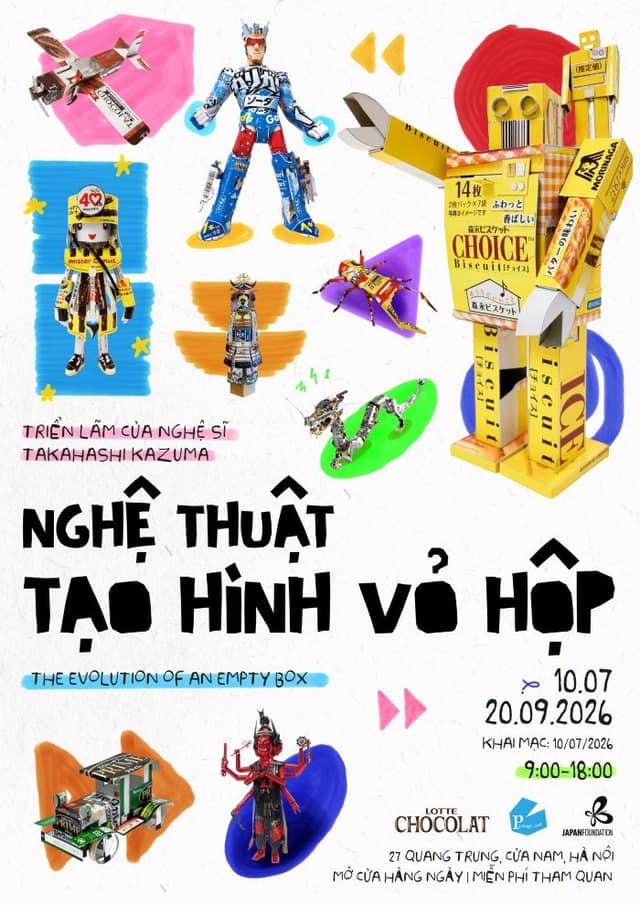
Package Craft | Takahashi Kazuma: The Evolution of an Empty Box
The Japan Foundation Center for Cultural Exchange in Vietnam
Free



 Culture and Arts
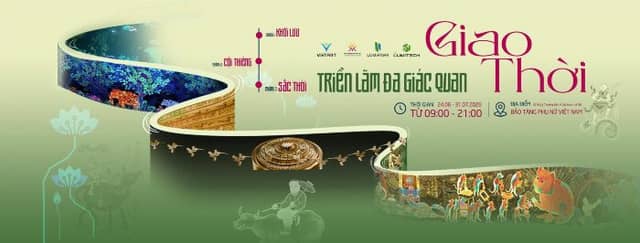
Touch a creature and it wakes up — that is how this show opens, before walking you back to the beginning of the world, through the sound of a bronze drum, and out into the colours of Đông Hồ folk prints. Three rooms in Hoàn Kiếm turn heritage into something you can put your hand on, instead of something behind glass.
The point of it is where cultural heritage meets creative technology: 3D projection mapping, the interactive CHẠM sensor system and modern storytelling make familiar values appear vivid and close to a contemporary audience, and to young visitors in particular. The name “Giao Thời” means the threshold between eras.
The three stages of the journey
— “Khởi lưu — Mạch nguyên sinh” (Origin): the world of primordial beings — a deep primeval ocean, vast ancient forests, magical vegetation; touch each creature to “awaken life” through the CHẠM sensors
— “Cội thiêng — Mạch văn hoá” (Sacred Roots): built on the bronze drum; sight joins sound as the drum's resonance links heaven and earth, carried through ancient carvings and the echo of history
— “Sắc thời — Mạch di sản” (Colours of Time): drawn from Đông Hồ folk painting; graphics over 3D mapping turn the whole room into a living, warm space
It works for families with children — here kids are meant to touch rather than stand and look — for younger visitors who came for the photographs, and for anyone who finds museums a little static. The exhibition is produced by Bảo tàng Phụ nữ Việt Nam (the Vietnamese Women's Museum) with VietArt and LumiTech, and it opened to mark Vietnamese Family Day.
Two things worth knowing before you go. The bronze drums that shape the second room were cast between roughly the 7th century BC and the 6th century AD, and belong to the Đông Sơn culture of the Red River delta — the era of the Hùng Kings, from which Vietnam dates its own statehood; the largest collection of them in the world is held here in Hanoi. The Đông Hồ prints behind the third room come from Bắc Ninh province and are printed from woodblocks using pigments made from nature: green from indigo leaves, red from crushed brick, white from powdered mother-of-pearl.
The last room carries a weight it would not have had a couple of years ago. In December 2025 UNESCO added the Đông Hồ printing craft to its list of heritage in need of urgent safeguarding — Vietnam's seventeenth entry on the organisation's lists. “Urgent” is not decoration: the craft is now kept alive by only a handful of families, passing the technique down at home and to students directly. So the roosters, pigs and famous “mouse wedding” of Đông Khê village, blown up in graphics across a whole wall, are not just a visual effect — they are a way of keeping those images in front of a younger generation.
Heritage does not have to sit still behind glass, if you give it something to respond to. Which creature will you wake first?
Vietnamese Women's Museum
36 Lý Thường Kiệt, Hoàn Kiếm, Hà Nội
The Japan Foundation Center for Cultural Exchange in Vietnam
Free
Vincom Center for Contemporary Art (VCCA)
Free

Nhà Thái Học, Văn Miếu – Quốc Tử Giám
35,000 ₫ – 70,000 ₫
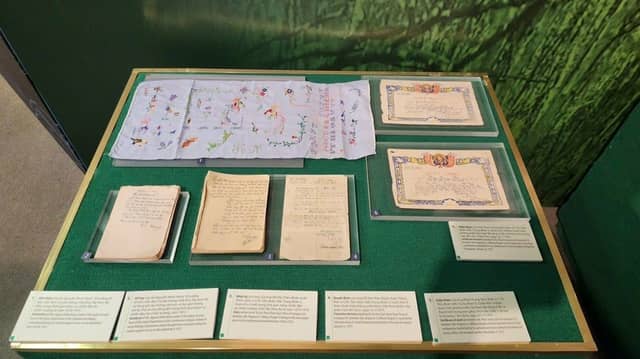
Vietnamese Women's Museum
Free
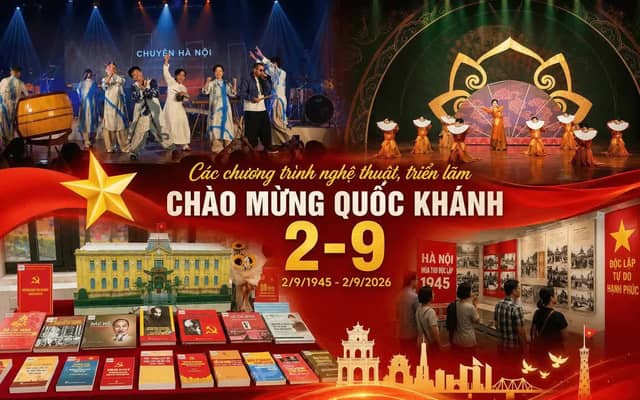
61 Tràng Tiền
Contact organizers
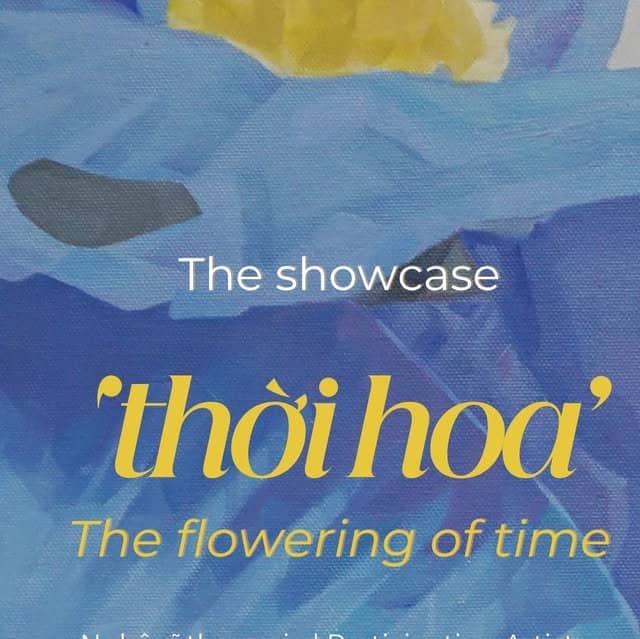
Nương Náu Art Hub
Free

Matca Space for Photography
Contact organizers

Bảo tàng Vũ Dân Tân (Vu Dan Tan Museum)
Free
The Japan Foundation Center for Cultural Exchange in Vietnam
Free
Vincom Center for Contemporary Art (VCCA)
Free
Nhà Thái Học, Văn Miếu – Quốc Tử Giám
35,000 ₫ – 70,000 ₫