“Thực ra, khi ra mắt sân khấu, chúng tôi dự tính chỉ duy trì hoạt động được nhiều nhất khoảng 3 năm vì kinh phí có hạn” — “To be honest, when we launched the stage, we expected to keep it running for three years at most, because our money was limited.” That is how Ái Như remembered 2010 when the theater turned fifteen, adding that the stage had by then lasted five times longer than planned (SGGP, 2025). In its first twelve years, according to a fact box in Thanh Niên (2022), the stage premiered 53 plays and gave 2,000 performances, and audiences came to them about a million times.
The theater has never had a building of its own. For its first four years it played on the main stage of the city’s Children’s House (Nhà Thiếu nhi, a center where children attend clubs and classes), and since 2014 it has rented a hall in the district Children’s House on Bắc Hải Street. This is where you can see stage versions of stories by the writer Nguyễn Ngọc Tư, classic cải lương turned into spoken drama, and plays by the founders themselves — such as “29 anh về” (“I’ll Be Home on the 29th”), which, according to Tuổi Trẻ (2026), many theatergoers know almost by heart and still come back to see.
At a glance
A private stage for spoken drama
The Hoàng Thái Thanh Drama Theatre is a private drama stage in Ho Chi Minh City. In Vietnam stages like this are called “xã hội hóa” — literally “socialized,” meaning non-state: they do not live on money from the public budget. It stages spoken drama (kịch nói, the Vietnamese term for straight, non-musical theater), above all psychological and social plays about human destinies, love and society (Vietnamese Wikipedia; theater website).
The stage was founded by two people: Meritorious Artist (NSƯT — Nghệ sĩ Ưu tú, a Vietnamese state honorary title for performers) Thành Hội and Ái Như, a director, actress and playwright. Before the opening, both had officially left the company of the Idecaf Drama Theatre (Tuổi Trẻ, 2010). The stage’s name is a pen name the two founders shared when signing their plays, which is why so many playbills credit “Hoàng Thái Thanh” as the author. According to Ái Như, “Hoàng” is her husband’s family name, while “Thái Thanh” was chosen partly out of admiration for the singer Thái Thanh and partly for what the words themselves convey — a person’s manner and bearing, outward and inward (Tuổi Trẻ, 2020).
The stage’s emblem is a dragonfly, and its motto is “Sưởi ấm tâm hồn” (“Warming the Soul”) (Vietnamese Wikipedia; theater website). A dragonfly’s wings are thin and fragile, yet it climbs high, flies far and shimmers in the sun, SGGP wrote when the theater turned ten (SGGP, 2020). In 2025 Ái Như explained the emblem her own way:
“Biểu tượng của sân khấu là con chuồn chuồn, 4 cánh của nó được ví như sự nâng đỡ, đồng hành của khán giả, sự đồng điệu của nghệ sĩ và tất cả anh em, cộng sự...” “The stage’s emblem is the dragonfly; its four wings stand for the support and companionship of our audiences, and for the harmony among the artists and all our comrades and collaborators…” Ái Như — SGGP, February 21, 2025
Ái Như sums up the company’s style in a phrase Viet Nam News quoted in 2025: “Our artists offer drama in the style of the South.” There is more about that style under “The house style.”
What it’s known for
- A million theatergoers in twelve years. According to a fact box in Thanh Niên’s report on the theater’s press conference in April 2022, 53 plays had premiered on this stage since 2010 and 2,000 performances had been given, with total attendance of about a million, 55,000 of them middle and high school students. The share of young theatergoers grew from 12% in 2012 to 72% in 2021 (Thanh Niên, 2022). By 2025 the number of plays had reached about sixty (SGGP; Viet Nam News, 2025).
- Cải lương without the singing. The stage reworks classic plays of cải lương (the musical drama of southern Vietnam) as spoken drama. It is precisely these productions — “Sông dài” (“The Long River”), “Bạch Hải Đường” (named after its hero, a bandit), “Nửa đời hương phấn” (“Half a Life of Powder and Perfume”) and “Lan và Điệp” (“Lan and Điệp,” after its two lovers) — that Thanh Niên (2022) counts among its greatest successes (more under “What to see”).
- 150 performances of a single play. The 150th performance of “Nửa đời ngơ ngác” (“Half a Life in Bewilderment”), based on a short story by Nguyễn Ngọc Tư, was scheduled for December 31, 2018 (Báo Văn hóa, 2018); according to VnExpress (2022), many of the theater’s other productions have also run to hundreds of performances.
- A readers’ prize. “Nửa đời hương phấn” won the 2015 Mai Vàng award (literally “Golden Mai,” after the yellow mai blossom), which the newspaper Người Lao Động gives on the strength of a readers’ vote (Người Lao Động, 2016).
- Festival gold. At the 1st Ho Chi Minh City Theater Festival in 2024, “Cơn mê cuối cùng” won a gold medal, and Thành Hội and Ái Như won individual gold medals (SGGP; Tuổi Trẻ, 2024).
- From stage to screen. In 2024 the Phương Nam film studio took on three of the stage’s plays to adapt them as a 31-episode TV series (SGGP, 2024). And the director of the film “Phá đám: Sinh nhật mẹ” (“Spoiling the Party: Mom’s Birthday,” 2025), in which Ái Như and Thành Hội appeared in commercial cinema for the first time, named this stage’s production “Bông hồng cài áo” (“A Rose Pinned to the Shirt”) among his sources of inspiration (Tuổi Trẻ, 2025).
Plan your visit
Where it is and how to get there
The stage works inside a district children’s center, Nhà Thiếu nhi Quận 10 (“the District 10 Children’s House”), at 139 Bắc Hải Street. The ward (phường, an urban ward; the current wards date from the administrative reform of July 1, 2025) is Hòa Hưng: that is how the Vietnamese Wikipedia gives the address, and by the ward boundaries in OpenStreetMap the building falls in the same ward (the address tags of the building itself in OSM still say “Phường 14”). The theater’s website still gives the address in its pre-reform form: “139 Bắc Hải, Phường 14, Quận 10” (“Ward 14, District 10”). According to Wikipedia, Hòa Hưng Ward was put together in 2025 from Wards 12, 13 and 15 and part of Ward 14 of the former District 10, and Bắc Hải Street forms its northern boundary. But under Resolution No. 1685/NQ-UBTVQH15, the old Ward 14 was split: part of it went to the new Diên Hồng Ward and the rest to Hòa Hưng (LuatVietnam), so the old address alone does not tell you the new ward. A landmark is nearby Lê Thị Riêng Park (Người Lao Động, 2014).
In OpenStreetMap the stage is mapped as a separate building on the grounds of the Children’s House, with the Children’s House itself as a separate point nearby.
Distances are our own measurements along OpenStreetMap routes (OSRM), taken on November 9, 2026, from the stage building; driving times assume no traffic.
| To | By car (by road) | Straight line |
|---|---|---|
| Downtown: the Saigon Opera House (Nhà hát Thành phố) | ≈7.1 km (4.4 mi) / 9 min | ≈4.8 km (3.0 mi) |
| Bến Thành Market | ≈6.7 km (4.2 mi) / 8 min | ≈4.3 km (2.7 mi) |
| Saigon Railway Station (Ga Sài Gòn) | ≈4.7 km (2.9 mi) / 7 min* | ≈1.9 km (1.2 mi) |
| Tân Sơn Nhất Airport, international Terminal T2 | ≈6.3 km (3.9 mi) / 9 min | ≈3.9 km (2.4 mi) |
| Tân Sơn Nhất Airport, domestic Terminal T3 | ≈5.7 km (3.5 mi) / 9 min | ≈3.5 km (2.2 mi) |
* The route leads to the station entrance through an alley off Cách Mạng Tháng 8 Street, which is why the road distance is more than twice the straight-line one.
Our sources have no published taxi fares and no information on public transport to the stage. Nearby places, with distances, are listed under “What to see nearby.”
What’s on and when
Seasons. Since 2022 the stage has played not every week but in seasons (mùa diễn, “performance seasons”). There are two: the Tết season, from Tết (the Lunar New Year) until about May, and a midyear season, which Thanh Niên places in July and August. A new play is performed in a single run — “mười mấy suất hoặc vài chục suất trong 4 tháng, sau đó ngưng hẳn” (“a dozen-odd or a few dozen performances over four months, after which it is taken off for good”) (Thanh Niên, 2022). Performances are on weekends (VnExpress, 2022; Viet Nam News, 2024). A single play can stay on the bill for up to five months (Vietcetera, 2026). Between seasons, the theater gives commissioned performances for organizations and schools (Báo Văn hóa; VnExpress, 2022).
What this looked like in 2026. The Tết season opened with two productions, a new play, “Hẹn nhau ở cuối con đường” (“Meet Me at the End of the Road”), and a new version of “29 anh về” (Tuổi Trẻ, 2025). The first began its run on February 17, the first day of Tết in the year of Bính Ngọ (the Year of the Horse in the lunar calendar) (SGGP, 2026). From the 1st to the 13th day of the first lunar month at least six productions were on: besides the two premieres, there were “Trái tim oan khuất” (“The Wronged Heart”), “Tóc mai sợi vắn sợi dài” (“Locks at the Temples, One Short, One Long”), “Bông hồng cài áo” and “Lạc ở đáy sông” (“Lost at the Bottom of the River”). After the holiday, Báo Văn hóa wrote, the stage went back to “dòng kịch tâm lý - gia đình vốn là thế mạnh của đơn vị” — “the psychological family drama that has always been the company’s strong suit” (Báo Văn hóa, February 27, 2026). In April there were school performances, and in the midyear season “Sông dài” returned to the stage: its comeback was announced for the evening of June 21 (Tuổi Trẻ, 2026).
Right now. As of November 9, 2026, the website’s “Kịch đang diễn” (“Now playing”) section lists four productions, none with dates: “Ai xuôi vạn lý” (literally “Who Goes Ten Thousand Li Away”; the li is an old measure of distance), “Người điên trong ngôi nhà cổ (2026)” (“The Madman in the Old House”), “Sông dài (2026)” and “Hẹn nhau ở cuối con đường” (more on them under “What to see”). On the page for “Ai xuôi vạn lý,” the ticket seller Showtik says: “Hiện tại chưa có lịch diễn cho vở diễn này” (“There is currently no performance schedule for this production”). The most recent press coverage of the stage’s productions that we found dates from July 2026. Going by the season model, the next season can be expected around Tết 2027, but that is our own inference, not an announcement by the theater: keep an eye on the website and the stage’s Facebook page.
Showtimes, tickets and practical tips
| Seasons | the Tết season (from Tết until about May) and a midyear season; performances on weekends; as of November 9, 2026, no schedule has been published |
| Start times | no start times have been published for 2026; in earlier years evening performances began at 20:00 (SGGP, 2012; Viet Nam News, 2023 and 2025) and matinees at 16:00–16:30 (SGGP, 2012); in the fall 2022 season, at 15:00 and 19:00 (Báo Văn hóa, 2022); check the exact time when you buy your ticket |
| Running time | from an hour and a half to three hours: “Nửa đời hương phấn” and “Trả lại lia thia” (“Give Back the Fighting Fish”) run 90 minutes each (Viet Nam News, 2023 and 2024), “Sông dài” about three hours (Tuổi Trẻ, 2026) |
| Tickets | on hoangthaithanh.com, the “MUA VÉ NGAY” (“Buy tickets now”) button and the “Mua vé” (“Buy tickets”) block on each production’s page lead to the Showtik ticketing platform; also at the theater’s box office (Viet Nam News, 2025); each production has its own price, and prices change |
| Questions | phone 0977 553 191 (shown on the website as “(084) 0977553191”), email [email protected], Facebook chat on the theater’s website |
| Children | do not bring children under six to performances for adults; children over six need their own ticket (rules on the production’s page at Showtik) |
| In the hall | arrive on time; no video recording or photography of the performance; switch your phone off or to vibrate; no food or sweet drinks in the hall (Showtik) |
| Refunds | tickets, once bought, are non-refundable (Showtik) |
| Language | Vietnamese, with a southern accent; our sources have no information on translation or subtitles for international audiences |
| Groups | commissioned performances for schools and organizations, including between seasons |
| The hall | about 400 seats (Báo Văn hóa, 2022); there is no official figure |
| Facilities | the theater’s website says nothing about the hall’s floor, an elevator, parking, air conditioning or a cloakroom |
Prices and hours change — check before you go.
When to go. A new play runs for a limited series, so it is best seen in its own season. In 2022 the theater announced that its earlier repertoire would be kept only for commissioned performances (VnExpress, 2022), but older productions do come back for the holidays: at Tết 2026 the bill included “Bông hồng cài áo,” “Lạc ở đáy sông” and others (Báo Văn hóa, 2026).
How to buy a ticket. Through the theater’s website, which sends you on to Showtik, a commercial ticketing platform (Showtik’s hotline is 0935 20 28 20, 8:00–20:00). In 2025 Viet Nam News also mentioned sales at the theater’s box office. Our sources do not give box office hours.
Tip: watch out for school bookings. On days of commissioned performances the whole hall may be taken: on April 11, 2026, both performances of “Hẹn nhau ở cuối con đường” played to a full house of students from a single school, Trường Chinh (Tuổi Trẻ, 2026).
What to see nearby
Distances are our own measurements along OpenStreetMap routes (OSRM), taken on November 9, 2026, from the stage building, by car.
- Lê Thị Riêng Park (≈0.9 km, about 0.6 mi / 2 min) — in 2014 Người Lao Động used it as the landmark for the stage’s new address.
- Phú Thọ Circus and Multi-Purpose Performance Theater (≈1.8 km, about 1.1 mi / 2 min) — Ho Chi Minh City’s new circus, with a ring that goes under water.
- Phú Thọ Indoor Stadium — an indoor arena next door to the circus (according to the card in our database).
- Thống Nhất Stadium (≈2.8 km, about 1.7 mi / 4 min).
- Hòa Bình Theatre (≈2.9 km, about 1.8 mi / 4 min) — a big Ho Chi Minh City hall for concerts and touring shows.
- Nhà Thiếu nhi TP.HCM (the Ho Chi Minh City Children’s House; TP.HCM is the standard abbreviation for Thành phố Hồ Chí Minh, Ho Chi Minh City), 36 Lê Quý Đôn Street (≈4.9 km, about 3.0 mi / 7 min) — the stage’s first home, in 2010–2014; there is no card for it in our database.
- Small Stage Drama Theatre (5B) (≈6.0 km, about 3.7 mi / 8 min) — one of the stages where the founders’ productions ran before 2010.
- Idecaf Drama Theatre — the company the founders left when they opened their own stage.
- Saigon Opera House (Municipal Theatre) — where the stage collected its festival gold in 2024 (for the distance, see “Where it is and how to get there”).
The Hoàng Thái Thanh Drama Theatre is part of our guide to Ho Chi Minh City.
What to see
The hall on Bắc Hải Street
The stage’s hall is in the district Children’s House, where local children attend clubs and classes; in 2020 the Children’s House was awarded the Labor Order, Third Class, for its work in 2014–2018 (VOH, 2020). The theater does not publish the number of seats. Reporting on an early performance on September 10, 2022, which sold out fast, Báo Văn hóa wrote that “400 chỗ ngồi trong khán phòng được lấp đầy” — “all 400 seats in the auditorium were filled” (Báo Văn hóa, 2022). The theater’s first hall, on Lê Quý Đôn Street, was bigger, with more than 450 seats (Tuổi Trẻ, 2010).
The theater rents its space, and the rent, according to Ái Như, is one of the stage’s main worries, along with money for productions and a shortage of good plays (SGGP, 2020). Storage is tight as well: the storeroom could no longer hold the sets of 53 productions, and that was one of the reasons the stage switched to seasons in 2022 (VnExpress; Thanh Niên, 2022). For anniversaries the theater puts on exhibitions: the program for its tenth anniversary in 2020 was announced with an exhibition (SGGP, 2020), and the one for its fifteenth in 2025 with an installation in front of the auditorium (Báo Văn hóa, 2025).
The house style
In 2022 Thanh Niên wrote that the stage carries “màu sắc Nam bộ rất rõ, cả màu sắc bi kịch giống như Sân khấu Kim Cương ngày xưa” — “a very distinct southern color, and a tragic coloring too, like the Kim Cương stage of old” (the company led by the actress Kim Cương). And it went on: “Thiếu Sân khấu Hoàng Thái Thanh, kịch Sài Gòn hụt đi một mảng lớn” — “Without the Hoàng Thái Thanh stage, Saigon drama would be missing a big piece of itself.”
The southern style here is a matter of hard work, not just of the actors’ accents:
“My actors have to learn about Southern history and culture before working on a new project. This helped to breathe life into the drama.” Ái Như — Viet Nam News, March 4, 2025
In 2022 Báo Pháp Luật Việt Nam called Hoàng Thái Thanh one of the few stages in Ho Chi Minh City that consistently put on serious drama (chính kịch, as opposed to comedy). Its productions are about love for one’s fellow human beings, magnanimity and the way every deed comes back to its doer; the cast is strong, and the humor is never overdone. Even at Tết, when other theaters bet on comedy, this one puts “những số phận, bi kịch của con người” — “human fates and tragedies” — first (Tuổi Trẻ, 2023). There is plenty to laugh at in these productions too, but of a particular kind: “Hài ở Hoàng Thái Thanh không dùng hài hình thể, mà khai thác tối đa hài tình huống” — “comedy at Hoàng Thái Thanh doesn’t rely on physical gags; it gets everything it can out of the situation” (Tuổi Trẻ, 2026).
In 2015 an SGGP interviewer asked Ái Như whether she might switch to “kịch kinh dị, kịch ma” — horror and ghost plays — to suit popular taste. She replied that she felt neither skilled nor confident with such subjects, so she did not take them on, and that if it were only about making money, she would do something else entirely (SGGP, 2015). The supernatural did reach this stage all the same. According to Báo Văn hóa, in 2023 “Trái tim oan khuất” showed regular audiences, for the first time, “yếu tố ma mị, không khí liêu trai” — “eerie elements and the atmosphere of tales of the supernatural” (liêu trai, from the Vietnamese name of a classic Chinese collection of ghost stories); the paper hastened to add that it was “không phải là một vở kinh dị, hù ma, dọa dẫm” — “not a horror play that sets out to scare you with ghosts” (Báo Văn hóa, 2023). That said, “Con ma nhà họ Hứa” (“The Ghost of the Hứa Family”) had played here before, including in the farewell series of 2022 (see “Modern history”).
Thanh Niên summed it up this way: “Một sân khấu tử tế từ cách làm nghề cho tới nội dung kịch bản, khán giả bất cứ lứa tuổi nào xem cũng "an toàn"” — “a decent stage, from the way it works to the content of its scripts; audiences of any age are ‘safe’ watching it” (Thanh Niên, 2022). In 2025 Thành Hội described the craft like this:
“Nghệ sĩ là những kẻ điên nhất, nhưng cũng là những kẻ tỉnh nhất. Phải điên thì mới có thể hóa thân, nhưng phải tỉnh để nhét viên thuốc chữa bệnh bên trong một viên kẹo.” “Artists are the craziest people there are, but also the most clear-headed. You have to be crazy to become someone else, but clear-headed to tuck the medicine inside a piece of candy.” Meritorious Artist Thành Hội — Tuổi Trẻ, November 4, 2025
Four plays on the website’s bill
As of November 2026, the “Kịch đang diễn” section of the theater’s website lists four productions. None of them has dates (see “What’s on and when”).
“Ai xuôi vạn lý.” A new play by Hoàng Thái Thanh and Minh Hảo. A district magistrate (quan huyện, a mandarin who governed a district in imperial times), Bá Tòng (Thành Hội), and his wife, Mai Trang (Ái Như), grow rich at the expense of ordinary people and get rid of an obstacle in their way: the lovers Trọng Phước and Tuý Nguyệt (Đoàn Minh Tài and Hồng Duyên). There are 17 actors in the cast. The website does not name the director; according to the Vietnamese Wikipedia, it is Huỳnh Công Hiển. We found no press coverage of the production; a search for the title turns up a film of the same name from the 1990s, which is a different work.
“Người điên trong ngôi nhà cổ (2026).” A new version of a long-standing production by the founders, based on a play by Ngọc Linh (the author is credited on the theater’s website): in 2011 it was among the productions brought to this stage from the boards of 5B and Idecaf (Tuổi Trẻ, 2011). The director is Thành Hội, who also acts in it, alongside Ái Như, Nguyễn Long, Công Danh, Thế Hải, Hoài Thương and others. The lawyer Tùng visits the family of his fiancée, Hạnh, whose father, Ninh, the master of the house, has been gravely wounded, and he uncovers “những sự thật oan nghiệt và tội ác bất nhân… bị chôn vùi suốt mấy chục năm qua” — “cruel truths and inhuman crimes… buried for decades” (theater website).
“Sông dài (2026).” A cải lương play reworked as drama; see the next section.
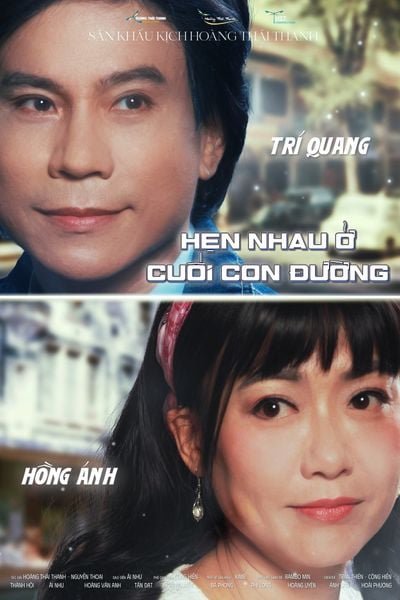
“Hẹn nhau ở cuối con đường.” The main premiere of Tết 2026: a play by Hoàng Thái Thanh and the young playwright Nguyễn Thoại, directed by Ái Như, with Công Hiển as second director and sets by KimB (theater website). The story opens in Saigon in 1973. Hiền (Hồng Ánh), a poor girl, works as a salesclerk at the Khai Trí bookstore; Tuấn (Trí Quang) is a medical student about to qualify as a dentist. Their romance plays out in sidewalk cafés and over poetry; then “chiến tranh loạn lạc, một cuộc hẹn không thành” — “war and turmoil, and a date that never happened” — keep them apart for many years. Hiền, whom the audience later sees as a blind woman selling secondhand books, serves as a reminder of the love of books (Tuổi Trẻ, January 3, 2026). Ái Như plays Tuấn’s mother. The comic thread belongs to Thành Hội and Hoàng Vân Anh: Uncle Hưởng talks the hapless Hậu into a swindle (same source).
The sources disagree about how long the separation lasts: twenty years in Tuổi Trẻ, twenty-five in the synopsis on the theater’s website. Before the premiere the stage’s manager, Công Hiển, said the story was set in Ho Chi Minh City in the 1980s and 1990s; after the premiere, Tuổi Trẻ was describing Saigon in 1973. The poster is not a photograph but a drawing: it “gợi lại không khí của TP.HCM xưa” — “brings back the atmosphere of old Ho Chi Minh City,” in the spirit of old book covers and cassette sleeves (Tuổi Trẻ, November 28, 2025). Hồng Ánh and Trí Quang were paired on stage for the first time since Tết 2020, when they played in “Tình yêu trời đánh” (“Heaven-Cursed Love”) (Tuổi Trẻ, November 28, 2025).
Cải lương without the singing
Cải lương is sung; Hoàng Thái Thanh turns its classics into spoken drama. Thanh Niên (2022) considered the choice especially well suited to a stage with a southern character and named “Sông dài,” “Bạch Hải Đường,” “Nửa đời hương phấn” and “Lan và Điệp” as successes.
“Sông dài.” A play by Hà Triều and Hoa Phượng, the celebrated pair of cải lương writers, about the people of old Saigon and of the country’s southwest (miền Tây, the Mekong Delta region). The blind girl Lượm has been taken in by old Hai Tất; she is loved by Niễng, a hunchback with a burned face, and a wedding is in the offing. But Lượm’s mother turns up — the wealthy Madame Hai Sa, who takes her daughter away to have her eyes treated, and that is where the tragedy begins (Tuổi Trẻ, July 7, 2026). The theater adapted the play as spoken drama with the permission of the authors’ family, and Thành Hội directed it. Its first performers here were Quý Bình (Niễng) and Hồng Ánh, with Ái Như as Hai Sa (Tuổi Trẻ, 2015 and 2026). In the 2026 version Lượm is played by Hoàng Vân Anh, Hai Tất by Thành Hội and Niễng by Quốc Thái. The production runs about three hours.
“Nửa đời hương phấn.” Also by Hà Triều and Hoa Phượng. After its premiere by the Thanh Minh – Thanh Nga troupe in Saigon in 1957, the cải lương play became a phenomenon; it is regarded as a Vietnamese “La Dame aux Camélias” (“The Lady of the Camellias”) (Viet Nam News, 2024). Wealthy Tùng loves Hương, a country girl who has become a prostitute to support her family. Tùng’s father objects, and his son is married off to someone else; on the wedding day Tùng discovers that the bride is Hương’s younger sister. Ái Như’s spoken-drama version won the 2015 Mai Vàng award. In August 2024 the director brought out a new, 90-minute version, with the film star Hồng Ánh in the lead (Viet Nam News, 2024).
“Bạch Hải Đường.” A play by Nguyễn Huỳnh, adapted for Tết 2021 and directed by Ái Như; the press praised the production’s meticulous finish (Tuổi Trẻ, 2021). Trí Quang played the bandit chief Bạch Hải Đường (Tuổi Trẻ, April 5, 2021).
“Bông hồng cài áo.” Another adaptation of a cải lương play; in 2019 it was revived with a new cast and changes to the plot (VnExpress, 2019). This is the production that the director Thanh Bình named among the sources of his 2025 film (see “Modern history”).
Fiction on stage: Nguyễn Ngọc Tư, Nguyễn Công Hoan, Chekhov
Most of the repertoire consists of stage adaptations of literature and of classic cải lương (Vietnamese Wikipedia). Among the literary adaptations is the fiction of the writer Nguyễn Ngọc Tư. “Nửa đời ngơ ngác” is based on her short story “Chiều vắng” (“An Empty Evening”) (Báo Văn hóa, 2018). Another of her stories became “Trả lại lia thia” (“Give Back the Fighting Fish”; a lia thia is a small fighting fish), a 90-minute drama about southern farmers in the market economy. Its premiere was scheduled for September 2, 2023, Vietnam’s Independence Day; the leads were Kỳ Thảo and Ma Ran Đô, and the cast also included Thành Hội, Trí Quang and Kim Huyền (Viet Nam News, 2023).
For Tết 2025 the stage brought out “Tóc mai sợi vắn sợi dài,” based on Nguyễn Công Hoan’s novel “Tắt lửa lòng” (“The Heart’s Fire Goes Out”). The stage adaptation is by Nguyễn Thị Minh Ngọc and Hoàng Thái Thanh, and the director is Thành Hội. The characters include the poor student Trọng (Đoàn Minh Tài); his fiancée, Loan (Kỳ Thảo); ông Phủ Nhơn (Thành Hội; ông is a respectful “Mister”); and Trọng’s mother, bà Lài (Ái Như; bà, “Madam,” is the way an older woman is addressed). Unlike in the novel, Loan does not become a nun. Thanh Niên called the production a rare piece of “pure drama” at Tết 2025 (Thanh Niên, 2025).
Chekhov has played here too: “Đêm thiên nga” (“Swan Night”), based on his “Swan Song,” was the play chosen to open the current hall in 2014 (more under “Modern history”).
The literary repertoire is also the backbone of the school performances. For years the city’s high schools have been commissioning productions from the theater for extracurricular literature lessons. Among them are “Nửa đời ngơ ngác,” “Bông hồng cài áo,” “Rau răm ở lại” (“The Rau Răm Stays Behind”; rau răm is a pungent herb, Vietnamese coriander), “Bao giờ sông cạn” (“When the River Runs Dry”) and “Lạc ở đáy sông” (Tuổi Trẻ, April 12, 2026).
Plays that won’t let go: “Nửa đời ngơ ngác” and “29 anh về”
“Nửa đời ngơ ngác.” Premiered on October 31, 2010, in the stage’s very first year. The script is by Trần Mỹ Trang and Hoàng Thái Thanh, and the director is Thành Hội. It tells the story of a love between Tư Nhớ and Út Lý that stretches over 15 years; the lovers were played by Trí Quang and Hồng Ánh, and Ái Như played the stern mother, bà Hai (Vietnamese Wikipedia; Báo Văn hóa, 2018). Báo Văn hóa announced the 150th performance and the one after it for December 31, 2018, and January 1, 2019, and wrote: “150 suất diễn không phải là quá nhiều, nhưng với một vở diễn sân khấu thì đó là một con số đáng mừng” — “150 performances isn’t really that many, but for a stage production it is a number worth celebrating.” For Tết 2019 the theater was preparing a sequel, “Bên kia... nửa đời ngơ ngác” (“The Other Side of… Half a Life in Bewilderment”) (Báo Văn hóa, 2018).
“29 anh về.” A play by Nguyễn Thị Minh Ngọc and Hoàng Thái Thanh, directed by Thành Hội, which premiered in 2012. The schoolteacher Diệu Hoài, living apart from her husband, receives a telegram from him: “29 anh về, em ra ga đón anh nha” — “I’ll be home on the 29th, come meet me at the station, OK?” And every time the 29th comes around she goes to the station — for twenty-five years, while her husband never comes back (Tuổi Trẻ, March 10, 2026; a 2025 preview says “more than twenty years”). For a long time Diệu Hoài was played by Ái Như; in the 2026 version the role went to the cải lương star Phương Hồng Thủy, and Ái Như moved on to the mother-in-law, bà Tâm Ái, who, unlike in the earlier version, now speaks with a Huế accent (Tuổi Trẻ, March 10, 2026; more under “Modern history”).
“Trải qua 14 năm, 29 anh về vẫn trở đi trở lại, khán giả nhiều người gần như thuộc tuồng mà vẫn muốn đi xem…” “Fourteen years on, ‘29 anh về’ keeps coming back again and again; many in the audience almost know the play by heart and still want to go and see it…” Tuổi Trẻ, March 10, 2026
The company
The company has about twenty professional actors (Viet Nam News, 2023 and 2025). Its best-known name is Hồng Ánh, a film star. Twice, in 2000 and 2007, she won the Vietnam Cinema Association’s award for best actress; she was named best actress at the 5th Dubai International Film Festival (2008) and represented Vietnam at Cannes in 2008, 2011 and 2013 (Viet Nam News, 2024). She has been associated with this stage since its opening (Tuổi Trẻ, 2010). Her regular partner is Trí Quang: together they have played in “Nửa đời ngơ ngác,” “Thử yêu lần nữa” (“Try Loving Once More”), “Màu của tình yêu” (“The Color of Love”), “Cảm ơn mình đã yêu em” (“Thank You for Loving Me”), “Tình yêu trời đánh” and “Hẹn nhau ở cuối con đường” (Tuổi Trẻ, January 3, 2026). Meritorious Artist Tuyết Thu has also been with the company since the opening (Tuổi Trẻ, 2010; SGGP, 2024).
The stage grows its own talent. By its tenth anniversary the founders had “nhẹ nhàng lùi về hậu cứ, làm dàn bao cho các diễn viên trẻ” — “quietly stepped back to the rear, to be the support behind the young actors” (SGGP, 2020). Hoàng Vân Anh, Quốc Thịnh, Tuyết Mai, Ngọc Duyên, Thế Hải and Nguyễn Long all came of age in this theater; some of them have gone on to be directors and playwrights at other private theaters and in television (SGGP; Viet Nam News, 2025). The film actresses Thúy Diễm, Kim Tuyến and Tú Vi came here to learn from Ái Như and Thành Hội (Tuổi Trẻ, January 4, 2026). Ma Ran Đô, before becoming a film actor, studied acting with Thành Hội and Ái Như, among others, and performed on this stage (Vietnamese Wikipedia). Both founders taught for many years (Thanh Niên, 2022).
New plays come from the young as well. The playwright Nguyễn Thoại is a student of the founders: a script he brought to the theater later grew into “Trả lại lia thia” (which, according to Viet Nam News, is based on a short story by Nguyễn Ngọc Tư; the sources do not explain how her story and Nguyễn Thoại’s script came together), and he wrote “Lạc ở đáy sông” and “Hẹn nhau ở cuối con đường” together with Hoàng Thái Thanh (Tuổi Trẻ, December 27, 2023, and January 4, 2026). Ái Như’s son, Công Hiển (Huỳnh Công Hiển), who trained in media, has been learning the craft from the founders since 2018. He directed “Chạy đến ngày hôm qua” (“Running to Yesterday”), was assistant director on “Lạc ở đáy sông” and “Hẹn nhau ở cuối con đường,” and runs the theater’s communications (Tuổi Trẻ, 2023 and January 4, 2026); in 2025 Tuổi Trẻ described him as the stage’s manager.
Legends and lore
Two princes in a hollow tree: the day of the stage’s patron saints
Every year on the 12th day of the 8th lunar month, Vietnamese performers honor the patron of their craft (Giỗ Tổ, literally “the founder’s death anniversary”). Why it falls on this particular day is explained by legends, and all of them, according to the researchers cited by Báo Pháp Luật Việt Nam (2023), are merely conventional. The best known is about two princes. According to legend, a childless king was blessed with two sons after prayers at which costumed “heavenly beings” sang and danced. Both boys came to love the theater so much that they forgot to sleep and eat, and their father forbade them to watch performances. The princes secretly ran off after a traveling troupe, hiding in the hollow of a coral tree (vông nem), and died in a fire — on the 12th day of the 8th lunar month. Their souls, the legend says, stayed with the stage to watch over performers, and that is why troupes keep two small wooden figures on their altars.
There are other versions too. Many performers, according to the researcher Associate Professor Nguyễn Thị Minh Thái, venerate “three holy forefathers” (Tam vị Thánh Tổ): the founder of the craft, the one who carried it on, and a gifted author of plays. Another belief holds that the patrons are three — a king, a beggar and a bandit; hence some old superstitions: certain performers would not give to beggars, and some believed that bandits would never rob a troupe (Báo Pháp Luật Việt Nam, 2023).
“Ông cha ta đặt ra những giai thoại này vừa dựa trên thực tế, vừa mang tính hoang đường, rồi truyền miệng từ đời này truyền sang đời khác.” “Our forebears made up these tales partly from real life and partly from fantasy, and then handed them down by word of mouth, from one generation to the next.” People’s Artist (NSND — Nghệ sĩ Nhân dân, Vietnam’s highest honorary title for performers) Đinh Bằng Phi — Báo Pháp Luật Việt Nam, September 13, 2023
This custom has a direct bearing on the Hoàng Thái Thanh stage. According to the same paper, it is more than a hundred years old: it was born in the South among the traveling troupes of hát bội (classical sung theater), and from them passed to cải lương and to southern spoken drama. Since 2011, under the prime minister’s Decision No. 13/QĐ-TTg (QĐ stands for quyết định, “decision,” and TTg for Thủ tướng, “prime minister”), the same day has also been Vietnam Theater Day (Báo Pháp Luật Việt Nam, 2023). On Bắc Hải Street it is marked every year. As Ái Như recounted in 2020, the stage keeps the custom of honoring its patron as it does every year: after a reverent offering of incense before the altar, the company and its teachers gather around a shared table (Znews, 2020). In 2019 the stage marked the day with a thank-you performance of “Vườn nho đắng” (“The Bitter Vineyard”) for its audiences (VnExpress, 2019). In 2024 performers, directors and playwrights gathered at the theater, and Ái Như offered words of advice to the young actors (SGGP, 2024).
Modern history
Two from Idecaf and 5B
Before 2010, Ái Như and Thành Hội’s productions played on various stages in Ho Chi Minh City, including the Small Stage Drama Theatre (5B) and Idecaf (Tuổi Trẻ, 2011). Three of them — “Thử yêu lần nữa,” “Màu của tình yêu” and “Cảm ơn mình đã yêu em” — were first staged as far back as 2005. They were conceived as a multi-part cycle about love, marriage and family, and were later revived many times (SGGP, 2024).
In May 2009 Ái Như took a break to rest and to find fresh inspiration for her work. Both of them had been invited more than once to open a stage of their own, but they hesitated. For people used to writing plays, directing and acting, it is hard to take on the business side as well — “lo cơm áo gạo tiền cho cả một tập thể,” that is, “earning the daily bread for a whole company” (Tuổi Trẻ, 2015).
Ái Như and Thành Hội
Ái Như comes from Huế. When she decided at 18 to become an actress, her mother, afraid that her sickly youngest daughter would have a hard time in the profession, locked her in at home and kept her from going to classes; it looked as though her road to the stage had been cut off after half a semester (Tuổi Trẻ, 2015). Ái Như herself gives the date: in 1980 she enrolled in the acting program of Theater School No. 2 (Trường Nghệ thuật Sân khấu 2, now the Ho Chi Minh City University of Theater and Cinema) but dropped out “vì nhiều lý do” — “for many reasons” (SGGP, 2025). She later married, had a daughter and, to make a living, sold cigarettes from a cart outside the gates of the Youth Cultural House. Every day the stars of those years, the singers Cẩm Vân and Đình Văn, walked past her on their way to the stage, and her dream of the theater came back. The composer Nguyễn Tuấn Kiệt talked her into applying again and even bought her the application papers for the directing department’s entrance exams (Tuổi Trẻ, 2015). In 1987 she went back to the school, this time to study directing (SGGP, 2025). She put everything into her graduation production, “Khúc nhạc lòng của vị mục sư” (“The Pastor’s Heartsong”): she sold her battered 1968 Honda and borrowed 2 chỉ of gold (the chỉ is a traditional Vietnamese unit of weight for gold) and 300 German marks from friends (Tuổi Trẻ, 2015).
“Khoảng 6 năm đó là sự khát khao được theo nghề, học nghề khiến có lúc tôi rơi vào tuyệt vọng. Đến khi được làm nghề, những lúc khó khăn, mệt mỏi, tưởng chừng phải bỏ cuộc, tôi lại nhớ quãng thời gian 6 năm đó…” “For those six years or so, my longing to follow the profession and to learn it was so strong that at times I fell into despair. Once I was finally working, in hard, exhausting moments when it seemed I would have to give up, I would remember those six years…” Ái Như — SGGP, February 21, 2025
Her notable productions of the 1990s already included “Sông dài” (Tuổi Trẻ, 2015). Viet Nam News calls Ái Như “one of the city’s very few female theatre directors” (2024); she has been in the profession for more than forty years (2025). As an actress she considered herself timid: a trace of a Huế accent could be heard in her southern speech. Audiences say of her acting that she “diễn như không diễn” — “acts as if she isn’t acting”; her bà Hai in “Nửa đời ngơ ngác,” Út Trâm in “Chuyện bây giờ mới kể” (“A Story Told Only Now”), Diệu Hoài in “29 anh về” and bà Hai Khương in “Tục lụy” (“Worldly Fetters”) have stayed in audiences’ memories. Titles, according to Tuổi Trẻ, are not what she cares about: with or without one, she would do just as much for the stage (Tuổi Trẻ, 2015).
Thành Hội was already a Meritorious Artist in 2010 (Tuổi Trẻ, 2010); we did not find the year he received the title. He studied at Theater School No. 2 and for many years taught at the Ho Chi Minh City College of Culture and Arts (Trường Cao đẳng Văn hóa Nghệ thuật TP.HCM). He is the youngest of five children, and he calls his mother his “người thầy độc nhất vô nhị” — his “one and only teacher, like no other”: her ability to keep an eye on everything around her at once is, he says, what he draws on in running the stage (Tuổi Trẻ, November 4, 2025).
His second teacher was Charlie Chaplin — “ông Sác Lô” (“Mr. Charlot”), as he is known in Vietnam. As a boy, Thành Hội watched him in a “hát bóng thùng” (literally “box cinema”): a box on a cart, with holes cut for the eyes, in which 8 mm films were shown while a loudspeaker played the sound in foreign languages. When cartoons were on, the boy would give up his place to other children and wait in the alley until the showman called out: “Ê thằng nhỏ, tới Sác Lô của mày rồi nè” — “Hey, kid, your Charlot’s on!” (Tuổi Trẻ, November 4, 2025).
Ái Như and Thành Hội are a creative duo, not a married couple: Ái Như has a family of her own, a husband and children (SGGP, 2015).
January 22, 2010: opening day on Lê Quý Đôn Street
“Sáng 22-1, đông đảo nghệ sĩ và bạn bè trong giới văn nghệ đã đến dự lễ khai trương sân khấu kịch Hoàng Thái Thanh…” “On the morning of January 22, a great many performers and friends from the world of the arts came to the opening ceremony of the Hoàng Thái Thanh drama stage…” Tuổi Trẻ, January 22, 2010
The stage’s first hall was the main stage of the city Children’s House (Nhà Thiếu nhi TP.HCM) at 36 Lê Quý Đôn Street in District 3 (Quận 3). It had been refitted as a “khán phòng hơn 450 ghế” — “an auditorium of more than 450 seats.” Legally, the new stage came under the Xuân Hương entertainment services company (Công ty TNHH dịch vụ giải trí Xuân Hương; TNHH means a limited liability company). Among those who came to congratulate the founders was Meritorious Artist Trần Minh Ngọc (Tuổi Trẻ, 2010).
Among the actors who would work with the stage, the report named Thành Hội, Ái Như, Tuyết Thu, Meritorious Artist Kim Xuân, Hồng Ánh, Trương Minh Quốc Thái, Kim Khánh and Kim Hiền. The plan was three productions a year for adults and two for children, timed for the summer holidays and the Mid-Autumn Festival (Trung thu). The first performances were scheduled for January 28 and 29: two plays for Tết in the year of Canh Dần (the Year of the Tiger), “Trần gian phải có tình yêu” (“There Must Be Love on Earth”; by Hoàng Thái Thanh and Mỹ Dung, directed by Ái Như) and “Mua bảo hiểm tình” (“Insuring Love”; by Hoàng Thái Thanh, directed by Thành Hội) (Tuổi Trẻ, 2010).
The sources give different founding dates. The report on opening day and Wikipedia say January 22, 2010; the theater’s website says simply “2010.” In 2015 Tuổi Trẻ, writing about the stage’s birth, called February 14, 2010, “có lẽ là một cột mốc không thể nào quên” — “perhaps an unforgettable milestone”; by our calculation, that was the first day of Tết in the year of Canh Dần, which is to say the start of the first Tết season. VnExpress (2022) gives 2009, perhaps meaning the preparations. We follow the 2010 report.
The first four years
On October 31, 2010, “Nửa đời ngơ ngác” premiered — the play that would go on to become one of the stage’s long runners (more under “What to see”). In 2011 the theater gathered under its own roof the founders’ productions that had been playing at 5B and Idecaf: “Thử yêu lần nữa,” “Bàn tay của trời” (“The Hand of Heaven”), “Người điên trong ngôi nhà cổ,” “Hãy khóc đi em” (“Go Ahead and Cry, Dear”), as well as “Ngôi nhà thiếu đàn bà” (“A House Without a Woman”) and “Không cần đàn ông” (“No Need for Men”), based on plays by the late writer Ngọc Linh. Tuổi Trẻ called this period “Thời của kịch cũ” — “the age of old plays.” The casts changed: in “Hãy khóc đi em” Quang Thảo took over from Meritorious Artist Thành Lộc, and in “Thử yêu lần nữa” Thành Hội himself stepped in for Hữu Châu (Tuổi Trẻ, 2011). In 2012 came “29 anh về.”
The newspaper listings of the time show how busy the stage was. For a single week in November 2012, SGGP announced five different productions here. On Sunday, November 4: “Tình nhân đến với tình nhân” (“Lover Comes to Lover”) at 16:00 and “Người điên trong ngôi nhà cổ” at 20:00. On Friday, November 9: “Tục lụy” at 20:00. On Saturday, November 10: “Cảm ơn mình đã yêu em” at 16:30 and “Màu của tình yêu” at 20:15 (SGGP, 2012).
On June 13, 2014, the exacting Thành Hội and Ái Như for once handed a production over entirely to an outsider, the young playwright and director Bùi Quốc Bảo. His “Lạc giữa phố người” (“Lost Among the Crowded Streets”) is about a beautiful woman who accidentally killed her husband and, once out of prison, tries to hide her past. It starred Thành Hội, Như Phúc and Hoàng Vân Anh. The production took more than six months to prepare: about ten meetings, four versions of the script and a month of daily rehearsals without a day off (Tuổi Trẻ, 2014). By August 2014, 27 plays had premiered on the stage, and readers of Người Lao Động nominated several of them for the Mai Vàng award (Người Lao Động, 2014).
2014: the move and “Swan Song”
In 2014 the city Children’s House closed for reconstruction, for about three years. The theater had been looking for a new venue since the start of the year, and from August 27 to September 7 performances were suspended. The hall in the District 10 Children’s House was leased for two years, with the idea of moving back afterward (Người Lao Động, 2014). SGGP (2025) also mentions the move from the city Children’s House to the district one.
The theater chose to open the new hall on September 7, 2014, with “Đêm thiên nga” (“Swan Night”), based on Chekhov’s “Swan Song” and directed by Ái Như — so Người Lao Động reported a week before the housewarming; we have not found a report on the opening itself. The move coincided with the season of Giỗ Tổ, the stage’s patron day, which made for extra bustle (Người Lao Động, 2014). Ái Như herself played the old prompter Boris, and his words at the climax of the play, Tuổi Trẻ wrote, sounded like the actress’s own confession:
“Tôi, nghệ sĩ Boris, sẽ để đôi hài bẩn của mình ngoài thánh đường nghệ thuật. Tôi sẽ luôn yêu nghệ thuật trong bản thân mình chứ không bao giờ yêu bản thân mình trong nghệ thuật.” “I, the artist Boris, will leave my dirty shoes outside the temple of art. I will always love the art in myself, and never love myself in art.” A line from “Đêm thiên nga” — Tuổi Trẻ (Minh Mẫn), July 15, 2015
Tuổi Trẻ closed its profile of Ái Như with another line from the play: “Đừng mang giày bẩn vào thánh đường nghệ thuật” — “Don’t wear dirty shoes into the temple of art.”
The housewarming was not easy. According to Ái Như, ticket sales fell after the move because many theatergoers did not know the new address (SGGP, 2015). Báo Pháp Luật Việt Nam wrote that the stage had moved out of the center to a more outlying district to cut costs and to put its work on a more professional footing. At the end of March 2015 the theater held a competitive selection for a class of young actors and auditions for a children’s production, “Hoàng tử và Lọ Lem” (“The Prince and Cinderella”), whose premiere was scheduled for May; according to the same paper, the theater had begun training actors five years earlier, when it first opened (Báo Pháp Luật Việt Nam, 2015).
The rebuilt Children’s House on Lê Quý Đôn Street opened on April 29, 2017 (SGGP, 2017). Its new building went up behind the old one, a building of “kiến trúc cổ kính” — “time-honored architecture” — and took the shape of “chiếc thuyền vươn ra biển lớn,” “a ship heading out to the open sea” (Znews, 2017). The Hoàng Thái Thanh stage stayed on Bắc Hải Street and was still playing there in 2024–2026 (Viet Nam News, 2024; theater website).
A readers’ prize and the first decade (2015–2021)
In 2015 Ái Như said that ever since it opened, the stage had been losing money almost every month (Tuổi Trẻ, 2015). That same year her “Nửa đời hương phấn” won the Mai Vàng award; the ceremony took place in January 2016.
“Niềm hạnh phúc dâng trào khi tôi nhận được lời chúc mừng của nhiều đồng nghiệp dành cho vở kịch "Nửa đời hương phấn" được trao Giải Mai Vàng 2015. Cảm nhận niềm hạnh phúc của người nghệ sĩ chính là được số đông bạn đọc, công chúng bình chọn.” “I was overflowing with happiness when so many colleagues congratulated me on ‘Nửa đời hương phấn’ winning the 2015 Mai Vàng award. For an artist, happiness is being chosen by a great many readers, by the public at large.” Ái Như — Người Lao Động, January 23, 2016
According to a table in the Vietnamese Wikipedia, the stage’s productions and actors were nominated for the Mai Vàng almost every year from 2011 to 2024. In 2019, a hard year for Ho Chi Minh City’s private drama theaters, Hoàng Thái Thanh responded with revivals: “Lạc dòng” (“Drifting Off Course”) and “Bông hồng cài áo” came back with new casts and changes to the plot (VnExpress, 2019).
On February 15 and 16, 2020, the stage celebrated its tenth anniversary with the program “Một thập niên yêu thương” (“A Decade of Love”): excerpts from “Màu của tình yêu” and “Nửa đời hương phấn,” an exhibition, meetings with the actors and a concert (SGGP, 2020). Ái Như thanked Thành Hội’s family and her own husband, whose support, she said, had helped the stage get through hard times. And she promised:
“…với nhiều suất diễn phải bù lỗ, tôi nghĩ rằng, hôm qua, hôm nay hay ngày mai, mình vẫn sẽ cố gắng hết sức có thể để duy trì hoạt động của sân khấu. Đến một lúc, khi không thể tiếp tục nữa, thì tôi mới đành buông tay!” “…even with so many performances that have to be paid for out of our own pockets, I think that yesterday, today or tomorrow, I will still try as hard as I possibly can to keep the stage going. Only when the time comes that we simply cannot go on will I reluctantly let go!” Ái Như — SGGP, February 14, 2020
That same year the pandemic arrived. By early 2021, as the actor Minh Nhí put it, the city’s stages had already been through three shutdowns because of the epidemic; at Tết 2021, of the roughly ten new plays across Ho Chi Minh City, two came from Hoàng Thái Thanh. They were “Bạch Hải Đường” and Bùi Quốc Bảo’s “Chờ thêm chút nữa” (“Wait a Little Longer”), staged by the young directors Quốc Thịnh and Tuyết Mai (Tuổi Trẻ, 2021). In 2021 the theater managed only a few months of work before going dark until early 2022 (VnExpress, 2022); during the pandemic Ho Chi Minh City’s theaters were closed for more than nine months (Báo Pháp Luật Việt Nam, 2022).
2022: “Flying on Thin Wings”
On the evening of April 21, 2022, the theater brought together nearly 300 journalists, performers and theatergoers. The gathering was called “Bay trên cánh mỏng” (“Flying on Thin Wings”), after the dragonfly in the emblem (Thanh Niên, 2022). The announcement was that the “đường bay” — the “flight path” — would have to change. There were several reasons. After the pandemic, audiences were in no hurry to see new productions. Actors were busy with film shoots and commercials. Losses were mounting, and keeping years’ worth of sets in cramped rented premises was getting ever harder — the storeroom could no longer cope with them (Thanh Niên; VnExpress; Báo Văn hóa, 2022). Thành Hội explained what that meant in practice: “Có vở mới diễn 3 suất thì diễn viên kẹt show, phải cất lại, cả năm sau mới tái diễn được, nguội ngắt” — “Sometimes a new production would play three times and then an actor would get tied up with other shows; we had to put it away, and only a whole year later could we revive it, by which time it had gone stone cold” (Thanh Niên, 2022). There were times when the stage turned its lights on for as few as fifty people (SGGP, 2022).
“…sân khấu kịch Hoàng Thái Thanh bắt buộc phải thay đổi để tồn tại. Kế hoạch này có thành công hay không thì chúng tôi chờ thời gian trả lời, riêng chúng tôi đã làm hết sức mình. Nhiều người nghĩ chúng tôi đang phiêu lưu, mà đành phải vậy thôi, còn nếu dừng lại thì chắc chắn chúng tôi sẽ đóng cửa.” “…the Hoàng Thái Thanh drama stage has no choice but to change in order to survive. Whether the plan works or not, we will wait for time to tell; for our part, we have done our very best. Many people think we are taking a gamble, but there is nothing else for it — if we stopped, we would certainly have to close.” Meritorious Artist Thành Hội — SGGP, May 6, 2022
Công Hiển put it more briefly: “Nhưng chúng tôi không muốn sân khấu chết trong im lặng” — “But we don’t want the stage to die in silence” (VnExpress, 2022). One theatergoer at the gathering said he had been coming here since his school days, and still did now that he was a teacher himself (Thanh Niên, 2022).
Before retiring its old repertoire, the theater put on a farewell series: from May 7 to July 3, 2022, ten plays and 18 performances over nine weeks. The genres varied: tragedy, comedy, historical costume drama, horror, psychological drama. The series included “Con ma nhà họ Hứa,” “Nửa đời ngơ ngác,” “Bàn tay của trời,” “Hãy khóc đi em,” “29 anh về,” “Bông hồng cài áo,” “Bạch Hải Đường,” “Sông dài,” “Tình yêu trời đánh” and “Nửa đời hương phấn” (Thanh Niên, 2022). For the time between seasons, the theater decided to look for plays, rehearse new productions and train actors (SGGP, 2022).
Two months after the farewell series came the first “seasonal” premiere, “Mùi của hạnh phúc” (“The Scent of Happiness”). The play took up the fashionable topic of “sugar babies” and “sugar daddies.” The early performance on September 10, 2022, sold out completely. The TV actress Thúy Diễm, almost a newcomer to drama, played Bạch Vân; Thành Hội played ông Trí, and Ái Như bà Thương. The season ran on weekends, two or three performances a week, at 15:00 and 19:00. Báo Văn hóa headlined its article “‘Thương hiệu’ sân khấu phương Nam quay trở lại” — “The ‘brand’ of the southern stage is back” (Báo Văn hóa, 2022).
The young at the helm (2023–2024)
The founders handed the day-to-day running of the stage over to the young Huỳnh Công Hiển, and that brought changes: from January 1, 2023, “Trái tim oan khuất” was shown at early screenings before its regular run (sneak shows). “Có thể coi sân khấu Hoàng Thái Thanh là đơn vị đầu tiên áp dụng cách phát hành này” — “The Hoàng Thái Thanh stage can be considered the first company to use this way of releasing a production,” Báo Văn hóa wrote; online bookings were growing. The play was written by three playwrights barely into their twenties: Huỳnh Công Hiển, Hồng Trúc and Lê Anh (Báo Văn hóa, 2023). At Tết 2023, fifteen performances in a row played with nearly 90% of the seats sold (SGGP, 2023).
For Tết 2024 the stage brought out “Lạc ở đáy sông,” a play by Hoàng Thái Thanh and Nguyễn Thoại directed by Ái Như; a preview was scheduled for the evening of December 31, 2023. The setting is an old boat on a river in the Mekong Delta. Ông Tư Bờ (Thành Hội) carries cargo for hire and pulls the drowned from the river to return them to their families. Years ago, after a quarrel, his wife, Lụa (Tuyết Thu), threw herself into the river, and for decades he has been recovering other people’s bodies in the hope that someone, in the same way, will find his wife’s body and give it a burial. Ái Như took the comic role of Tám Bích, a lottery-ticket seller. The story was inspired by newspaper features about people who recover the drowned (Tuổi Trẻ, 2023). The run was set to open on the first day of Tết, alongside “Lồng sắt” (“The Iron Cage”) (Tuổi Trẻ, 2023).
In May 2024 the theater announced that the Phương Nam film studio (Hãng phim Phương Nam) would adapt three plays forming a cycle, “Thử yêu lần nữa,” “Màu của tình yêu” and “Cảm ơn mình đã yêu em,” as a 31-episode TV series called “Màu của tình yêu.” The director was Quách Khoa Nam, and the cast included Thành Hội, Ái Như, Quốc Thái, Tú Vi, Thanh Bình and Lyna Trang. The series was planned to air in 2024 on Vĩnh Long television (SGGP, 2024).
On October 13, 2024, during the midyear season, “Cơn mê cuối cùng” premiered, a play by Ngọc Linh directed by Ái Như. It is set in a poor village on a river island. Thành Hội plays a man who has lost his memory, Meritorious Artist Tuyết Thu the orphan Mận, Ái Như bà Hai, and Trí Quang ông Hai Khương. The theme is the right of someone who has stumbled to a second chance (SGGP, 2024). According to Wikipedia, it is a new version of a play by the same author that was staged here in 2012 as “Tục lụy.”
On November 29, 2024, the 1st Ho Chi Minh City Theater Festival, “Khát vọng Phương Nam” (“The Aspiration of the South”), closed at the Saigon Opera House (Municipal Theatre): 19 companies, 24 productions and five gold medals for productions (SGGP, 2024). One of those golds went to “Cơn mê cuối cùng”:
“Ngoài huy chương vàng vở diễn, Cơn mê cuối cùng của Sân khấu Hoàng Thái Thanh còn nhận được hai huy chương vàng vinh danh nghệ sĩ Thành Hội và Ái Như. Bao nhiêu năm qua, Thành Hội và Ái Như là hai đầu tàu vất vả xây dựng thương hiệu kịch Hoàng Thái Thanh, nơi được xem là sân khấu nghiêm túc, chỉn chu của làng sân khấu TP.” “Besides the gold medal for the production, the Hoàng Thái Thanh stage’s ‘Cơn mê cuối cùng’ also received two gold medals honoring the artists Thành Hội and Ái Như. For many years Thành Hội and Ái Như have been the two locomotives laboring to build the Hoàng Thái Thanh drama brand, a stage regarded in the city’s theater world as serious and meticulous.” Tuổi Trẻ (Linh Đoan), November 30, 2024
In “Cơn mê cuối cùng” the two founders have supporting roles, but, the same paper wrote, their skill made their characters unforgettable.
Fifteen years and a first film (2025)
For its fifteenth anniversary the stage prepared the program “Hành trình của yêu thương” (“The Journey of Love”) for February 22 and 23, 2025; the announcements promised excerpts from landmark productions, songs to remember, an installation in front of the auditorium and meetings between audiences and actors (Báo Văn hóa; SGGP, 2025). From March 8, the theater announced, there would be evening performances on weekends at 20:00; among the productions, Viet Nam News named “Lạc ở đáy sông,” “Lồng sắt” and “Nửa đời hương phấn” (Viet Nam News, 2025).
In the summer of 2025 word came that Ái Như and Thành Hội were acting in a feature film for the first time (Tuổi Trẻ, July 14, 2025). The film, “Phá đám: Sinh nhật mẹ,” directed by Thanh Bình, was screened in Ho Chi Minh City on October 28, 2025, went on general release on October 31 and stayed in theaters for nearly three weeks (Tuổi Trẻ, October 28 and November 17, 2025). Ái Như plays a gravely ill mother, bà Tâm, who wants to spend her last days with her children and grandchildren but has spent her whole life pressing her dream of a medical career on her son and grandson. The cast also includes Hồng Ánh and Trần Kim Hải, and Thành Hội plays a character called Sác Lô Tình — with that same “Sác Lô” in his name. For both of them it is their first commercial feature film; Thành Hội, according to Tuổi Trẻ, was returning to the big screen after more than thirty years (Tuổi Trẻ, October 28 and November 4, 2025).
The director named among his sources of inspiration “Bông hồng cài áo,” a production he had seen at this theater with his mother and grandmother, and said he was lucky to be directing idols — his own and his parents’ — in his very first film. Ái Như had doubts at first: “Sao em mời chị? Chị không phải là diễn viên bán vé của phim” — “Why are you asking me? I’m not an actress who sells tickets for a film.” The producer, Thái Minh Châu, replied: “Dạ không có gì thay đổi hết, chị đừng có bỏ tụi em” — “Nothing’s going to change at all — please don’t abandon us.” Thành Hội sees no difference between the stage and the screen:
“Tôi thấy không có gì khác nhau hết. Vì ở sân khấu tôi không gồng, không đóng "kịch", mà diễn y như cuộc đời, y như bản thân tôi ngoài đời.” “I don’t see any difference at all. Because on stage I don’t strain, I don’t ‘put on a play’; I act just like life, just like the person I am in real life.” Meritorious Artist Thành Hội — Tuổi Trẻ, October 28, 2025
In September 2025, in the season of Vietnam Theater Day, the stage presented “Chạy đến ngày hôm qua,” directed by Công Hiển (Báo Văn hóa, 2025).
2026: a cải lương star, school audiences and Lệ Thủy
The Tết season of 2026 began well before Tết: a press preview of “Hẹn nhau ở cuối con đường” took place on January 2, an early performance was scheduled for January 4, and the regular run for the first day of the holiday (Tuổi Trẻ; SGGP, 2026). The season’s second premiere, a new version of “29 anh về,” was staged by Thành Hội with the cải lương star Phương Hồng Thủy. For her it was a return to the drama stage almost thirty years after her first play, “Đèn lồng đỏ treo cao” (“The Red Lanterns Hang High”) at Idecaf (so Tuổi Trẻ wrote in March 2026; in November 2025 the same paper reported Ái Như as saying she had seen Phương Hồng Thủy in that production about twenty years earlier). The director decided to renew the play rather than keep to the old staging, so the actress could not learn her part in advance and was nervous at rehearsals. For two months she hardly celebrated Tết at all, spending the time learning her lines. For the role she even took off her ring: “Tôi thậm chí còn không dám đeo đồ trang sức…” — “I didn’t even dare to wear jewelry…” — so that the schoolteacher Diệu Hoài would stay plain and unadorned. Ái Như, now the mother-in-law, bà Tâm Ái, recalled: “Lúc nào lỡ quên là Thủy cứ tập đi tập lại và nói Như ơi đừng giận Thủy nha” — “Whenever she slipped up and forgot something, Thủy would go over it again and again and say, ‘Như, please don’t be cross with Thủy.’” On the weekend around International Women’s Day, March 8, cải lương fans came out to see their favorite; by March 10 the production had been performed more than ten times, and Thành Hội accepted the actress as one of their own in the drama company (Tuổi Trẻ, March 10, 2026).
April 11 and 12 brought four school performances of “Hẹn nhau ở cuối con đường.” For students the production is adjusted: it makes more of the value of reading, and the characters admit their mistake — moving in together too early, without their families’ blessing. The two performances on April 11, before a full house, were watched by students from Trường Chinh School, who were visiting this stage for the first time; two performances for Nguyễn Hữu Cảnh School were scheduled for April 12, and Phan Đăng Lưu School was expected a week later (Tuổi Trẻ, April 12, 2026).
“Cảm xúc của khán giả là học sinh trong trẻo và cũng khó đoán… Khán giả người lớn đến cảnh này thường họ sẽ lắng đọng để chìm trong cảm xúc, nhưng các em thì đơn giản thấy vui vì hai người gặp lại nhau nên vỗ tay rần rần.” “The emotions of an audience of schoolchildren are pure, and hard to predict, too… At this scene, adult audiences usually go quiet and sink into their feelings, but the kids are simply happy that the two have found each other again, so they burst into applause.” Hồng Ánh — Tuổi Trẻ, April 12, 2026
In June “Sông dài” came back to the stage (its return was announced for the evening of June 21). Niễng was played by Quốc Thái, who was returning to the theater’s “long” productions after fourteen years and did his own makeup (Tuổi Trẻ, June 15 and July 7, 2026). As Tuổi Trẻ reported on July 7, People’s Artist Lệ Thủy, a legend of cải lương, came to a matinee at his invitation. She had played both female roles in “Sông dài” herself: Lượm and Hai Sa, twice for the TV program “Bước chân hai thế hệ” (“Footsteps of Two Generations”), and Hai Sa on stage as well, in a production by “Sân khấu Vàng” (“The Golden Stage”) that raised money for houses for the poor, and later at the Bến Thành Theatre. She sat through all three hours of the performance and then went backstage (Tuổi Trẻ, July 7, 2026).
“Thương Thành Hội, Ái Như và các nghệ sĩ trong điều kiện sân khấu kịch khó khăn mà vẫn kiên trì làm kịch đàng hoàng. Vé xem kịch so với cải lương không mắc… Vậy đó mà họ không bỏ kịch, cũng không chạy theo thị hiếu dễ dãi để giữ chất lượng vở diễn.” “My heart goes out to Thành Hội, Ái Như and the other artists: in conditions this hard for drama, they still keep at it and make theater properly. Compared with cải lương, a ticket to a play isn’t expensive… And even so, they haven’t given up on drama, nor chased undemanding tastes, so as to keep up the quality of their productions.” People’s Artist Lệ Thủy — Tuổi Trẻ, July 7, 2026
Lệ Thủy was struck by how the theater had changed a story she knew so well — it came out “vừa lạ vừa quen,” “both new and familiar.” And she added: “Coi kịch xong rồi chúng tôi đi ăn mà vẫn cứ bàn hoài về vở kịch, về cái kết” — “After the play we went out to eat and still kept on talking about it, about the ending” (Tuổi Trẻ, July 7, 2026).
We found no press coverage of new productions at the stage after July 2026. As of November 9, 2026, the website lists four productions with no dates (see “What’s on and when”).
Reference
What we don’t know
- Whether there will be a fall–winter 2026 season, and when “Ai xuôi vạn lý” and “Người điên trong ngôi nhà cổ (2026)” will be performed: as of November 9, 2026, there are no dates either on the theater’s website or on Showtik, and we found no press coverage of new productions after July 2026.
- What time performances start in 2026, and when the box office is open.
- How many seats the current hall has: the figure of 400 comes from a single Báo Văn hóa article (2022). Which floor the hall is on (Vietnamese Wikipedia says the fourth; we found no confirmation), and whether there is an elevator, parking and wheelchair access.
- Whether the new address, in Hòa Hưng Ward, is confirmed by an official source or by the press: so far it appears only in Wikipedia and by the ward boundaries in OpenStreetMap (the address tags of the building itself in OSM still say “Phường 14,” and the old Ward 14 was split between Diên Hồng and Hòa Hưng wards).
- Whether there is translation or subtitling for international audiences.
- Why Tuổi Trẻ (2015), writing about the stage’s birth, singles out February 14, 2010, while VnExpress (2022) gives 2009.
- How many people have come in all: about a million over 2010–2022, according to the fact box in Thanh Niên (2022); “more than 10 million” on the theater’s website, with no date and no confirmation.
- In what year Thành Hội received the title of Meritorious Artist. Whether Ái Như holds a title: Báo Văn hóa once called her a Meritorious Artist (NSƯT) in 2018, but most sources give her no title.
- When the building at 139 Bắc Hải was built and what it was used for before; the history of the old building of the Children’s House on Lê Quý Đôn Street.
- How the opening of the hall on Bắc Hải Street actually went: Người Lao Động wrote a week ahead that it would open on September 7, 2014, with “Đêm thiên nga,” but we have not found a report on the opening.
- Whether the series “Màu của tình yêu” ever aired, and who directed “Ai xuôi vạn lý” (Huỳnh Công Hiển — only according to Wikipedia).
- Which film Thành Hội acted in more than thirty years ago.