At 10:00 on October 23, 2017, tickets went on sale for the first MAMA ceremony ever held in Vietnam (MAMA stands for the Mnet Asian Music Awards, a Korean music prize), and the server almost immediately gave way under the flood of fans. Sales restarted at 11:38, and within two minutes every regular ticket was gone (Tuổi Trẻ, 2017). The ceremony took place on November 25 at the Hòa Bình Theatre (Nhà hát Hòa Bình), on the same stage where Bryan Adams, John Denver and Air Supply had performed (VnExpress, 2018).
The theater opened on April 26, 1985, for the 10th anniversary of the liberation of the South and national reunification (giải phóng miền Nam, thống nhất đất nước) (SGGP, 2025). In 2018 VnExpress, in a survey of the city’s theaters, called it the venue with the largest seating capacity in Ho Chi Minh City, with nearly 2,500 seats. A major renovation began in December 2024, and a year later concerts were back on in the refurbished hall, which now has 2,000 seats.
At a glance
A hall called “Peace” in former District 10
Nhà hát Hòa Bình is one of Ho Chi Minh City’s big halls. Our sources name neither a resident company nor a permanent repertoire: this is a venue where promoters bring concerts, live shows, stage productions and award ceremonies (Znews, 2025). SGGP (2025) adds international cultural exchanges and political events of the district, the city and the country.
Hòa Bình means “peace” in Vietnamese. Our sources don’t explain why the theater was given that name. But in 2025 SGGP called it the symbol of “một thành phố bước qua chiến tranh để đến với hòa bình, hạnh phúc” — “a city that passed through war to reach peace and happiness.”
The building became the emblem of its district: an image of the theater appeared on the logo of District 10 (Quận 10). After the 2025 reform, when the city’s districts were abolished, the newly formed ward (phường, the basic unit of urban administration) of Hòa Hưng put the theater on its own logo (Người Lao Động, 2025). The ward’s song “Hòa Hưng – Nhịp bước đi lên” (“Hòa Hưng — Stepping Forward”), by Tô Trung Kiệt, according to its description on the ward’s website, takes the listener “từ mái đình làng xưa” — “from the roof of the old village communal house (đình)” — all the way to the theater, “biểu tượng văn hóa rạng rỡ của địa phương” — “the ward’s shining cultural symbol” (phuonghoahung.com, 2025). The ward’s name itself is almost a century and a half older than the theater: according to Vietnamese Wikipedia, citing the local reference work “Địa chí văn hóa Thành phố Hồ Chí Minh” (“A Cultural Gazetteer of Ho Chi Minh City”), the village of Tân Hưng was renamed Hòa Hưng in 1836, and its land later held the front section of the Great Fort of Chí Hòa (Đại đồn Chí Hòa), which the military commander Nguyễn Tri Phương built in 1860–1861 to defend Saigon.
What it is known for
- A district theater that became the city’s main hall. District 10 built it with money from its own businesses and residents, and for a quarter of a century, as Người Lao Động put it in 2010, it carried the role of the central theater of the country’s largest city. According to the director of the city’s Department of Culture and Sports (2023), it is one of three theaters built in Ho Chi Minh City after 1975 (for details, see “Modern history”).
- The first MAMA in Vietnam. On November 25, 2017, the theater hosted the “2017 MAMA Premiere in Vietnam,” the first ceremony of this Korean music prize held in the country (SGGP, 2017; for details, see “Modern history”).
- A stage for awards. The Làn Sóng Xanh (“Green Wave”) music awards have been presented here more than once — including in 2023 and 2024 — and so have the Mai Vàng (“Golden Apricot Blossom”) awards of the newspaper Người Lao Động; in 2024 the theater hosted the “Ngôi sao xanh” (“Green Star”) film and television awards, and in 2015 the 19th Vietnam Film Festival both opened and closed here (for details, see “Modern history”).
- The birthplace of well-known programs. “Duyên dáng Việt Nam” (“Charming Vietnam”), “Bài ca không quên” (“The Unforgettable Song”) and “Tuổi thần tiên” (“The Fairy-Tale Years”) were all born here (Người Lao Động, 2025).
Plan your visit
Where it is and how to get there
The address is 240 đường Ba Tháng Hai (3 Tháng 2 Street, that is, “February 3 Street”; the press also writes it as “3/2”), in Hòa Hưng Ward (Dân trí; Người Lao Động, 2025). Before the reform of July 1, 2025, the address read “240–242 đường 3 Tháng 2, phường 12, quận 10” — 240–242 3 Tháng 2 Street, Ward 12, District 10 (SGGP, April 2025). Dân trí writes that the theater stands right in the center of the ward, with easy connections to the central districts.
According to OpenStreetMap, there are bus stops named “Nhà hát Hòa Bình” right by the theater on 3 Tháng 2 Street; check which routes serve them.
Distances and travel times are our measurements of November 2, 2026, along OpenStreetMap routes (OSRM) from the theater building; driving times assume no traffic and will be longer at rush hour.
| To | On foot | By car |
|---|---|---|
| Bến Thành Market — the city center | ≈3.5 km (2.2 mi) / 47 min | ≈4.0 km (2.5 mi) / 6 min |
| Saigon Railway Station (Ga Sài Gòn) | ≈1.9 km (1.2 mi) / 26 min | ≈2.1 km (1.3 mi) / 4 min |
| Tân Sơn Nhất Airport, international Terminal T2 | — | ≈7.7 km (4.8 mi) / 10 min |
| Tân Sơn Nhất Airport, domestic Terminal T1 | — | ≈8.0 km (5.0 mi) / 11 min |
What’s on and when
The theater has no permanent program: events are announced by their organizers. Since the renovation, according to the press, these events have taken place here or been announced:
- December 20, 2025 — “Nhã Concert” (named after the singer), marking Lân Nhã’s 15 years on stage: three hours and 25 numbers with the live band of the composer Hoài Sa. The guests were People’s Artist (NSND — Nghệ sĩ Nhân dân, Vietnam’s highest honorary title for performers) Tấn Minh, Hương Tràm and Hoàng Quyên. The house was full (SGGP, 2025).
- February 2026 — the Hòa Hưng Ward festival “Hội Xuân Bính Ngọ” (“Spring Festival of the Year of Bính Ngọ,” that is, the Year of the Horse). For Tết, the Lunar New Year, stalls and decorative scenes evoking the “Tết of old” were set up in the theater’s front courtyard, next to a calligraphy stall where an old-style village scholar (ông đồ) writes New Year wishes by brush. Visitors could stroll and take photos free of charge until February 26, the 10th day of the first lunar month (Người Lao Động, 2026).
- March 21–22, 2026 — the live concert “Giữa một vạn tour” by the singer-songwriter Phùng Khánh Linh, inspired by her album “Giữa một vạn người” (“Among Ten Thousand People”). The program had 25 of her songs, staged by the director Dương Mai Việt Anh. Tickets sold out 10 minutes after going on sale, and about 2,000 people came each night (SGGP, 2026).
- July 2026 — the premiere of the multimedia show “Dế Mèn ngoại truyện” (“Dế Mèn: A Side Story”). It grew out of the writer Tô Hoài’s classic children’s tale about the cricket Dế Mèn, a book more than 80 years old, but rather than retelling the original plot it opens a new, imagined chapter. An old cricket looks back on the mistakes of his youth; young Mèn, proud and sure that he was born to conquer the world, is played by the singer Thanh Duy. The show combines musical theater, music, dance, contemporary circus and choir. Every seat was taken at the premiere. A representative of the organization that manages the theater called the production a step toward shows that connect the classics of Vietnamese literature with life today (Tuổi Trẻ, July 13, 2026).
- October 21–24, 2026 — four evenings of “Eugene Onegin” by the Boris Eifman Ballet of St. Petersburg were announced. Ho Chi Minh City was listed as the first stop on the Vietnam tour, followed by Hanoi on October 28–31 at the Việt–Xô Friendship Cultural Palace. This ballet in two acts is based on Pushkin’s novel in verse; it premiered in St. Petersburg on March 3, 2009. Eifman moved the characters into the present day, into a society at a turning point, and combined Tchaikovsky’s music with rock by Alexander Sitkovetsky; the set design is by Zinovy Margolin. The ballet has been performed in more than 40 countries (Báo Văn hóa; VietnamPlus, June 2026). The organizers were the Saigon Philharmonic Orchestra (SPO) and the Vietnam National Theatre of Song, Dance and Music (Nhà hát Ca Múa Nhạc Quốc gia Việt Nam), with a license from the Ministry of Culture, Sports and Tourism. Tickets went on sale on June 26 (Báo Văn hóa, 2026). As late as October 19, the company’s website was still announcing the shows at the Hòa Bình Theatre for October 21–24 (eifmanballet.com, 2026). The tour did go ahead: according to a wrap-up report in Báo Quốc tế, “Onegin” played four nights in Ho Chi Minh City and four in Hanoi, with the final performance on October 31 at the Việt–Xô Friendship Cultural Palace closing the tour; the report does not name the Ho Chi Minh City venue or dates (Báo Quốc tế, November 1, 2026).
“Eugene Onegin is a production aimed at young audiences and has, in fact, attracted young people who rarely attend ballet performances at many of its venues.” Boris Eifman, choreographer — Viet Nam News, August 28, 2026
Two more evenings were announced by Tuổi Trẻ:
- November 3, 2026, 19:00 — the scheduled gala concert “Quê hương một dải – Đạo sáng ngàn năm” (“One Unbroken Homeland — The Light of the Dharma for a Thousand Years”) for the 45th anniversary (1981–2026) of the Vietnam Buddhist Sangha (Giáo hội Phật giáo Việt Nam) and its 10th National Congress. The organizers are the Sangha’s culture boards, central and Ho Chi Minh City; the singers were to include Vân Khánh, Phương Thanh, Quốc Đại, Đức Tuấn, Nguyễn Phi Hùng and others (Tuổi Trẻ, October 23, 2026, citing the Sangha’s Buddhist news portal). We found no report on how the evening went.
- January 10, 2027 — the live show “Dòng chảy thanh âm – 35 năm tiếng hát NSƯT Kim Tiểu Long” (“The Flow of Sound — 35 Years of Song by Meritorious Artist Kim Tiểu Long”; NSƯT — Nghệ sĩ Ưu tú, “Meritorious Artist,” an honorary title one rank below People’s Artist). The program will also include three excerpts from cải lương (the musical drama of southern Vietnam): two historical pieces and one drawn from everyday life. They are staged by the actor Kim Tử Long, whom Kim Tiểu Long calls his teacher (Tuổi Trẻ, October 10, 2026).
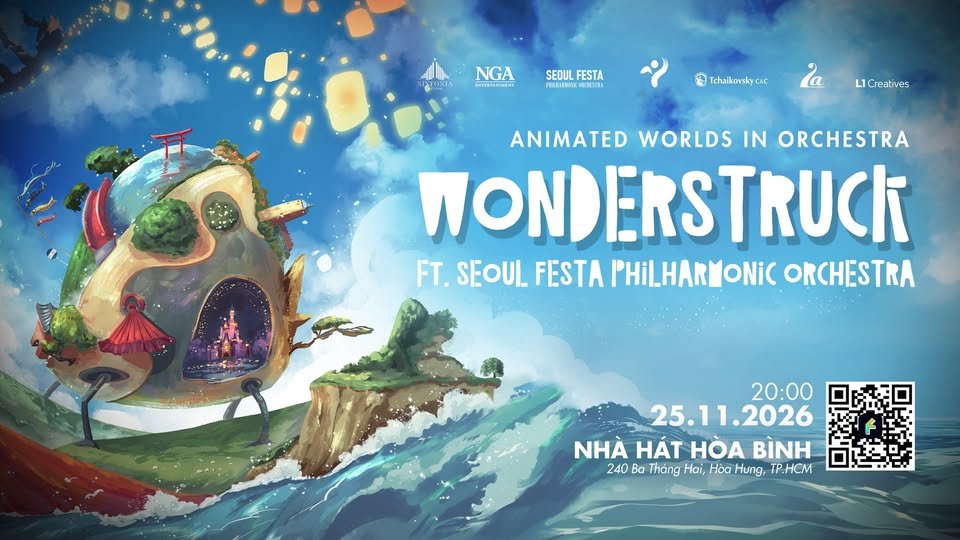
The announcements don’t say where tickets for these evenings are sold. We found no other events for November 2026 – January 2027, so keep an eye on announcements from organizers and ticketing platforms.
Tickets, hours and facilities
| Hours | no regular visiting hours: the theater opens for events |
| Program | our sources name no permanent repertoire; the 2025–2026 concerts covered by the press were held in the evening |
| Tickets | from the event organizer, and for big events through ticketing platforms: for MAMA 2017 the only official seller was Ticketbox (Tuổi Trẻ, 2017); for “Eugene Onegin,” Ticketbox, Ticketmelon, MetaTicket and TicketVN (Báo Văn hóa, 2026); each event has its own price, and prices change; our sources mention no box office, website or official page of the theater itself |
| Free | at Tết 2026 the front courtyard with its festive decorations was open for strolling and photos (Người Lao Động) |
| Facilities | an elevator to the upper floors, new restrooms, evacuation plans on every floor (Znews, 2025) |
| Parking | in 2018 the courtyard served as the parking lot (Nhà Đầu tư); since the renovation there is a plaza in front of the theater, and our sources don’t say where to leave a car or motorbike now |
| Rules, language | our sources say nothing about rules for the audience (children, photography), a coat check or the language of the programs — check with the event organizer |
Prices and hours change — check before you go.
Tip: buy tickets early. Tickets for high-profile events go in minutes: for MAMA 2017, in two (see the introduction); for Phùng Khánh Linh’s concerts in March 2026, in ten (SGGP).
What to see nearby
Distances and times are our measurements of November 2, 2026, along OpenStreetMap routes (OSRM) from the theater building, on foot.
- FITO Museum of Traditional Vietnamese Medicine (≈770 m, about 2,500 ft / 10 min) — a private museum of Vietnamese folk medicine in the same ward of Hòa Hưng, opened in 2007; its collection holds more than 3,000 objects.
- Thống Nhất Stadium (≈2.1 km, 1.3 mi / 28 min) — a stadium built in 1929 and opened in 1931; under reconstruction until 2027.
- Lê Thị Riêng Park (≈2.3 km, 1.4 mi / 31 min) — a large park in former District 10; in 2026 a metro station is under construction on part of its grounds.
- Phú Thọ Indoor Stadium (Nhà thi đấu Phú Thọ) (≈2.5 km, 1.6 mi / 34 min) — an indoor arena built for the 2003 Southeast Asian Games; it also hosts concerts.
- Phú Thọ Circus and Multi-Purpose Performance Theater (≈2.6 km, 1.6 mi / 35 min; by car ≈3.1 km, 1.9 mi / 4 min) — the city’s new 2,000-seat circus, where water floods the ring.
- Bến Thành Market — the city center (for the distance, see “Where it is and how to get there”).
The Hòa Bình Theatre is part of our guide to Ho Chi Minh City.
What to see
The main hall and stage
Since the renovation the main hall has 2,000 seats — so reads the caption to a photo of the hall in Người Lao Động (2025); Znews gives the capacity as “more than 2,000.” The seats are on two levels, lower and upper. During the renovation they were replaced entirely, and with them the floor tiles, the LED lighting, the sound system and the stage lighting. A wide aisle paved with patterned tiles and lit by bright LEDs leads up to the stage (Znews, 2025). The wooden acoustic wall panels and the plywood and plaster ceilings were also redone (Dân trí; Người Lao Động, 2025). The corridor railings and the stairs in the seating area, however, were kept as they were: the rusty paint was simply scraped off and they were repainted (Người Lao Động, 2025).
According to VnExpress (2018), the stage here is wider and deeper than in the city’s other theaters, which allows for large-scale sets. Người Lao Động said much the same in 2010, calling Hòa Bình “nhà hát duy nhất tại TPHCM, thậm chí trong cả nước” — “the only theater in Ho Chi Minh City, and even in the whole country,” with a stage “đủ rộng và sâu để thiết kế nên một sân khấu hoành tráng” — “wide and deep enough for a grand stage design.”
Before the renovation the hall held more people, but exactly how many changed over the years. Pieced together from the sources, the version runs like this: 2,500 seats at the opening in 1985, according to Trần Vương Thạch, director of the city’s symphony and ballet theater, speaking in 2018 (Pháp Luật TP HCM); 2,035 after seats were installed in 2005 (Vietnamese Wikipedia only, with no source cited); about 2,000 after the 2024–2025 renovation. The middle figure is in doubt: even after 2005 the press wrote of “dưới 2.500” — “fewer than 2,500” — seats (Người Lao Động, 2007) and of “gần 2.500” — “nearly 2,500” (Tuổi Trẻ, 2017; VnExpress, 2018). For other figures, see “What we don’t know.”
Facade, foyer and plaza
Znews (2025) writes that the theater “từng trải qua nhiều lần trùng tu nhưng vẫn giữ lại những nét riêng về mặt kiến trúc, kết cấu, hoa văn, màu sắc chủ đạo” — “has been renovated many times but has kept its own character: its architecture, structure, ornament and main colors.”
- The relief. A large bas-relief faces the main entrance, in front of the foyer. During the renovation it was scraped, cleaned and repainted, and, according to Znews, it became a striking highlight of the refurbished theater (Dân trí; Znews, 2025).
- The foyer doors. The damaged frames were replaced, and the patterned wrought-iron grilles were remade to their original design and glazed (Dân trí, 2025).
- The original volume. Later additions were demolished so that they would no longer distort the building’s architecture (Người Lao Động, 2025). The first (ground) floor was laid with new tiles, the second floor with stone (Dân trí, 2025).
- The small halls. Under the renovation project, the reception room, the small performance hall and the multipurpose hall are to get movable stepped seating that folds away (Dân trí; Người Lao Động, 2025).
- The foyer. In 2018 it displayed relics from the theater’s first years and a handwritten message from the singer Hồng Nhung (Nhà Đầu tư). What is on display since the renovation, our sources don’t say.
- The plaza. In front of the theater is a new plaza paved with decorative stone. The approach roads were resurfaced with asphalt, the fence was rebuilt and trees were planted (Dân trí; Người Lao Động, 2025).
What is staged here
VnExpress (2018) lists among the shows the theater has hosted concerts by international stars, live shows by Vietnamese singers, circus, drama, cải lương (southern musical drama) and award ceremonies. Examples:
- Live shows. On the evening of October 1, 2023, the first concert of the series “Trái tim phụ nữ – Trái tim ngọc trai” (“A Woman’s Heart — A Pearl Heart”) took place here. Its main star was the singer Hương Lan, and more than 2,000 people came (Người Lao Động, 2023). For the 2025–2026 concerts, see “What’s on and when.”
- Ceremonies. On the evening of January 24, 2024, the 26th Làn Sóng Xanh awards, for 2023, were presented here; the ceremony was organized jointly by the city’s radio station VOH (Đài Tiếng nói Nhân dân TP.HCM — “Voice of the People of Ho Chi Minh City”) and Vietnam Event Group (SGGP, 2024). According to a Tuổi Trẻ preview, more than 100 stars were expected on the red carpet.
- Circus. From May 28 to June 3, 2023, around International Children’s Day, Hanoi’s Central Circus (Liên đoàn Xiếc Việt Nam – Rạp xiếc Trung ương, “Vietnam Circus Federation — Central Circus”), with the theater’s support, scheduled 22 back-to-back performances here, morning, afternoon and evening: animal acts, aerial flying, a “giant wheel,” springboards (SGGP, 2023, announcement). From the 1st to the 9th day of Tết 2024, a holiday program was performed by 26 artists from the North — teachers and students of the Vietnam Circus and Variety Arts School (Trường Trung cấp Nghệ thuật Xiếc và Tạp kỹ Việt Nam). The organizer, Tuấn Giang, said that the year before he had also put on a Tết program at this theater, that time with performers from the Vietnam Circus Federation (Tuổi Trẻ, 2024).
- Cải lương. At the 2018 National Cải lương Festival (opened September 5; 25 theaters and troupes, 32 productions), the main venue was the stage of the Long An provincial cải lương troupe, while the organizers assigned Ho Chi Minh City’s non-state troupes to this theater, the Trần Hữu Trang Cải lương Theatre and the Công Nhân (“Workers’”) hall (SGGP, 2018).
- Musicals. On July 12 and 13, 2024, the Broadway musical “Shrek: On National Tour,” staged under a purchased license, played here for the first time, and young audiences gave it a warm welcome (Người Lao Động, 2024). For the multimedia show “Dế Mèn ngoại truyện” (2026), see “What’s on and when.”
Modern history
The theater the district built itself (1983–1985)
How it all began was told in 2010, for the theater’s 25th anniversary, by Người Lao Động in an article titled “25 năm oằn vai” (“25 Years of Shoulders Bent Under the Load”). When the theater was conceived, the paper writes, life in the city and in District 10 was hard: residents and the authorities alike worried more about putting food on the table than about the life of the spirit. The decision was made by the chairman of the district People’s Committee (UBND — Ủy ban nhân dân, the local executive authority):
“Nhưng chính quyền quận 10 lúc đó đã nghĩ khác: Đời sống tinh thần cũng quan trọng không kém. Người được mọi người nhắc đến với cái tên thân thương ‘Bác Năm Thái’, lúc đó là chủ tịch UBND quận 10, đã đưa ra quyết sách xây nhà hát để phục vụ đời sống tinh thần người dân trong quận.” “But the District 10 authorities of the day thought differently: the life of the spirit matters just as much. The man everyone remembers by the affectionate name of ‘Uncle Năm Thái,’ then chairman of the District 10 People’s Committee, made the decision to build a theater to serve the spiritual life of the district’s residents.” Người Lao Động, April 26, 2010
The paper doesn’t give Uncle Năm Thái’s full name. At first the plan was a small hall modeled on the theater of Hóc Môn district. But after going to see it, the district decided to build something “bề thế hơn” — “more imposing”: not only for its own residents but for the whole city. The city approved the idea but provided no money:
“UBND TPHCM chấp thuận chủ trương nhưng giao cho địa phương tự lo kinh phí xây dựng. UBND quận 10 phải vận động mọi nguồn tài chính đóng góp của doanh nghiệp và người dân trong quận để xây dựng cho được công trình này.” “The Ho Chi Minh City People’s Committee approved the plan but left it to the locality to find the construction funds itself. The District 10 People’s Committee had to rally every possible contribution from the district’s businesses and residents to get the building built.” Người Lao Động, April 26, 2010
Our sources don’t say how much was raised or who built the theater. It opened on April 26, 1985, for the 10th anniversary of the liberation of the South and national reunification (SGGP, 2025; Người Lao Động, 2010). Forty years later Người Lao Động (2025) would call it “tài sản đóng góp quý báu của nhân dân và các thế hệ lãnh đạo TPHCM và quận 10 trước đây” — “a precious asset contributed by the people and by generations of leaders of Ho Chi Minh City and the former District 10,” and Dân trí (2025) one of Ho Chi Minh City’s important cultural symbols, one that marked a new stage of development after the country’s reunification in 1975. In 2023 Trần Thế Thuận, director of the city’s Department of Culture and Sports, placed it on a short list:
“…từ sau khi giải phóng miền nam, thống nhất đất nước đến nay, thành phố có ba công trình văn hóa được xây dựng như: Nhà hát Bến Thành, Nhà hát Hòa Bình, Nhà hát Cải lương Trần Hữu Trang.” “…since the liberation of the South and national reunification, the city has built three cultural venues: the Bến Thành Theatre, the Hòa Bình Theatre and the Trần Hữu Trang Cải lương Theatre.” Trần Thế Thuận, director of the Ho Chi Minh City Department of Culture and Sports, as reported by Nhân Dân, May 5, 2023
The other two theaters on that list are the Bến Thành Theatre and the Trần Hữu Trang Cải lương Theatre.
Huỳnh Tấn Phát’s sketch
The theater was designed by the architects Huỳnh Tấn Phát and Nguyễn Thành Thế (SGGP, 2025); according to Wikipedia, from 1983 onward the two also took part in directing construction. Dân trí (2025) names Huỳnh Tấn Phát alone as its author — and, according to the journal of the Vietnam Association of Architects, he found the idea for the building himself:
“Ông cũng là người trực tiếp cầm bút phác thảo đồ án kiến trúc Nhà hát Hòa Bình (Q.10, TPHCM)…” “He was also the one who personally took up the pen to sketch the architectural design of the Hòa Bình Theatre (District 10, Ho Chi Minh City)…” Architect Phạm Thanh Tùng, “KTS Huỳnh Tấn Phát: Nhà cách mạng – Nhà văn hóa” (“Architect Huỳnh Tấn Phát: Revolutionary and Man of Culture”), Tạp chí Kiến trúc (“Architecture Magazine”), 2018
The journal also published the sketch itself, with the caption “KTS Huỳnh Tấn Phát đã trực tiếp sơ phác tìm ý tưởng cho Công trình Nhà hát Hòa Bình (Quận 10, TPHCM)” — “Architect Huỳnh Tấn Phát personally made the first rough sketches, searching for the idea of the Hòa Bình Theatre (District 10, Ho Chi Minh City).” The sources disagree on the years of the design. Vietnamese Wikipedia’s article on the theater and Nhân Dân’s special feature on Huỳnh Tấn Phát (2025) give 1983. Wikipedia’s article on the architect himself gives 1978–1985, “có sự hợp tác của Kiến trúc sư Nguyễn Thành Thế” — “in collaboration with the architect Nguyễn Thành Thế.”
Huỳnh Tấn Phát (1913–1989) was already designing buildings in colonial Saigon. In September 1938 he graduated top of his class in architecture at the Indochina College of Fine Arts (Trường Cao đẳng Mỹ thuật Đông Dương) (Nhân Dân, 2023), and in 1940 he opened his own design office in Saigon and won first prize in the architectural competition for the Indochina Fair and Exhibition in the Ông Thượng Garden, today’s Tao Đàn Park (Tạp chí Kiến trúc, 2018).
The architect went on to become a statesman. According to the official biography read out in 2023, on the 110th anniversary of his birth, by Prime Minister Phạm Minh Chính, Huỳnh Tấn Phát was deputy prime minister in 1977–1982, in charge of urban planning and heading the State Commission for Capital Construction; as an architect he was also entrusted with reviewing key national projects — the Hòa Bình hydropower plant, the passenger terminal at Nội Bài International Airport, the master plan for Hanoi and the Ho Chi Minh Museum. In the years the theater was being built, the former deputy prime minister was vice chairman of the Council of State (from June 1982) and chairman of the Central Committee of the Vietnam Fatherland Front (1982–1989) (Nhân Dân, 2023), and in 1983, at the 3rd Congress of the Vietnam Association of Architects — the first congress of architects of the reunified country — he was elected the association’s president (Tạp chí Kiến trúc, 2018). SGGP (2025) calls him “the late deputy prime minister,” after the post he once held. According to Nhân Dân (2025) and Vietnamese Wikipedia, he also designed the flag of the National Liberation Front of South Vietnam (Mặt trận Dân tộc Giải phóng miền Nam Việt Nam): half red, half blue, with a yellow star.
A district hall as the city’s main stage (1985–2010)
In its early years the theater hosted cultural programs, official receptions and meetings with foreign guests. In hard times it even served as a “field cinema” (rạp chiếu phim dã chiến), so that city residents would have somewhere to go for entertainment (SGGP, 2025). The films stayed for a long time. In 2007 Người Lao Động (reprinted by Tuổi Trẻ Online) wrote that every day from 16:00, unless a show was scheduled that evening, a screen was lowered in the hall and films were shown, so performers could use the stage for rehearsals only until 16:00.
According to the same article, only three halls in the city were then called theaters: Hòa Bình, the Saigon Opera House (Municipal Theatre), with about 500 seats, and the Bến Thành Theatre in the District 1 Cultural Center. The Lan Anh Music Center (Trung tâm Ca nhạc Lan Anh) held more than 3,000 people, but it too was a sports hall, and shows for 4,000 people or more went to sports arenas. The Hòa Bình Theatre, the article said, was “điểm sáng hiện nay mà giới tổ chức biểu diễn thuộc hạng có máu mặt trong nước chọn lựa” — “today’s bright spot, the choice of the country’s heavyweight promoters” (Người Lao Động, 2007).
Twenty-five years after the opening, Người Lao Động took stock. The district hall, the paper wrote, was “oằn mình gánh vác vai trò của một nhà hát trung tâm ở một TP lớn nhất nước” — “bending under the weight of the role of central theater in the country’s largest city.”
“25 năm qua, trong tâm tưởng của người dân TPHCM và giới văn nghệ sĩ hoạt động biểu diễn ít ai còn nghĩ Nhà hát Hòa Bình là nhà hát cấp quận, bởi tầm vóc của nó đã vượt ra ngoài ranh giới hành chính của một quận, trở thành một địa chỉ, điểm hẹn tin tưởng cho giới làm nghệ thuật biểu diễn chuyên nghiệp và công chúng yêu nghệ thuật của toàn TP.” “After 25 years, few city residents or performing artists still think of the Hòa Bình Theatre as a district theater: its stature has outgrown the administrative boundaries of a single district, and it has become an address, a trusted meeting place for professional performers and art-loving audiences from all over the city.” Người Lao Động, April 26, 2010
One section of that article is headed “Nơi bảo chứng chất lượng chương trình” — “The place that vouches for a program’s quality.” The paper explains: “Giới nghệ sĩ thường bảo nhau chỉ cần nhà tổ chức cho biết chương trình diễn ra ở đâu thì họ sẽ biết phần nào chất lượng và mức độ đầu tư của chương trình đó” — “Artists often tell one another that once the organizer says where a program will be held, they already have some idea of its quality and of how much has been invested in it.”
Programs born at the theater (from the 1990s)
“Duyên dáng Việt Nam” (“Charming Vietnam”) is a charity gala of the newspaper Thanh Niên. First held in 1994, it became “chương trình nghệ thuật danh tiếng hàng đầu thập niên 1990-2000” — “one of the most celebrated arts programs of the 1990s and 2000s” — and traveled to Australia, Singapore and the United Kingdom (Pháp Luật TP HCM, 2018); the 20th edition, for example, was staged on March 4, 2008, at Central Hall Westminster in London (Báo Quốc tế, 2008). The money raised went to the Nguyễn Thái Bình scholarships for students:
“Dozens of thousands of disadvantaged students have received Nguyen Thai Binh scholarships with funds raised from the charity event.” Viet Nam News, December 28, 2013
At home the program kept coming back to Hòa Bình. According to Tuổi Trẻ’s reports, the 15th edition was staged here in December 2005, the 19th in January 2008, the 21st on December 31, 2009, and the 25th in December 2011. The 26th edition, with more than 100 artists, beauty queens and models, was announced here for January 10 and 11, 2014 (Viet Nam News, 2013, announcement), and according to Znews’s report it was staged at this theater under the theme “Thương quá Việt Nam” (“Vietnam, So Dear to Us”): hip-hop and beatboxing over the music of the Vietnamese zither (đàn tranh), and a finale in which Mỹ Tâm sang “Tiếng Việt” (“The Vietnamese Language”), a song the music director Đức Trí wrote especially for this edition (Znews, January 11, 2014). The 30th, “Bốn mùa và em” (“The Four Seasons and You”), was scheduled here for January 5, 2019, staged by the director and choreographer Binh Hùng and featuring the “Hoa xuân” (“Spring Flowers”) collection of áo dài (the Vietnamese long dress) by the beauty queen Ngọc Hân; according to the announcement, no tickets were sold — 2,000 invitations were to be sent out through the program’s partners (Pháp Luật TP HCM, 2018, announcement). The evening did take place on January 5 in Ho Chi Minh City, but Vietnamnet’s report (2019) doesn’t name the hall: the Hòa Bình Theatre appears only in the announcements, including one in Viet Nam News three days before the show (2019).
“Bài ca không quên” (“The Unforgettable Song”) is a program of revolutionary songs. It takes its name from the composer Phạm Minh Tuấn’s song “Bài ca không quên” (1981), written for the film of the same name; Cẩm Vân was the first to sing it (Báo Pháp luật, 2011). Our sources don’t give the year the program began. The singer Đức Tuấn, winner of the 2000 “Tiếng hát Truyền hình TP HCM” (“Ho Chi Minh City Television Singing Contest”), said in 2015 that “14 years ago” he had been invited to sing in “Bài ca không quên” at the Hòa Bình Theatre — so the program was already running here around 2001 (VnExpress, 2015). And on December 5, 2010, he sang here with Cẩm Vân at a gala for the contest’s 20th anniversary (VnExpress, 2010).
For the 40th anniversary of the liberation of the South and national reunification, Đức Tuấn and the theater brought the program’s founders back together and prepared a new version for the evening of April 22, 2015, with free admission. According to the announcement, the stage was to tell the story of the resistance war’s journey to the day of national reunification, in songs running from “Lời người ra đi” (“Words of the One Who Leaves”) to “Tổ quốc gọi tên mình” (“The Homeland Calls My Name”), and People’s Artist Thế Anh, Meritorious Artist Phi Điểu and the poet Nguyễn Duy were to appear on stage as witnesses of history. The director Tất My Loan said that a single piece of red cloth would be the only prop throughout, with just a handful of dancers: “Tiền tôi mua sách đọc tài liệu để tái hiện lịch sử một cách chân thật còn hơn tiền công tôi nhận được khi làm chương trình” — “I spent more on books and research to recreate history truthfully than I was paid for making the program” (VnExpress, 2015, announcement).
“Tuổi thần tiên” (“The Fairy-Tale Years”) is a children’s program, also born at this theater (Người Lao Động, 2025). In the 1990s it was a genuine hit with children, staged in both Ho Chi Minh City and Hanoi, and according to the English-language press in 2013 no other show at the theater has matched its ticket-sales record since (VietNamNet, 2013). Sources disagree on when it began. According to Brands Vietnam (2015, a commercial portal), it ran every summer from 1993. Yet when the program returned in 2013, the theater explained the revival this way:
“We decided to revive the program to mark the 20th anniversary of the last performance (June 1, 1993-2013)…” Director of the Hòa Bình Theatre — VietNamNet, June 12, 2013
In the summer of 2013, “Tuổi thần tiên” played here every Sunday from June 16 to August 18. It was written and directed by Tất My Loan and Tất My Ly, with music by Đức Trí (VietNamNet, 2013).
Where careers began: directors and singers (1993–2017)
In 2010 Người Lao Động wrote about the people the theater helped make a name:
“Cũng trên sân khấu Nhà hát Hòa Bình, đã có một đội ngũ sáng tạo nghệ thuật xuất hiện và làm nên tên tuổi: đạo diễn Tất Mi Loan, Đoàn Khoa, Huỳnh Phúc Điền, Phạm Hoàng Nam...” “It was on the stage of the Hòa Bình Theatre, too, that a whole team of creative artists emerged and made their names: the directors Tất Mi Loan, Đoàn Khoa, Huỳnh Phúc Điền, Phạm Hoàng Nam…” Người Lao Động, April 26, 2010 (other sources spell the director’s name Tất My Loan)
The same article recorded the words of the singer Phương Thanh: “Không có Nhà hát Hòa Bình nâng đỡ trong những bước chân đầu tiên thì khó có được một ca sĩ Phương Thanh nổi tiếng sau này” — “Without the Hòa Bình Theatre to support my first steps, there would hardly have been a famous singer Phương Thanh later on.” In November 2026 she is back on the theater’s program (see “What’s on and when”).
The singer Cẩm Ly first stepped onto a professional stage here too, in 1993, and she marked 20 years on stage here on November 1 and 2, 2013, at 20:00, with the fourth live show of her series “Tự tình quê hương” (“Heart to Heart with the Homeland”) (Znews; Thanh Niên, 2013, announcements). In January 2023 she received an achievement award on this same stage (see “A stage for awards and a film festival”).
Three live shows by the singer Quang Dũng are associated with the theater. According to Wikipedia, his first live show, “Chuyện của tôi” (“My Story”), took place here in 2006, and in 2008 came “Love story,” marking 10 years on stage. The press doesn’t confirm the venue of those two evenings: Báo Quốc tế (2013) merely mentions his live show “Chuyện tình” (“Love Story”) from about five years earlier, without saying where it was held. He did, however, celebrate 20 years here on March 18, 2017, with the live show “Giấc mơ mang tên mình” (“A Dream That Bears My Name”):
“Tối 18-3, không gian gần 2.500 chỗ ngồi của Nhà hát Hòa Bình (TP.HCM) không còn một chỗ trống trong liveshow Giấc mơ mang tên mình kỷ niệm 20 năm ca hát của ca sĩ Quang Dũng.” “On the evening of March 18, not one of the nearly 2,500 seats at the Hòa Bình Theatre (Ho Chi Minh City) was empty for ‘Giấc mơ mang tên mình,’ the live show marking the singer Quang Dũng’s 20 years of singing.” Tuổi Trẻ, March 19, 2017
International tours (1994–2015)
VnExpress (2018) names Bryan Adams, John Denver and Air Supply among those who have sung on this stage, but gives no dates. The foreign press places Bryan Adams’s concert in Vietnam in January 1994: in March 1994 the American Christian Science Monitor wrote that he had recently performed there to thousands of fans, and English Wikipedia, citing Entertainment Weekly, gives the date as January 19. The Irish music magazine Hot Press adds that the concert took place in Ho Chi Minh City before an audience of 2,500. But none of these sources says in which hall it was held.
In 2002 a troupe from China’s Shaolin Monastery performed here. The tour was organized by the newspaper Sài Gòn Giải Phóng and broadcast live on the city’s HTV7 channel, and the show was directed by Huỳnh Phú (SGGP, 2024).
On November 15, 2015, the theater hosted the World Police Music Festival (Nhạc hội Cảnh sát thế giới), with police bands from Osaka, New York, Tokyo, Singapore and Vietnam. The audience of several hundred applauded longest for the northern folk-flavored song “Bèo dạt mây trôi” (“Duckweed Drifts, Clouds Float”), played by the Tokyo police band, and for the Singaporeans’ “Hello Việt Nam” (Pháp Luật TP HCM, 2015).
September 18, 2015. A concert by the two-time Grammy winner Peabo Bryson was announced here as part of the “In The Spotlight” concert series. Uyên Linh, Văn Mai Hương and Dương Hoàng Yến were to sing duets with him (Báo Pháp luật, announcement).
A stage for awards and a film festival (2008–2024)
The Mai Vàng (“Golden Apricot Blossom”) awards of Người Lao Động — for music, theater, film and television — have been presented here more than once. The paper captioned a photo of the stage at the Mai Vàng 2008 ceremony “tại Nhà hát Hòa Bình” — “at the Hòa Bình Theatre” (Người Lao Động, 2010), and on the evening of January 22, 2011, the Mai Vàng awards for 2010 were presented here: 15 awards and, for the first time, the title “Ca sĩ của năm” (“Singer of the Year”) for the ten singers with the most readers’ votes (Thanh tra, 2011).
The Vietnam Cinema Association’s “Cánh Diều Vàng 2007” (“Golden Kite”) film awards ceremony was scheduled here for March 9, 2008, with a live broadcast on the national channel VTV3. “Lần đầu tiên, buổi lễ trao giải được tổ chức tại Nhà hát Hòa Bình, thành phố Hồ Chí Minh” — “For the first time, the awards ceremony is being held at the Hòa Bình Theatre in Ho Chi Minh City,” Znews wrote in its preview (2008), and three days before the ceremony SGGP also named the Hòa Bình Theatre as the venue. The ceremony took place on the evening of March 9. The jury withheld the top Golden Kite for a feature film, and two Silver Kites went to “Trái tim bé bỏng” (“Little Heart”), directed by Nguyễn Thanh Vân, and “Nụ hôn thần chết” (“Kiss of Death”), directed by Nguyễn Quang Dũng (Znews, report, March 10, 2008); neither that report nor the same-day report in Báo Quốc tế names the hall.
On December 1, 2015, the 19th Vietnam Film Festival (Liên hoan phim Việt Nam), organized by the Ministry of Culture, Sports and Tourism and the Ho Chi Minh City People’s Committee, opened here; the opening ceremony at 20:00 was broadcast live on VTV1 and HTV9. The festival films were screened from December 1 to 5 in the city’s movie theaters — in four cinema chains according to the plan (Đại Đoàn Kết, 2015), in five multiplexes according to the final report. On the evening of December 5 the closing and awards ceremony was held at Hòa Bình once again: the Golden Lotus (Bông Sen Vàng) for a feature film and the best director award went to “Tôi thấy hoa vàng trên cỏ xanh” (“Yellow Flowers on the Green Grass”), directed by Victor Vũ (SGGP, December 6, 2015, report).
The Làn Sóng Xanh music awards have moved between venues: the 14th ceremony, for 2011, was scheduled at the Lan Anh Music Center (Tuổi Trẻ, 2011), and the 23rd, for 2020, was held in the VOH – Music One hall of the city radio station (VOH, 2021). The 25th, for 2022, took place here on the evening of January 5, 2023. Vương Quyền, deputy director of the city’s radio station VOH, hoped it would be “bước khởi đầu tốt đẹp cho một chặng đường mới của âm nhạc sau đại dịch COVID-19” — “a fine start to a new road for music after the COVID-19 pandemic.” The cải lương star People’s Artist Bạch Tuyết received her first trophy from the awards here, and the “Thành tựu” (“Achievement”) award went to Đan Trường and Cẩm Ly (Pháp Luật TP HCM, 2023). A year later the 26th ceremony was held here too (see “What is staged here”), while “Làn Sóng Xanh 2024,” in January 2025, took place at the Nguyễn Du indoor arena (VOH, 2025).
On the evening of January 10, 2024, the theater also hosted the “Ngôi sao xanh” (“Green Star”) film and television awards, first presented in 2013; the host and director Trấn Thành and the actress Việt Hương walked the red carpet (Báo Quốc tế, 2024).
“A Story of Peace” at the “Peace” theater (2014–2015)
On the evening of August 28, 2014, the “Peace” theater hosted the concert “Câu chuyện hòa bình” (“A Story of Peace”). More than 2,000 people came. Hồng Nhung opened the evening with Phạm Minh Tuấn’s song “Đất nước” (“Our Country”), and the program’s three parts were titled “Yêu quê hương,” “Yêu con người” and “Yêu hòa bình” — “Love the Homeland,” “Love People,” “Love Peace.” The evening raised 6.1 billion ₫ for the program “Chung sức bảo vệ chủ quyền biển Đông” (“Joining Hands to Protect Sovereignty in the East Sea”) (VnExpress, 2014).
April 30, 2015. For the 40th anniversary of the liberation of the South and national reunification, a concert of patriotic songs was announced: “Sắc Âm Hòa Nhịp Hùng Ca,” which Viet Nam News rendered as “Harmony of Colours & Sounds.” The audience was promised a meeting with witnesses of the events of April 30, 1975: the artist Phạm Thanh Tâm, who sketched the first tank entering the Independence Palace (Dinh Độc Lập), and the photojournalist Hoàng Văn Cường, who took the unforgettable picture of a tank entering the palace (Viet Nam News, announcement). Eight days earlier, “Bài ca không quên” had returned to this stage (see “Programs born at the theater”).
MAMA 2017 and the Korean wave (2017–2024)
MAMA 2017. In 2017 the awards, under the theme “Giao Thoa” (“Intersection”), were held at three venues, and Ho Chi Minh City came first: the Hòa Bình Theatre (November 25), then Yokohama in Japan (Yokohama Arena, November 29) and Hong Kong (China; AsiaWorld-Expo, December 1) (Tuổi Trẻ, 2017). In Ho Chi Minh City more than 20 Vietnamese artists took the stage in various roles, along with Korea’s Samuel, Seventeen and Wanna One. The Vietnamese singer Tóc Tiên received the award for Best Asian Artist in Vietnam, her first at a major music awards. Wanna One won as the year’s “promising artist” and performed “Energetic” and “Burn it up”: the hall, SGGP wrote, “như muốn nổ tung” — “seemed ready to explode.” Seventeen were named the “world’s favorite artist.” The award for a “breakthrough” Vietnamese artist went to Sơn Tùng M-TP: he could not attend and thanked the audience from the screen (SGGP, 2017).
K-pop every month. In the summer of 2018 the theater saw the launch of V Heartbeat Live, a monthly show of the streaming service V Live, owned by the Korean company Naver, which linked the music of Vietnam and Korea. The first edition was announced for July 8, 2018, at this theater, with Hà Anh Tuấn, Noo Phước Thịnh, Vũ Cát Tường, Chi Pu and other Vietnamese stars — and the Korean group WINNER (SGGP, 2018, announcement). Mực Tím (2021) dates the concerts from August 2018, so the sources disagree on the month the series began. According to Tuổi Trẻ’s youth publication Mực Tím, the concerts were held on the last Friday of each month, each with at least one artist from Korea: Winner, EXID, Momoland, Mamamoo, Red Velvet, Super Junior, NU'EST, ITZY and others. In August 2019 a V Heartbeat Live evening with the Korean group CIX took place at this same theater (Znews, 2019). Because of the COVID-19 pandemic, only Vietnamese artists performed during the show’s last year; its final evening was the Year End Party in January 2021, and in May the show officially said goodbye to its fans (Mực Tím, 2021). On the evening of September 22, 2024, Park Bom of the group 2NE1 gave a fan concert here, the “2024 Park Bom Special Fan Concert in Vietnam” (Tuổi Trẻ, 2024).
Renovation and return to the program (2023–2026)
The major renovation project got moving in August 2023, when the city ordered it reviewed as a public investment, with an eye to the theater’s 40th anniversary and the 50th anniversary of the liberation of the South (Người Lao Động, 2023). Work began on the morning of December 22, 2024; District 10 timed it to the 50th anniversary of the liberation of the South and national reunification. The estimate was nearly 270 billion ₫ from the city budget, with a 9-month schedule. The first phase, covering the facade, the auditorium and the stage, was to be largely finished by April 20, 2025. The renovation was meant to repair the wear on the structures and equipment and to update the interiors, the grounds and the technical systems for many kinds of performance (SGGP, 2024). On the evening of April 26, 2025, the district celebrated the theater’s 40th anniversary and presented a project called “Sân khấu Du lịch” (“Tourism Stage”); the newspaper gave no details (SGGP, 2025).
On July 1, 2025, Ho Chi Minh City abolished its districts, and the theater found itself in Hòa Hưng Ward. By December 2025, after almost a year of work, the main tasks were done and the building went into trial operation. The renovation cost more than 270 billion ₫ (Người Lao Động; Dân trí, 2025). Znews gives a figure of about 275 billion ₫ and writes that the work had been planned to take 2 years but was finished in one (when work began, SGGP wrote of 9 months); back in April 2025 the portal of the city Party Committee had put it at “gần 275 tỷ đồng” — “nearly 275 billion ₫.” Beyond the visible changes (see “What to see”), the theater gained an elevator, an underground water reservoir for firefighting, a wastewater treatment plant and a fire pump station. The wiring and lighting were redone, the drainage was redesigned and rebuilt, and the fire protection and lightning protection systems were designed in line with the recommendations of the Ho Chi Minh City Police fire prevention and rescue division (Người Lao Động; Dân trí, 2025).
Hòa Hưng Ward scheduled the official opening for December 22, 2025, exactly one year after work began (Người Lao Động; Znews, 2025). We found no confirmation that it took place: on December 27 Dân trí was still writing about trial operation, during which arts programs were already being staged. Judging by the dates, these included the “Nhã Concert” of December 20 (see “What’s on and when”).
Since the renovation the hall has hosted more than the concerts on its public calendar. On the evening of July 25, 2026, it staged “Musique de Salon 21: Radio – Tự tình quê hương” (French and Vietnamese for “Salon Music 21: Radio — Heart to Heart with the Homeland”) by the composer Đức Trí: Vietnamese songs with a live symphony orchestra (Báo Quốc tế, 2026). On the evening of August 15 the Ho Chi Minh City Committee of the Vietnam Fatherland Front and HTV television staged a 90-minute program here, “Hướng về biên giới, biển, đảo Tổ quốc” (“Facing the Homeland’s Borders, Seas and Islands”), broadcast live with link-ups to other sites, including Trường Sa Lớn Island (SGGP, 2026, announcement); it raised more than 55 billion VND in pledges (Nhân Dân, August 15, 2026). And in the summer the theater hosted graduation ceremonies of the University of Economics and Finance (UEF) (SGGP, 2026).
Reference
What we don’t know
- How many seats. There is no official figure, either for the past or since the renovation: 2,000 (a photo caption, Người Lao Động, 2025) or “more than 2,000” (Znews). For a version by year, see “The main hall and stage.” Where the figures of 2,330 (Brands Vietnam, 2015, a commercial portal) and 1,300 (Nhà Đầu tư, 2018 — probably an error) come from is unclear.
- How it was built. The full name of the district chairman known as “Uncle Năm Thái,” when the decision was made, who built the theater, how much was raised from businesses and residents, who opened it on April 26, 1985, and what was performed that evening. We have no information about the project’s co-author, the architect Nguyễn Thành Thế.
- Plot size. 9,152.2 m² (about 2.3 acres) with a building footprint of 3,668.3 m² (about 0.9 acres), according to the renovation project (Dân trí; Người Lao Động, 2025), or 16,500 m² (about 4.1 acres) (VnExpress, 2018; SGGP, 2025).
- The revolving stage. The commercial portal Brands Vietnam (2015) wrote of a revolving stage 22 m (about 72 ft) in diameter with three “faces”; we have not found this figure in the press. The reports on the renovation don’t say whether the stage survived.
- Who runs the theater since District 10 was abolished, and whether it has a box office, a website or an official page. In April 2025 the theater had its own management board (Ban Giám đốc Nhà hát Hòa Bình) — that is how photo captions from its 40th anniversary name it (SGGP, 2025). At the same celebration, Bùi Thế Hải, vice chairman of the district People’s Committee, addressed his wishes for the future to the Hòa Bình Cultural Center (Trung tâm Văn hóa Hòa Bình) (city Party Committee portal, 2025), but our sources don’t say outright whether the theater is part of that center.
- Whether it took place: the official opening on December 22, 2025. The “Eugene Onegin” tour did happen — four nights in Ho Chi Minh City (Báo Quốc tế, 2026) — but the report does not say outright that they were at this theater on October 21–24. Nor did we find a report on the November 3, 2026, concert for the Buddhist Sangha’s 45th anniversary — only the announcement (Tuổi Trẻ, 2026).
- Concerts of the 1990s. When and in which hall John Denver and Air Supply sang; whether Bryan Adams’s Vietnam concert in January 1994 was held here.
- How old the programs are. Since what year “Bài ca không quên” has been running (we know only that it was already playing here around 2001), and when “Tuổi thần tiên” began — in 1993, as Brands Vietnam writes, or earlier: according to the theater’s director (2013), June 1, 1993, was its last performance before a 20-year break.