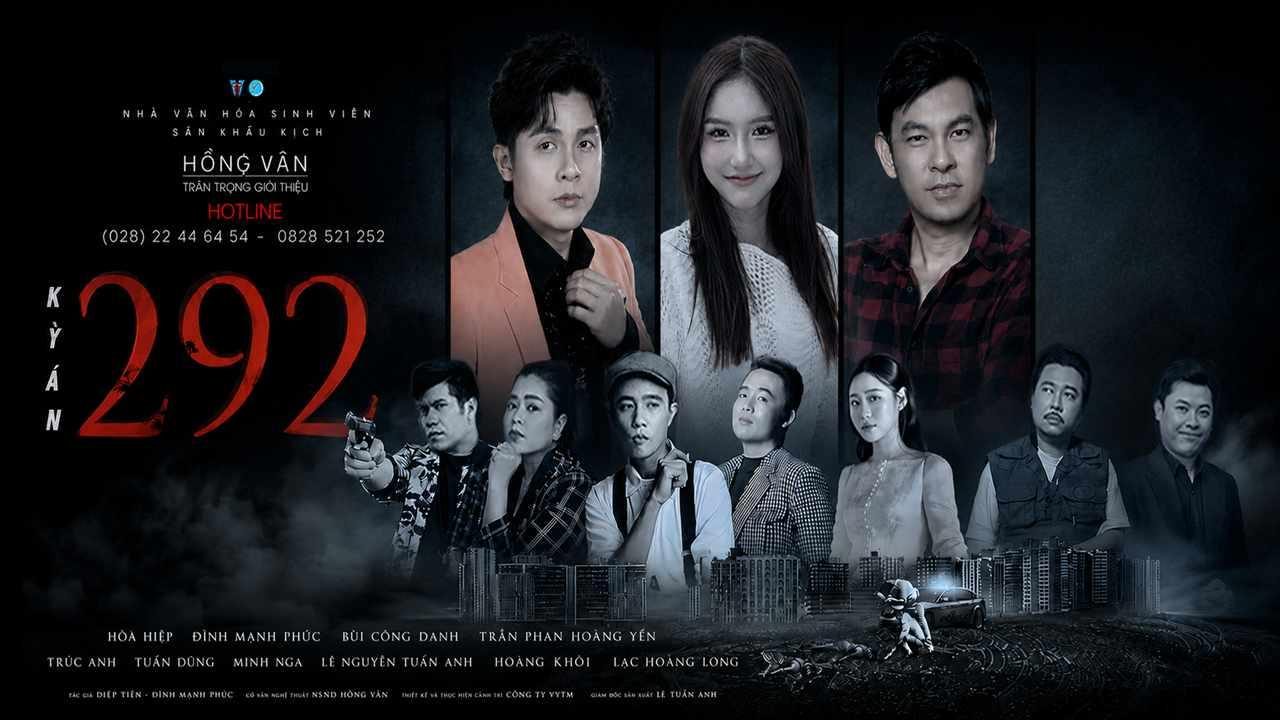
“Ước mơ: Có 1 SK của riêng mình, không phải đi thuê” — “My dream: a stage of my own (SK is short for sân khấu, ‘stage’), so I don’t have to rent one.” That is how People’s Artist Hồng Vân answered a questionnaire on her company’s official website. The company still has no building of its own. Hồng Vân opened her first stage in 2000 in a rented hall at a district cultural center on Nguyễn Văn Trỗi Street, which at the time, as she remembered it, was still narrow and not as busy as it is today. Then came the SuperBowl stage in Tân Bình District, the third floor of a shopping mall in Chợ Lớn and a student stage at a university. And since September 2023 the company has been performing in the hall of the Student Cultural House on Điện Biên Phủ Street.
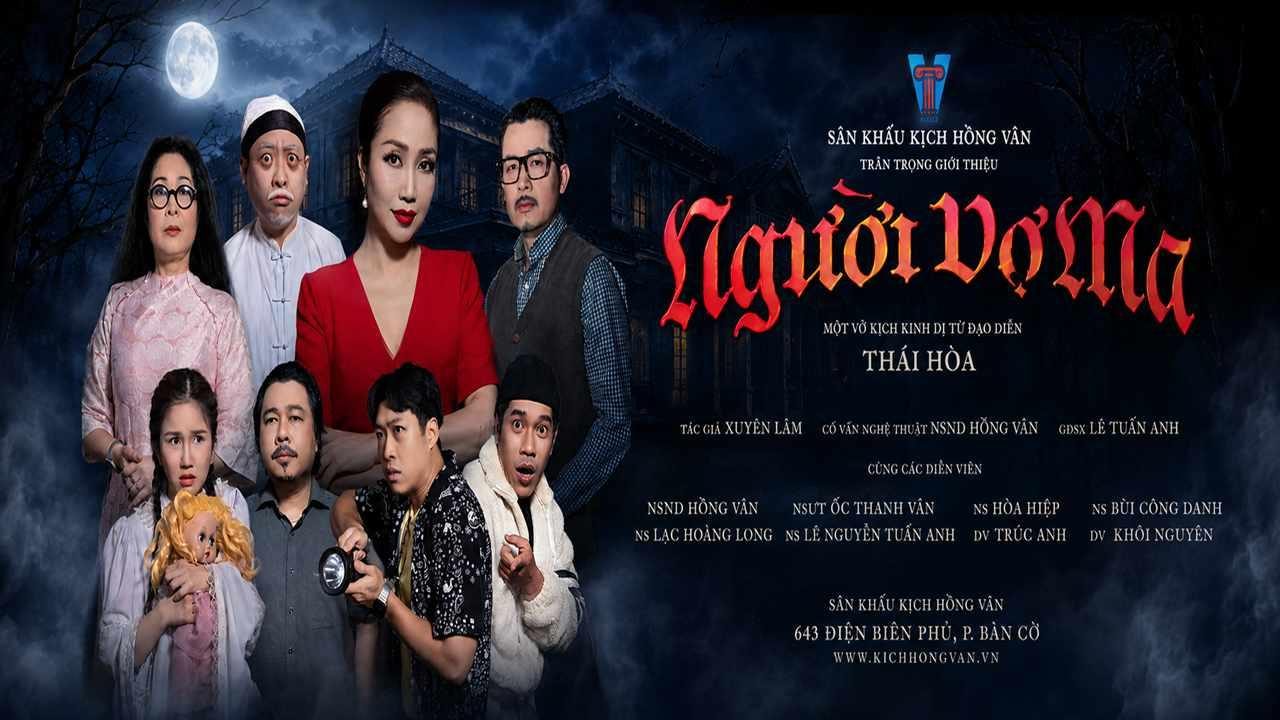
Yet it was in rented halls that a fashion was born. In the early 2000s the stage put on “Người vợ ma” (“The Ghost Wife”). The playwright had conceived it as a psychological drama, but the stage’s owner and the director added horror to it. The production has been performed several thousand times, people lined up for tickets, and in its wake a wave of theatrical horror (kịch ma, literally “ghost plays”) swept through Ho Chi Minh City. On November 29, 2026, “The Ghost Wife” is on the bill once again. There are no ghosts in it, though. The stage’s website sums up the idea of the play like this: “không có ma, chỉ có con người đối xử với nhau đôi khi còn tệ hơn ma” — “there are no ghosts, only people who sometimes treat one another even worse than ghosts.”
At a glance
A private drama stage since 2000
Hong Van Drama Stage is a private stage for spoken drama (kịch nói, literally “spoken play”: straight theater, as opposed to cải lương, the musical theater of southern Vietnam, and the country’s other sung genres). In Vietnam stages like this are called “xã hội hóa,” literally “socialized”: they live not on state money but on ticket sales and their owners’ own funds. The stage was founded and is run by the actress and director Hồng Vân, a People’s Artist (NSND — Nghệ sĩ Nhân dân, Vietnam’s highest honorary title for performers). Legally, the company operates under her firm. The press gives the firm’s name in different ways; in SGGP (the newspaper Sài Gòn Giải Phóng, 2023) it is “Công ty CP Điện ảnh và Sân khấu Vân Tuấn” (“Vân Tuấn Film and Theater Joint Stock Company”; CP stands for cổ phần, “joint-stock”). In an interview reprinted on the stage’s website, Hồng Vân explained that VTTM stands for “Vân – Tuấn – Theater – Movies.” In the same interview she refused to be called a businesswoman (doanh nhân):
“Tôi "ăn bờ ở bụi", lăn lộn trên sàn diễn cùng anh chị em diễn viên kia mà. Hãy gọi tên đúng bản chất của sự vật. Tôi là bầu sô, bầu gánh, trưởng đoàn.” “Why, I ‘live rough’ [literally, ‘eat on the embankments and sleep in the bushes’] and toil on the stage side by side with my fellow actors. Call things by their true names: I’m an impresario, a troupe owner, the head of a company.” People’s Artist Hồng Vân — interview by Ngọc Ái (recorded when she was still a Meritorious Artist, NSƯT — Nghệ sĩ Ưu tú, the state title one rank below), “Diễn viên” (“Actors”) page on kichhongvan.vn
For its first 23 years the stage performed in the hall of a district cultural center, the Phú Nhuận District Cultural Center (Trung tâm Văn hóa quận Phú Nhuận) at 70–72 Nguyễn Văn Trỗi Street in Phú Nhuận District, and the press often named it after that hall: “Sân khấu kịch Phú Nhuận” (“Phú Nhuận Drama Stage”). Since September 16, 2023, it has been working in the hall of the Ho Chi Minh City Student Cultural House (Nhà Văn hóa Sinh viên TP.HCM) at 643 Điện Biên Phủ Street (SGGP, 2023).
The repertoire takes in horror comedies and “ghost plays,” comedies, psychological dramas, musicals, historical and festival productions, and shows by young actors from the stage’s own school. Performances are on weekend evenings at 19:30, in Vietnamese (the stage’s website, November 2026). In the official credits Hồng Vân is most often listed as director or as artistic consultant (cố vấn nghệ thuật), and in several productions she goes on stage herself.
What it’s known for
- The craze for stage horror. “Người vợ ma” (“The Ghost Wife”), staged in the early 2000s, in the words of Tuổi Trẻ (2022), “tạo nên trào lưu kịch kinh dị ở TP.HCM” — “set off a trend for horror plays in Ho Chi Minh City.” It has been performed “vài ngàn suất” — “several thousand times,” more than any other production of the stage (same source).
- The acting school. For many years the stage has run Hồng Vân’s acting courses. According to the newspaper Pháp Luật TP.HCM (PLO, 2018), Hồng Vân and her Phú Nhuận stage were the first to open a private class for training stage actors; among its graduates are Hữu Tín, Xuân Nghị and Lê Lộc. In 2026 the stage announced enrollment for its K33 course, starting on September 15; judging by its number, it is the 33rd intake (the stage’s website).
- Gold in 2009. At the 2009 National Professional Spoken Drama Festival, “Mẹ và người tình” (“The Mother and the Lover”) won a gold medal for the production, and Hồng Vân a personal gold medal for the role of bà Xuân (Mrs. Xuân) (SGGP, 2020).
- Gold in 2025. “Nguyệt hạ” (“Beneath the moon”) took one of the six production gold medals at the 6th International Experimental Theatre Festival, and the only one that went to the south of the country (Tuổi Trẻ, 2025).
- Awards in 2026. At the Hanoi Open Theatre Festival in October 2026, “Cuốn truyện bị đốt” (“The Burned Book”) won a silver medal for the production and four more awards (Báo Văn hóa, 2026).
- On a list of notable venues. In 2013 the newspaper Người Lao Động included the stage in its list of “5 điểm biểu diễn nghệ thuật tiêu biểu” — “5 notable performing arts venues” in Ho Chi Minh City.
- From stage to screen. The comedy “Xóm trọ 3D” (“Boarding House 3D”) played to full houses at the Phú Nhuận stage for three years, and in 2017 Hồng Vân produced a film of the same name based on it (SGGP, 2017).
Plan your visit
Where it is and how to get there
The stage performs in the hall of the Student Cultural House at 643 Điện Biên Phủ Street. Since the administrative reform of July 1, 2025, the address has belonged to Bàn Cờ Ward (phường Bàn Cờ; a phường is an urban ward) (Báo Văn hóa, April 2026); before the reform it was written as Ward 1, District 3 (Phường 1, Quận 3). The “Liên hệ” (“Contact”) page of the stage’s website still gives the old address, while the 2026 enrollment notice for the acting course already has the new one: “643 Điện Biên Phủ, Phường Bàn Cờ.”
Don’t confuse it with the new Student Cultural House on the campus of Vietnam National University (ĐHQG — Đại học Quốc gia): that building opened in 2019 and has nothing to do with Hồng Vân’s stage (SGGP, 2019). In 2019 both houses were institutions of the city committee of the Youth Union (Thành đoàn); at the opening of the new one, the older house was referred to as “Nhà Văn hóa Sinh viên (quận 3)” — “Student Cultural House (District 3)” (VOH, the Ho Chi Minh City radio station, 2019). On January 12, 2026, the Ho Chi Minh City Student Cultural House (Nhà Văn hóa Sinh viên TPHCM), together with the Youth Cultural House and the Children’s House, was placed under the city committee of the Vietnam Fatherland Front (Ủy ban MTTQ Việt Nam TPHCM); the report gives no address (SGGP, 2026).
OpenStreetMap has no separate object for No. 643. The Google Maps pin on the stage’s website sits by the alley at No. 645 Điện Biên Phủ, in the western part of the street, not far from the Ngã Bảy roundabout (according to the OpenStreetMap map).
Distances are our own measurements along OpenStreetMap routes (OSRM), taken on November 9, 2026, from the pin on the stage’s website, by road in a car. Times assume no traffic; in the evening rush hour in Ho Chi Minh City the trip will take noticeably longer.
| To | By road | No traffic |
|---|---|---|
| Bến Thành Market — the city center | ≈4.0 km (2.5 mi) | ≈5 min |
| Saigon Opera House (Nhà hát Thành phố) | ≈4.4 km (2.7 mi) | ≈5 min |
| Saigon Railway Station (Ga Sài Gòn) | ≈2.4 km (1.5 mi) | ≈4 min |
| Tân Sơn Nhất Airport, international Terminal T2 | ≈8.1 km (5.0 mi) | ≈10 min |
| Tân Sơn Nhất Airport, Terminal T3 (domestic flights) | ≈7.6 km (4.7 mi) | ≈12 min |
Nearby places, with distances, are listed under “What to see nearby.”
What’s on and when
The usual rhythm. Performances are on weekend evenings, with curtain at 19:30 (the stage’s website; Báo Văn hóa, 2025–2026). In 2015 evening performances at Phú Nhuận started at 20:00 (Tuổi Trẻ, 2015). Specific dates and titles are in the “Lịch diễn” (“Schedule”) section of kichhongvan.vn.
November 2026. The official schedule on the stage’s website (viewed November 9 and 14) lists four evenings, all at 19:30 in the hall the website labels “SK Điện Biên Phủ” (“the Điện Biên Phủ stage”):
- Saturday, November 14 — “Bí mật một lời nguyền” (“The Secret of a Curse”), a horror comedy (kinh dị – hài). It is a mystery about a young TikToker who shoots videos about strange rumors and stumbles upon the legend of a certain university. Play by Lan Phương, directed by Lê Nguyễn Tuấn Anh, with People’s Artist Hồng Vân as artistic consultant;
- Saturday, November 21 — “Đại ca mình đi đâu thế?” (“Where Did Our Boss Go?”), a comedy (hài kịch). More about it under “Comedies”;
- Saturday, November 28 — “Suối linh hồn” (“Spring of Souls”), a horror comedy;
- Sunday, November 29 — “Người vợ ma” (“The Ghost Wife”), a psychological horror play (kinh dị – tâm lý).
What about “Già gân”? The comedy “Già gân” (“Tough Old Man”) was announced with a year-long run: it premiered on April 25, 2026, and was to be played until April 25, 2027 (Báo Văn hóa, April 2026). It is not in the website’s November schedule. As of November 14, there is no December 2026 schedule on the website yet — check before you go.
On tour. The festival production “Cuốn truyện bị đốt” (“The Burned Book”) went on its first tour since its awards on November 6, 2026 — to Long Điền, a rural commune (xã) that is part of Ho Chi Minh City; other cities are planned next (details under “Festival productions”).
Ticket prices change from production to production — check when you book.
The theater year
The dates change every year, but the stage’s rhythm repeats.
- Tết (the Lunar New Year) is the main season. Hồng Vân wants the stage to be the “"điểm hẹn" của khán giả trong dịp Tết” — “the audience’s ‘meeting place’ at Tết” (Báo Văn hóa, January 2025). At Tết 2025 the stage offered five productions, among them the new “Căn phòng câm lặng” (“The Silent Room”; premiere January 4, 2025) and the comedy “Thân sâu hồn bướm” (“Caterpillar Body, Butterfly Soul”) (Báo Văn hóa, January 2025). At Tết 2026 there were three on the bill: “Bắt cá ba tay” (“Catching Fish with Three Hands”), “Tương đối rối tương phùng” (the title is a play on words: “tương đối” means “relatively,” “rối” “tangled” and “tương phùng” “meeting again”) and “Ảnh ảo” (“Illusory Image”), the third part of “Người vợ ma”; after the holiday all three stayed on the bill (Báo Văn hóa, February 2026).
- April 30 – May 1. Premieres are prepared for these national holidays. In 2026 “Già gân” opened on April 25; for the holidays it was scheduled for May 1 and 3, and “Tương đối rối tương phùng” for April 30 and May 2, all evenings at 19:30 (Báo Văn hóa, April 2026).
- Summer. Productions by young actors: in 2026 “Đại ca mình đi đâu thế?” was announced, for example, for June 20 (Báo Văn hóa, June 2026).
- Fall — festivals. In November 2024 the stage won silver at the 1st Ho Chi Minh City Theatre Festival, in November 2025 gold at the International Experimental Theatre Festival, and in October 2026 five awards at the Hanoi Open Theatre Festival (see “Medals and tours”).
Showtimes, tickets and practical tips
| Performances | weekend evenings, starting at 19:30; in November 2026 — November 14, 21 and 28 (Saturdays) and November 29 (Sunday) (the stage’s website) |
| Schedule | the “Lịch diễn” (“Schedule”) section of kichhongvan.vn; the site also has a page for each production with the playwright, director and cast |
| Booking | by hotline, 028 2244 6454 or 0828 521 252; on the website it is labeled “Hỗ trợ mua vé Online” and “Hỗ trợ đặt vé” (“Help with buying tickets online,” “Help with booking”). The “MUA VÉ ONLINE” (“Buy tickets online”) button next to each production leads to that production’s page: the website has no online payment and no seating plan (the stage’s website, November 9, 2026) |
| Price | depends on the production and changes — check when you book |
| Box office | neither the website nor the press gives opening hours for the box office or the hotline |
| [email protected] | |
| Language | performances are in Vietnamese; our sources mention English dialogue only in “Nguyệt hạ”; there is no information on translation or subtitles for foreign audiences |
| Hall | the number of seats, air conditioning, wheelchair access, parking and a snack bar are not mentioned in the sources |
| Children | the website gives no age restrictions; many of the productions on the bill are horror plays — ask when you book |
Prices and hours change — check before you go.
Good to know. The website’s contact page also lists a second venue, “Sân khấu ĐH Kinh Tế” (“the University of Economics stage”; ĐH stands for đại học, “university”) at 17 Phạm Ngọc Thạch Street, but the November 2026 schedule has no performances there; all shows are on Điện Biên Phủ Street. The address on the website is still the old one (Phường 1, Quận 3) — for your navigation app, the house number and street name are enough.
What to see nearby
Distances are our own measurements along OpenStreetMap routes (OSRM), taken on November 9, 2026, by road (car or motorbike) from the stage’s pin.
- Southern Women’s Museum (≈2.6 km / 1.6 mi).
- Independence Palace (≈2.8 km / 1.7 mi).
- War Remnants Museum (≈2.9 km / 1.8 mi).
- Hoàng Thái Thanh Drama Theatre (≈3.0 km / 1.9 mi) — another of the city’s private drama stages, in the Children’s House (Nhà Thiếu nhi) on Bắc Hải Street.
- Small Stage Drama Theatre (5B) (≈3.3 km / 2.1 mi) — the theater where Hồng Vân acted from 1989 to 2000 (see “Modern history”).
- Tao Đàn Park (≈3.5 km / 2.2 mi).
- Bến Thành Theatre — where, at Tết 2024, Hồng Vân and Meritorious Artist Kim Tử Long staged the historical musical “Tình sử Thăng Long” (“A Love Story of Thăng Long”; Thăng Long is the old name of Hanoi) (SGGP, 2024).
- Saigon Opera House (Municipal Theater) — where, in November 2024, the stage won silver at the 1st Ho Chi Minh City Theatre Festival (distance under “Where it is and how to get there”).
- Bến Thành Market — the city center (distance under “Where it is and how to get there”).
Hong Van Drama Stage is part of our guide to Ho Chi Minh City.
What to see
The hall at the Student Cultural House
The stage has no building of its own: it performs in the hall (hội trường) of the Student Cultural House. The House itself organizes citywide student competitions: in 2013, for example, a student sports tournament and the festival “Tiếng hát sinh viên – học sinh” (“Voices of University and School Students”) (Tuổi Trẻ, 2013). Before Hồng Vân’s stage moved in, the hall was renovated for half a month (SGGP, 2023). Our sources do not say how many seats it has — neither the press nor the stage’s website, which has no seating plan either.
Sets for the productions are built by the stage’s own company — the credits list “Cty VTTM” (Cty is short for công ty, “company”). The credits of the 2025–2026 productions also include the lines “Màn hình led,” “Xử lý led” and “Thiết kế Visual Led” (“LED screen,” “LED processing,” “LED visual design”): the productions use an LED screen as video scenery (the stage’s website). Every production on the bill is labeled with its genre — “kinh dị – hài” (horror comedy), “kinh dị – tâm lý” (psychological horror), “hài kịch” (comedy) — and these labels make it easy to pick an evening.
“The Ghost Wife” and the craze for stage horror
How “Người vợ ma” came about. The playwright, Xuyên Lâm, is the pen name of the journalist Quang Thi, who worked for the newspapers Thanh Niên and Tuổi Trẻ, covered the theater and had a passion for Shakespeare and Molière. “Người vợ ma” was his first play. He offered it to several stages, and it was at Phú Nhuận that things worked out. He had conceived a psychological drama, but Hồng Vân and the director Thái Hòa “táo bạo” — “boldly” — added horror to it (Tuổi Trẻ, 2022). The production opened in the early 2000s. The stage’s website now credits Thái Hòa and Minh Luân as directors; it does not say when the second director joined the production.
What it’s about. After his wife dies, a husband remarries, and his new wife, Thủy, has exactly the same face as the late one. Strange things begin to happen in the house: the twelve-year-old daughter, Yến, has nightmares, her mother appears to her in a frightening guise, and the family decides the house is haunted (Tuổi Trẻ, 2022). The fear, as the stage’s website describes it, rests on sound and lighting, while the laughs in the hall come from the servant Sửu and two burglars who are themselves afraid of ghosts. The website calls the production a tragedy and sums it up like this:
“…những kẻ xấu xa ấy sẽ bị sự trừng phạt của chính lương tâm mình trước khi luật pháp trừng trị họ!” “…those wicked people will be punished by their own conscience before the law punishes them!” Page of “Người vợ ma” on kichhongvan.vn
Thousands of nights. The production was an instant hit: tickets sold out and people stood in long lines to get them. It ran without a break for more than ten years and toured the provinces, and on April 14, 2008, it opened a tour of ten southern provinces on the square in Biên Hòa, Đồng Nai Province (Tuổi Trẻ, 2008 and 2022). In all, according to Tuổi Trẻ, “Người vợ ma” has been performed several thousand times. Thủy has been played from the very first days by Ốc Thanh Vân, now a Meritorious Artist:
“Với Người vợ ma giống như sau một đêm tôi có tất cả.” “With ‘Người vợ ma’ it was as if I had everything overnight.” Ốc Thanh Vân — Tuổi Trẻ, May 2, 2022
For years the husband was played by Hòa Hiệp, and the girl, in the early casts, by Kim Huyền (Tuổi Trẻ, 2022; the stage’s website). On May 1, 2022, the stage announced the last performance, but in July 2024 “Người vợ ma” was played again to a sold-out house (Tuổi Trẻ, 2024), and the November 2026 schedule has it on the 29th.
A trilogy. “Người vợ ma” now has three parts (the stage’s website). The second is “Ngôi nhà hoang” (“The Abandoned House”; play by Minh Hoàng, directed by Hồng Vân): Yến’s family has moved away, a new couple rents the house, and the husband has a dark scheme of his own; the website promises it with “rất nhiều kỹ xảo âm thanh, ánh sáng” — “a great many sound and lighting effects.” The third is “Ảnh ảo” (“Illusory Image”; also by Minh Hoàng, directed by Lê Nguyễn Tuấn Anh), which was on the bill at Tết 2026: Thủy, whom her husband has by now forgiven, gets caught up in misunderstandings once again, and around her are the mysteries of two villas and a woman who appears and vanishes at night to the sound of a piano. A horror play called “Ảnh ảo” by the same Minh Hoàng reopened the Phú Nhuận stage after renovation on August 8, 2015 (Tuổi Trẻ, 2015).
The wave. After “Người vợ ma” the stage put on more than a dozen horror productions, but none surpassed the first (Tuổi Trẻ, 2022). Horror comedy (kịch ma hài, literally “ghost comedy”) became the house genre: for Tết 2020 Hồng Vân bet on exactly that — “Gác cũ” (“The Old Attic”), “Ma nữ không chồng” (“The Unmarried Ghost Girl”), “2-4-6” and “Oan hồn truyện” (“The Tale of a Wronged Soul”) (VnExpress, 2020). For Tết 2025 came “Căn phòng câm lặng” (“The Silent Room”; play by Quỳnh Trâm, directed by Hồng Vân). Ốc Thanh Vân’s heroine, Ngọc, lives in a villa and can remember only a single day — by the next morning her memory is wiped clean; she is haunted by the figure of a strange girl “không có mắt, không mũi” — “with no eyes and no nose.” The comic couple, ông Ba and bà Ba (Mr. and Mrs. Ba), are played by Hoàng Sơn and Hồng Vân herself. The production was put together in a month (Báo Văn hóa, January 2025). In November 2026 three horror productions are on the bill: “Bí mật một lời nguyền,” “Suối linh hồn” and “Người vợ ma” itself (see “What’s on and when”).
Comedies: from “Xóm trọ 3D” to “Già gân”
“Xóm trọ 3D” (“Boarding House 3D”). According to the stage’s website, this comedy has three parts. The first is “Xóm trọ 3D” itself: as SGGP (2017) describes it, the boarding house is home to “những người có giới tính thứ 3” — “people of the third gender.” For three years the production played to full houses at the Phú Nhuận stage, and in 2017 Hồng Vân produced a film of the same name; it was directed by Hoàng Tuấn Cường, and the screenplay, based on the play, was written by Hồng Vân and Minh Nhí (SGGP, 2017). The second part is “Bí ẩn Cafe 3D” (“The Mystery of Cafe 3D”), and the third, “3D cung tâm kế” (“3D Palace Intrigues”), was written by the stage’s playwright and actor Đinh Mạnh Phúc: the boarding house residents are carried back to olden times, where each of them acquires a new station in life (the stage’s website). The mandarin Bảo Quan (played by Hòa Hiệp) loves only one of his three wives, the other two are jealous, and intrigues are spun in the household. “3D cung tâm kế” was first performed on Thursday, July 28, at 20:30 on the company’s second stage, SuperBowl (the stage’s website; judging by the day of the week and the years the first part ran, that was 2016 — our inference). A new version opened on May 10, 2025, directed by Hồng Vân and Lê Nguyễn Tuấn Anh, with Hồng Vân, Ốc Thanh Vân, Hòa Hiệp, Lâm Vỹ Dạ, Thanh Duy and Lạc Hoàng Long in the cast (Báo Văn hóa, 2025).
“Già gân” (“Tough Old Man”). A 2026 comedy, written and directed by Đinh Mạnh Phúc. It is set in a poor boarding house for working people in a narrow alley: the neighbors gossip and spy on one another, and their guesswork sets off a chain of funny and bitter misunderstandings until the truth reconciles everyone (the stage’s website). At its center are a father and a son. Ông Tài (Mr. Tài, played by Đinh Mạnh Phúc himself) spent 15 years in prison to get his son Hiền the money for a heart operation. The grown-up Hiền has done well for himself and is ashamed of his father (the stage’s website; Báo Văn hóa, 2026). Hồng Vân plays bà Hồng (Mrs. Hồng); the cast numbers 13 actors, among them Tuấn Dũng, Lê Nguyễn Tuấn Anh, Lạc Hoàng Long and Trần Phan Hoàng Yến (Báo Văn hóa, 2026).
“Đại ca mình đi đâu thế?” (“Where Did Our Boss Go?”). A crime comedy for the young actors of the stage’s school. The gang boss Hùng Râu (his nickname, Râu, means “Whiskers”) goes missing, and to throw their rivals off the scent his henchmen find an extra named Dương who is the boss’s spitting image. The play was written and directed by Lê Nguyễn Tuấn Anh, with Hồng Vân as artistic consultant; the boss is played by Duy Khang, his henchman by Công Bùi (Báo Văn hóa, 2026).
At Tết 2026 the stage also had two more comedies on the bill, “Bắt cá ba tay” and “Tương đối rối tương phùng” (see “The theater year”); our sources do not describe their plots.
Drama, literature and a musical
Serious work on a private stage. Back at Phú Nhuận the stage put on not only box-office hits but also productions that theater professionals rated highly: “Nỏ thần” (“The Magic Crossbow”) and stage versions of Vietnamese literature — “Số đỏ” (“Dumb Luck,” as the novel is known in English), “Chí Phèo” (named after its hero) and “Kỹ nghệ lấy Tây” (“The Industry of Marrying Europeans”) (VnExpress, 2015). Hồng Vân herself admitted that the literary productions did not pay for themselves and were kept afloat by the takings from the horror plays and comedies (Báo Văn hóa, 2021). In 2015 she spoke of a dream:
“Tôi sẽ mời khán giả đến sân khấu xem miễn phí định kỳ hàng tuần hoặc hàng tháng, nhất là đối tượng học sinh. Có thể ban đầu họ chưa thích xem kịch nhưng với các vở chất lượng, dần dần họ sẽ thích và có thói quen đến với sân khấu.” “I would invite audiences to come to the theater for free on a regular basis, every week or every month, especially schoolchildren. Maybe at first they won’t care much for plays, but with quality productions they will gradually come to like them and get into the habit of going to the theater.” People’s Artist Hồng Vân, on what she would do if she had a great deal of money: perform “Nỏ thần,” “Người đàn bà uống rượu” and stage versions of literature all the time — VnExpress, September 9, 2015
“Người đàn bà uống rượu” (“The Woman Who Drinks”; play by Hữu Ước, directed by Quốc Thảo) was taken to Hanoi for a festival devoted to the image of the people’s police officer, and according to Tuổi Trẻ (2015) it won several major awards there; the paper does not say which.
“Mẹ và người tình” (“The Mother and the Lover”). The play by Lê Chí Trung is “niềm tự hào của Sân khấu kịch Hồng Vân” — “a source of pride for Hong Van Drama Stage” (SGGP, 2020). At the 2009 National Professional Spoken Drama Festival (Liên hoan Sân khấu kịch nói chuyên nghiệp toàn quốc) it won a gold medal for the production, and Hồng Vân a personal gold medal for the role of bà Xuân. Bà Xuân is past sixty. She is a widow, and her children are successful and prominent: the eldest son heads a research institute, another is a thriving businessman, and the daughter is beautiful and an excellent student. All of this was arranged by their mother’s calculating care. When bà Xuân decides to marry ông Sơn (Mr. Sơn), the children rebel: they fear gossip, they fear losing the house, and they don’t want their mother to forget their late father. In their fight against her late love, their masks fall one after another (the synopsis on the stage’s website, signed by Thanh Thúy). The synopsis sums up the meaning of the production in a single sentence:
“Yêu thương không có lỗi, nhưng yêu thương đặt không đúng nơi, đúng chỗ sẽ tạo ra đau khổ.” “Love is not to blame, but love placed where it does not belong creates suffering.” Synopsis of “Mẹ và người tình” on kichhongvan.vn
In May 2020 the production came back in a new version by Minh Nhí, “mang đậm phong cách văn hóa Nam bộ” — “steeped in the style of southern (Nam Bộ) culture” (SGGP, 2020); the current version on the website is directed by Lê Nguyễn Tuấn Anh, with Hồng Vân, Minh Hoàng and People’s Artist Trịnh Kim Chi in the cast.
“Đứt dây tơ chùng” (“The Slack String Snaps”). Play by Lê Hoàng Long, directed by Hoàng Hải, with People’s Artist Trần Ngọc Giàu as artistic consultant. It is set in Bạc Liêu in the years when cải lương, the southern musical theater, is in decline: the “Giang Phụng” troupe goes through bitter events, and its descendants, who keep their forebears’ legacy alive, pay for the mistakes of the older generation. The cast includes Lâm Vỹ Dạ, Lạc Hoàng Long, Xuân Nghị, Bùi Công Danh, Đinh Mạnh Phúc and others (the stage’s website). In 2024 the production won silver at the 1st Ho Chi Minh City Theatre Festival (SGGP, 2024).
“Bông cánh cò” — a musical on songs of the South. The title combines “bông,” “flower,” and “cánh cò,” “a stork’s wing”: that is what the heroine names her son. The musical is based on a song-story (nhạc truyện, a story told through a cycle of songs) by the late composer Bắc Sơn, a Meritorious Artist: an island in a river in the Mekong Delta, a single mother, Tư Liễu, and grandmothers who quarrel over their grandson (VnExpress, 2023). The songs include “Còn thương rau đắng mọc sau hè” (“I Still Love the Bitter Greens Behind the House”), “Bông bí vàng” (“Yellow Squash Blossom”), “Về thăm quê ngoại” (“Visiting My Mother’s Home Village”) and other songs by Bắc Sơn; the musical adaptation and direction are by Lê Nguyễn Tuấn Anh, and the music director is Minh Vy (SGGP, 2023). The production began as a graduation piece by Hồng Vân’s students. Tư Liễu was played by the singer Cẩm Ly — her first time on the drama stage in more than ten years (SGGP, 2023). The stage opened its new hall with the musical in September 2023, and Hồng Vân said then that next she wanted to stage productions built on southern folk songs, and later musicals about Vietnamese history (VnExpress, 2023).
Detective story and history. “Phục diện pháp y” (the title contains “pháp y,” “forensic medicine”; script by Quỳnh Trâm, directed by Hồng Vân) ran on weekends from July 2025. It is a detective story with a supernatural streak about organ trafficking: the forensic examiner Tâm is played by Đinh Mạnh Phúc, while Lê Lộc took on a dramatic role unusual for him. The production grew out of an acting course’s graduation piece; before it, the stage had performed a play on a medical theme, “Một cuộc chiến khác” (“Another War”) (Tuổi Trẻ, 2025). Hồng Vân makes historical productions together with Meritorious Artist Kim Tử Long: before the musical “Tình sử Thăng Long” (Tết 2024, Bến Thành Theatre), the two of them had also staged “Nỏ thần” (SGGP, 2024).
Festival productions: “Nguyệt hạ” and “Cuốn truyện bị đốt”
“Nguyệt hạ” (literally “Under the Moon”; its English title is “Beneath the moon”). The play is by the late playwright Lê Duy Hạnh, whom Hồng Vân calls her teacher (VnExpress, 2023), and she directed it herself. It premiered on November 17, 2025 (Báo Lâm Đồng, 2025). The production was Ốc Thanh Vân’s initiative — to mark her 20 years of work on this stage, which she calls her “ngôi nhà thứ hai,” her “second home.” She put her own money into the production, and the Báo Lâm Đồng headline puts it this way: “2 tháng ăn ngủ tại sân khấu” — “two months of eating and sleeping at the theater.” The paper paraphrases her words like this: “làm sân khấu không phải để làm giàu mà là để giữ nghề” — “you make theater not to get rich but to keep the craft alive” (Báo Lâm Đồng, November 22, 2025).
Tuổi Trẻ retells the plot like this:
“Vở là câu chuyện về đôi tình nhân bị truy đuổi, họ chạy mãi đến hang tử biệt và quyết định cùng chết bên nhau giữa núi non, sóng biển, dưới ánh nguyệt hạ. Và rồi Romeo cùng Juliet từ hơn 300 năm trước đã xuất hiện, với mong muốn bảo vệ tình yêu thuần khiết, ngăn cản cái chết của hai người yêu nhau…” “The play is the story of a pair of lovers who are being hunted; they run and run until they reach the cave where lovers part in death, and decide to die together amid the mountains and the waves of the sea, beneath the moon. And then Romeo and Juliet, from more than 300 years ago, appear, wishing to protect pure love and to prevent the deaths of the two lovers…” Tuổi Trẻ, December 1, 2025
According to the synopsis on the stage’s website, Romeo and Juliet are forever 22: they did not die, and for centuries their souls have been entering lovers all over the world so that those lovers would not die senseless deaths. The central character is a mother who once suffered for love herself and now “heals” herself with a greater love — a mother’s love — and wants to raise her two children to be true performing artists. Ốc Thanh Vân plays the heroine and her incarnations — a young woman, Juliet, a character from chèo (the folk musical theater of northern Vietnam) and Hồ Nguyệt Cô (more about her under “Legends and lore”); she speaks Vietnamese and English, sings and dances (Tuổi Trẻ, 2025). Shakespeare is played by Mike Trần, Juliet by Khánh Tiên Leona, Romeo by Khôi Nguyên, the Young Man by Bùi Công Danh and the Old Man by Hoàng Khôi; choreography is by Huỳnh Mến and music by Hà Tùng (the stage’s website). The production runs without an intermission, with live singing and choreography (Báo Lâm Đồng, 2025).
At the 6th International Experimental Theatre Festival “Nguyệt hạ” won a gold medal for the production, Ốc Thanh Vân and Bùi Công Danh won personal gold medals, and the young Khánh Tiên, Khôi Nguyên and Hoàng Khôi silver ones (Tuổi Trẻ, 2025). After the award ceremony Hồng Vân said:
“Điều khiến tôi hạnh phúc là Nguyệt hạ đã tạo cơ hội cho thế hệ trẻ của sân khấu tỏa sáng. Đó là những bạn trẻ lần đầu được đứng trên sân khấu lớn, những gương mặt mới nhưng giàu năng lượng với trái tim yêu nghề, yêu sân khấu.” “What makes me happy is that ‘Nguyệt hạ’ gave the young generation of the stage a chance to shine. These are young people standing on a big stage for the first time — new faces, but full of energy, with hearts that love the profession and love the theater.” People’s Artist Hồng Vân — Tuổi Trẻ, December 1, 2025
On January 30, 2026, the Ho Chi Minh City Theatre Association (Hội Sân khấu TP.HCM) gave “Nguyệt hạ” a Class A award in the category “Tác phẩm sân khấu năm 2025” (“Stage Work of 2025”) (Tuổi Trẻ, 2026).
“Cuốn truyện bị đốt” (“The Burned Book”). A stage version of Nguyễn Tất Thọ’s four-volume “Người hùng không cầm súng” (“A Hero Without a Gun”); Hồng Vân wrote the adaptation and directed it, and the first performances featured young actors from the school’s advanced course (Người Lao Động, 2025). The action takes place on the Trường Sơn Road, the supply route through the Trường Sơn mountains, in 1971–1972, during the Resistance War against America to Save the Nation (kháng chiến chống Mỹ cứu nước) (same source). The story follows three university friends, Lâm, Hằng and Hiệp; Lâm and Hiệp become war correspondents and, at a food depot, meet Thắm and two of her friends from the Youth Volunteer brigades (thanh niên xung phong). Lâm and Thắm lose touch for 25 years; the production is about people who went through the war and about the wounds that remained after the country found peace (Báo Văn hóa, 2026). Thắm is played by Nhật Kim Anh, who also put money into the production.
On December 18, 2025, the production was shown to an artistic council on Hồng Vân’s stage; the next performance was scheduled for December 27 in Hạ Long (Quảng Ninh Province), at a launch of the author’s books (announcement in Người Lao Động, 2025). In October 2026, at the Hanoi Open Theatre Festival, it won a silver medal for the production; gold medals for acting went to Nhật Kim Anh and Ốc Thanh Vân, and silver ones to Hoàng Khôi and Trung Anh (Báo Văn hóa, 2026).
“Đây là Huy chương Vàng đầu tiên của tôi ở lĩnh vực sân khấu… Với sự hướng dẫn của NSND Hồng Vân, tôi đã đạt được thành quả này.” “This is my first gold medal in the theater… Under the guidance of People’s Artist Hồng Vân, I achieved this result.” Nhật Kim Anh — Báo Văn hóa, October 24, 2026
On November 6, 2026, “Cuốn truyện bị đốt” went on tour for the first time since its awards — to Long Điền. The hall, with nearly 600 seats, was full; the performance was organized together with the local authorities for Vietnam Culture Day (Ngày Văn hóa Việt Nam, November 24). Next on the plan are Phước Hải, which is linked to the play’s story, Cần Thơ and Hanoi again (Báo Văn hóa, November 7, 2026).
The acting school
Hồng Vân began teaching actors back at Phú Nhuận. Among the graduates of her classes are Hữu Tín, Xuân Nghị and Lê Lộc (PLO, 2018); Lạc Hoàng Long, Tiến Dũng and Hữu Đằng grew up at SuperBowl and Phú Nhuận, and students earned extra money there as ushers and sound operators (Tiền Phong, 2018). She put her principle like this:
“Phương châm của tôi, người lớn chỉ làm dàn bao cho mấy đứa nhỏ thôi. Vai nặng ký đẩy vô cho tụi trẻ hết.” “My motto: the grown-ups are just the supporting frame for the kids. All the weighty roles go to the young ones.” People’s Artist Hồng Vân — Giáo dục Việt Nam, 2014 (reprinted from An ninh thế giới cuối tháng)
The courses are named by level and number — for example, “Nâng cao 2” and “Nâng cao 4” (“Advanced 2,” “Advanced 4”). In 2021 the “Nâng cao 2” course was taught by People’s Artist Việt Anh, Meritorious Artist Hữu Châu, Hữu Nghĩa, Hoàng Sơn, Đại Nghĩa, the director Bảo Châu and Ngọc Tưởng (Báo Văn hóa, 2021). Graduation productions often stay in the repertoire: that is how “Bông cánh cò” and “Phục diện pháp y” came about, and a production by the “Nâng cao 4” course, “Quyền lực và tình yêu” (“Power and Love”), opened the student stage at the University of Economics in November 2022 (VnExpress, 2022 and 2023; Tuổi Trẻ, 2025).
Enrollment in 2026. The stage’s website carries an enrollment notice for course K33, starting on September 15, 2026. The course lasts 12 months, with classes Monday through Friday from 19:00 to 22:00 at the Student Cultural House. The head teacher is People’s Artist Hồng Vân; acting technique is taught by Meritorious Artist Ốc Thanh Vân, and stage speech by Lê Nguyễn Tuấn Anh. The program covers sketches, scenes and short plays, stage speech, acting for the camera, makeup and movement; the course prepares students both for film and for sitcoms, TikTok videos and web series. It is open to school and university students with a passion for the stage, and to actors, models and singers who need acting experience (the stage’s website).
The stage bets on young people in its repertoire, too. According to its representative, the stage is developing a line of productions “dành cho sinh viên và diễn viên trẻ” — “for students and young actors” — so that young people get practice and the city’s drama theater has a new generation coming up (Báo Văn hóa, June 2026). One example is “Đại ca mình đi đâu thế?,” performed by young actors who are training at the stage.
Legends and lore
“Nỏ thần”: the Golden Turtle’s magic crossbow
Lê Duy Hạnh’s play “Nỏ thần” (“The Magic Crossbow”) is based on a folk legend. As Việt Nam News (VNS) retells it, in the 3rd century BC King An Dương Vương, the founder of the state of Âu Lạc, defended his country from enemies with a magic crossbow, a gift from the Golden Turtle God (Thần Kim Quy). His only daughter, Princess Mỵ Châu, fell in love with Trọng Thủy, the son of Triệu Đà, ruler of a neighboring state to the north. After their wedding she revealed to her husband the secret of the crossbow and how to use it; Trọng Thủy passed it on to his father, and Âu Lạc was defeated; the king puts his daughter to death for her betrayal and dies himself (VNS, 2024). The play, according to the same paper, is about patriotism, honesty, love and betrayal, and Lê Duy Hạnh brought devices of French tragedy into it.
Lê Duy Hạnh himself (1947–2023), Báo Văn hóa writes, was one of Vietnam’s major playwrights of the past half-century. According to VNS, he started out in 1976 as a writer for cải lương theaters in Ho Chi Minh City and combined in his work Western drama, the South’s cải lương and tuồng, the classical musical theater of central Vietnam. He received the State Prize for Literature and Arts in 2001, for the historical plays “Bùi Thị Xuân hồi kết cuộc” (“Bùi Thị Xuân: The Finale”), “Mặt trời đêm thế kỷ” (“The Sun in the Night of the Century”) and “Trời Nam” (“Southern Sky”) (PLO, 2023; VNS, 2024); Báo Văn hóa (2025) gives the year as 2021. Báo Văn hóa credits him with more than 50 works for the stage, VNS with more than 60 plays. In 2025 the playwright was posthumously honored with the “Giải thưởng Lớn” (“Grand Prize”) of the Đào Tấn Award (Báo Văn hóa, 2025).
The Phú Nhuận stage first put on “Nỏ thần” in 2009. In VNS’s words, it was “a phenomenon after its debut”; it starred the director Đức Thịnh and the actors Bảo Quốc and Huỳnh Đông. In 2023 Hồng Vân intended to stage the play anew — in a “sử ca” (“historical ballad”) version, “để tri ân thầy chị, cố tác giả Lê Duy Hạnh” — “to pay tribute to her teacher, the late playwright Lê Duy Hạnh” (VnExpress, 2023). In September 2024 VNS reported that the new version was being prepared by young artists, among them students of the Ho Chi Minh City University of Theatre and Cinema — in Hồng Vân’s words, it would be “drama in the style of the South” — with the premiere scheduled for October:
“I wanted to restage Nỏ Thần to honour my idol, late scriptwriter Lê Duy Hạnh. My project celebrates one year of the artist’s death.” People’s Artist Hồng Vân — Việt Nam News, September 11, 2024
Our sources do not say whether that premiere took place.
The White Snake, a fox spirit and the eternal Romeo and Juliet
The stage has no legends of its own — no tales of theater ghosts in the hall, superstitions or “unlucky” spots, as far as our sources go — even though it made its name with ghost plays. The legends live in its repertoire.
The White and Green Snakes. At Hồng Vân’s stage in Chợ Lớn, at Tết 2020 and at the reopening after lockdown in May 2020, the bill included “Bạch xà truyện” (“The Tale of the White Snake”) and “Thanh Xà – Bạch Xà” (“Green Snake – White Snake”) (VnExpress, 2020; SGGP, 2020). The titles refer to the Chinese “Legend of the White Snake”: in its operatic version a white snake and a green snake transform themselves into two young women, Bai Suzhen and Xiaoqing; the sources do not say how the story was told on stage.
The fox spirit. In “Nguyệt hạ,” among her other incarnations, Ốc Thanh Vân’s heroine becomes Hồ Nguyệt Cô — according to legend, a fox that spent a thousand years perfecting itself to take human form. Vietnamese audiences know her from the classical play “Hồ Nguyệt Cô hóa cáo” (“Hồ Nguyệt Cô Turns into a Fox”), which, as Tuổi Trẻ (2025) writes, is widely staged in traditional music theater. The legend itself is not told in the stage’s materials.
Romeo and Juliet as guardian spirits. “Nguyệt hạ” turns Shakespeare’s lovers into a new legend: they did not die, they are forever 22, and for centuries their souls have come to lovers all over the world so that they would not perish in vain; Shakespeare himself also appears on stage (the stage’s website; see “Festival productions”).
Modern history
From 5B to Nguyễn Văn Trỗi Street (1989–2000)
Hồng Vân was born in 1966, and her family comes from Bắc Ninh Province (VnExpress, 2023); she studied in the directing department of Theater and Arts School No. 2 (Trường Sân khấu Nghệ thuật 2; today the Ho Chi Minh City University of Theatre and Cinema) (Znews). From 1989 to 2000 she was an actress at the Small Stage Drama Theatre (5B) on Võ Văn Tần Street (VnExpress, 2019 and 2023). Of her roles from those years she especially remembers Thị Bình in “Lôi vũ” (“Thunderstorm”): “Một đứa con gái 22 tuổi đóng vai bà lão 65 tuổi… là một thách thức vô cùng lớn” — “a 22-year-old girl playing a 65-year-old woman… was an enormous challenge” (Giáo dục Việt Nam, 2014).
Acting at the same time at 5B and at the “Kịch Sài Gòn” (“Saigon Drama”) stage run by the impresario Phước Sang, she saw how much young talent there was around her that was not being given roles. That, as she recalled, is where her decision came from: she asked for permission to “tách về sân khấu Phú Nhuận, chi nhánh của 5B, hoạt động theo phương thức xã hội hóa” — “split off to the Phú Nhuận stage, a branch of 5B, operating on the xã hội hóa model,” that is, paying its own way. Minh Hoàng, Minh Nhí and Quốc Thảo went with her; later came Trịnh Kim Chi from the City Drama Theater and Đức Hải from Hanoi (Giáo dục Việt Nam, 2014, reprinted from An ninh thế giới cuối tháng). Hồng Vân made the link with 5B into a slogan as well: the stage started out with the words “Xem kịch 5B không cần đi xa” — “No need to go far to see 5B drama” — and for this brand she obtained the consent of the leadership of the Ho Chi Minh City Theatre Association (Báo Văn hóa, 2021, according to the card in our database).
The stage opened around the end of 2000 (VnExpress, 2015); one of its first actors was the comedian Anh Vũ (VnExpress, 2020). Hồng Vân recalled the beginning in an address on the stage’s website, written, judging by the text (“mới đó mà đã gần 10 năm,” “almost 10 years have gone by already”), around 2010:
“Còn nhớ, đường Nguyễn Văn Trỗi còn hẹp và không sầm uất như bây giờ, sân khấu kịch Phú Nhuận ra đời trong sự âu lo, lo vì sợ khán giả yêu kịch chưa quen xem ở một điểm mới, mặc dù khoảng cách đi vào trung tâm Sài Gòn không xa là mấy, lo chưa có kinh nghiệm, lo nghệ sĩ quy tụ về sân khấu chưa đông, lo chưa có vở diễn hấp dẫn…” “I remember how Nguyễn Văn Trỗi Street was still narrow and not as busy as it is now, and how the Phú Nhuận drama stage was born amid worries: worry that theater lovers were not yet used to going to a new venue, even though it was not far at all to the center of Saigon; worry that we lacked experience, that few artists would gather at the stage, that we had no appealing productions yet…” People’s Artist Hồng Vân — “Giới thiệu” (“About us”), kichhongvan.vn
The stage’s first production was “Giải oan Thị Mầu” (“Clearing Thị Mầu’s Name”). To draw audiences, Hồng Vân invited well-known performers into her productions: for “Bản chúc thư” (“The Will”), for example, she brought in the actress Việt Trinh. After a couple of good years came hard times — constant rain and storms, the soccer World Cup, fierce competition among stages. What saved the day, in her words, was the People’s Committee of Phú Nhuận District (UBND quận Phú Nhuận; UBND stands for Ủy ban nhân dân, “People’s Committee,” the local government): it set up programs to encourage learning and began buying performances every month (Giáo dục Việt Nam, 2014). In the address on the website, Hồng Vân thanks the leadership of the city and of Phú Nhuận District, the Ho Chi Minh City Theatre Association, the press and the audience for their support (the stage’s website).
Phú Nhuận: 23 years at the district cultural center
The hall at 70–72 Nguyễn Văn Trỗi belonged to the district cultural center (Trung tâm Văn hóa quận Phú Nhuận), and the stage rented it (SGGP, 2023; Người Lao Động, 2013). In 15 years it put on more than 75 productions and was regarded as one of the most successfully developing private stages in Ho Chi Minh City (VnExpress, 2015). Among the actors and directors who grew up here or worked here for a long time are Đức Thịnh, Thái Hòa, Cát Phượng, Thanh Thúy, Diệp Tiên, Mạnh Phúc, Quốc Nam, Kim Huyền and Hòa Hiệp (VnExpress, 2019 and 2022). PLO (2018) called Minh Hoàng and Xuân Trang Phú Nhuận’s “hai trụ cột” — its “two pillars” — over many years; Trịnh Kim Chi, now a People’s Artist, worked here for 15 years (SGGP, 2022). According to Vietnamese Wikipedia, Lê Khánh started out here as an extra in “Số đỏ,” in the role of a Western lady (cô đầm) whom the audience saw only as a shadow; the director Võ Việt Hùng noticed her and cast her in the TV series “Long xích lô” (“Long the Cyclo Driver,” 2002).
Free seats. Around 2005 the stage made it a rule: every Wednesday and Thursday about 20 tickets were set aside for low-income residents and people with disabilities from the district; by October 2012 the program had been running for seven years (Tuổi Trẻ, 2012). Hồng Vân said at the time:
“…khi nhìn vào những ánh mắt, những nụ cười mãn nguyện, tôi cảm giác họ đang xem chúng tôi diễn bằng cả trái tim và "nuốt" từng lời kịch.” “…when I look at those eyes, those contented smiles, I feel that they are watching us perform with all their hearts and ‘swallowing’ every line.” People’s Artist Hồng Vân — Tuổi Trẻ, October 14, 2012
One of the invited audience members told the paper that for working people, buying a ticket to the theater is a luxury. The last mention of the program we found dates from 2012; we found no confirmation that it is still running.
The title. Hồng Vân became a People’s Artist in 2012 (VnExpress, 2015 and 2023; Vietnamese Wikipedia gives 2011). In an interview with Znews on May 5, 2012, she already talks about the new title, and a photo caption says it was presented at a ceremony in Ho Chi Minh City (Znews, 2012).
Renovation and the 15th anniversary (2015). In the summer of 2015 the hall was closed for two months: the district cultural center replaced the ceiling, the seats and the restrooms. On August 8 the stage came back with the horror play “Ảnh ảo” by Minh Hoàng, directed by Hồng Vân, with curtain at 20:00, and from August 14 it began opening new productions (Tuổi Trẻ, 2015). Around the same time Hồng Vân marked the stage’s 15th anniversary with a gala program:
“Điểm diễn này như ngôi nhà chung của không ít anh em nghệ sĩ, như "đứa con" tôi dứt ruột đẻ ra.” “This venue is like a shared home for a good many fellow artists, like a ‘child’ I gave birth to myself.” People’s Artist Hồng Vân — VnExpress, September 9, 2015
Lines at Tết. At Tết 2020 the Phú Nhuận stage sold an average of more than 200 tickets per performance, and the audience for the next show waited in line while the previous one was still on (VnExpress, 2020).
A network of stages: SuperBowl, Kim Châu, Chợ Lớn
Over time a single stage grew, as the website puts it, into a “hệ thống sân khấu kịch Hồng Vân” — a “system of Hồng Vân drama stages.”
SuperBowl. The second stage was in Tân Bình District. Unlike at Phú Nhuận, the partner here handed the whole stage over to Hồng Vân to use (VnExpress, 2015). The hall had 272 seats; there were two performances a week, on Saturday and Sunday, each drawing 100–150 spectators on average (Tiền Phong, 2018; Báo Văn hóa, 2019). Here Hồng Vân ran acting classes and staged productions for young actors (PLO, 2018), and in 2016 (by our calculation) the comedy “3D cung tâm kế” had its first performance here. In 2018 SuperBowl very nearly closed: in February Hồng Vân announced she was shutting it after two years of losses (PLO and Tiền Phong, 2018), but she then reached an agreement with the owner of the premises to extend the lease at a new rent (VnExpress, 2019). The sources give different years for SuperBowl’s opening (see “What we don’t know”). In 2019, as she parted with it, Hồng Vân said with regret:
“Nhiều lúc, SuperBowl bán được vé hơn cả bên kịch Phú Nhuận - sân khấu đầu tiên tôi thành lập. Tôi vẫn muốn duy trì nơi này để các diễn viên trẻ rèn luyện tay nghề.” “At times SuperBowl sold more tickets than even Phú Nhuận, the first stage I founded. I would still like to keep this place going so that young actors can hone their craft.” People’s Artist Hồng Vân — VnExpress, August 1, 2019
The premises had to be handed back to the landlord. SuperBowl’s last show, “Tầng 13” (“The 13th Floor”), was played on the evening of September 29, 2019; in her farewell post Hồng Vân wrote that the night “khép lại chặng đường 14 năm của một địa chỉ văn hoá” — “closes the 14-year journey of a cultural address” (Dân trí, as republished by Báo Đầu tư, 2019). Clearing out the sets took two weeks, and the main pieces went to Phú Nhuận (Báo Văn hóa, 2019). In the summer of 2019 Hồng Vân signed a contract with Phước Sang: from late September her company was to play at the Đại Đồng cinema in District 3 from Monday to Thursday, and his “Kịch Sài Gòn” (“Saigon Drama”) on weekends (VnExpress, 2019); whether this plan came off has not been confirmed.
Kim Châu. The Kim Châu cinema, where Anh Vũ worked as deputy director, was also a branch of the Phú Nhuận stage (VnExpress, 2020; Vietnamese Wikipedia). We do not know the years it operated.
Chợ Lớn. On December 21, 2019, the Hồng Vân – Chợ Lớn stage opened in an empty hall on the third floor of the Garden Mall shopping center (190 Hồng Bàng Street, then District 5). It was managed by the actor Minh Luân, and it opened with “Ngẫm Kiều” (“Reflecting on Kiều”), a sung drama by Lê Quốc Nam based on the classic verse novel “Truyện Kiều” (“The Tale of Kiều”), with music by Nguyễn Văn Chung, directed by Hồng Vân (SGGP, 2020; VnExpress, 2019). Three years later, around 2022, the Chợ Lớn stage stopped operating (VnExpress, 2022).
The student stage. On November 17, 2022, Hồng Vân opened the “Sân khấu Học đường” (“School Stage”) at the University of Economics Ho Chi Minh City (Đại học Kinh tế TP.HCM); the first production there, on November 20, was the graduation piece of the “Nâng cao 4” course, “Quyền lực và tình yêu,” directed by Vũ Xuân Trang (VnExpress, 2022). On the stage’s website this venue — “Sân khấu ĐH Kinh Tế,” 17 Phạm Ngọc Thạch — is still listed among the contacts.
The pandemic and a change of course (2020–2022)
In early February 2020, right after Tết, Hồng Vân’s stages at Phú Nhuận and in Chợ Lớn took a two-week break because of the coronavirus (VTC News, 2020), and then stayed closed for about three months. On May 23, 2020, the Chợ Lớn stage was the first to reopen, with “Bạch xà truyện,” and on May 24 came Phú Nhuận, with a new version of “Mẹ và người tình” (VnExpress, 2020; SGGP, 2020). VnExpress wrote that at the first performance after lockdown all 370 seats of Hồng Vân’s stage were filled; the paper does not say directly which of the two halls it meant. After the performance at Phú Nhuận, Hồng Vân said:
“Đến lúc này, tôi mới tin sân khấu đã hồi sinh sau thời gian đóng băng.” “Only now do I believe that the stage has come back to life after the freeze.” People’s Artist Hồng Vân — VnExpress, May 26, 2020
Soon another blow followed: in the summer of 2020, after a heavy downpour, the roof of the Phú Nhuận hall leaked and the hall flooded, and performances were halted for half a month (SGGP, July 10, 2020).
On May 1, 2022, Phú Nhuận announced the last performance of “Người vợ ma,” and Hồng Vân herself said that the stage was retiring its old productions and preparing a new performance plan (Tuổi Trẻ, 2022). At a press meeting on May 2 she denied rumors that the stage was closing: it was changing the way it worked (Thanh Niên, 2022). Trịnh Kim Chi stepped in to help on weekends (SGGP, 2022). After a break of more than three months the stage came back in the summer of 2022 with the premiere of a new play directed by Tuấn Anh, and from September it switched from weekly performances to runs in blocks and around holidays (VnExpress, 2022).
The move to Điện Biên Phủ Street (2023)
The press had written that the hall would have to be given up long before the move. In February 2018 SGGP reported that the stage had a five-year contract with the district cultural center, and that when it ran out the center would stop leasing the hall in order to put up a new building — so the Phú Nhuận stage was expected to close in 2020 (SGGP, February 23, 2018). It came later: in 2023 the lease ran out, and after 23 years the stage left Nguyễn Văn Trỗi Street (VnExpress, 2023; SGGP, 2023). Acquaintances helped Hồng Vân find a new hall: the Student Cultural House at 643 Điện Biên Phủ. The hall was renovated for half a month, a production was chosen in a hurry, and rehearsals got under way. On September 15, 2023, Hồng Vân presented the new venue to the press, and on September 16 it opened with the musical “Bông cánh cò” (SGGP, 2023). Eight consecutive evenings were scheduled, September 16–23, and the first four sold out before the premiere (SGGP, 2023); after the premiere VnExpress wrote of seven consecutive days of performances, all sold out (VnExpress, 2023).
At its first Tết in the new venue the stage played “Ai kế tiếp” (“Who’s Next”) and “Hậu cung ngoại truyện” (“The Inner Palace: A Side Story”), while Hồng Vân and Kim Tử Long staged the historical musical “Tình sử Thăng Long” at the Bến Thành Theatre (SGGP, 2024).
Phú Nhuận or Hồng Vân: two names for one stage
The card in our database also lists the stage as the “former Phú Nhuận stage” — as if until September 2023 it had been called “Sân khấu kịch Phú Nhuận” (“Phú Nhuận Drama Stage”) and changed its name when it moved. The press paints a more complicated picture: the two names lived side by side for more than ten years. As early as 2012 Tuổi Trẻ writes of the “sân khấu kịch Hồng Vân” (“Hồng Vân drama stage”) — a stage that was then performing at Phú Nhuận; in 2020 SGGP calls the second stage “Sân khấu kịch Hồng Vân – Chợ Lớn” (“Hồng Vân Drama Stage – Chợ Lớn”) and the first “điểm diễn TTVH quận Phú Nhuận” (“the venue at the Phú Nhuận District Cultural Center”; TTVH stands for trung tâm văn hóa, “cultural center”); in 2022 Tuổi Trẻ, in a single article, writes both “sân khấu Phú Nhuận” (“the Phú Nhuận stage”) and “kịch Hồng Vân” (“Hồng Vân drama”). The address on the stage’s website, written around 2010, calls Phú Nhuận the “tiền thân của hệ thống sân khấu kịch Hồng Vân ngày nay” — “the forerunner of today’s system of Hồng Vân drama stages.” So “Phú Nhuận” was the name of the venue, and “Hồng Vân” the name of the company. After the move in 2023 only the second remained.
One inaccuracy in the press: in 2024 Việt Nam News wrote that the Phú Nhuận stage “closed in 2022 after 22 years.” Most likely the paper mistook the pause in the spring and summer of 2022 for a closure: according to SGGP and VnExpress, the stage left the hall in September 2023, after working there for 23 years.
Medals and tours (2024–2026)
2024. The 1st Ho Chi Minh City Theatre Festival, “Khát vọng Phương Nam” (“Aspirations of the South”), brought together 19 companies and 24 productions. At the awards ceremony on November 29, 2024, at the Saigon Opera House (Municipal Theater), “Đứt dây tơ chùng” won silver, and for “Bông cánh cò” the stage received a prize for an outstanding promotion of a production (SGGP, 2024).
2025. In April Hồng Vân said that the stage had come out of its streak of losses, and among those who had helped she named the HTV (Ho Chi Minh City Television) program “Nghệ sĩ và sàn diễn” (“Artists and the Stage”): its host and scriptwriter, the director Thanh Hiệp, helped introduce audiences to the stage’s new productions:
“Đến nay, dù còn nhiều chật vật, chúng tôi thoát khỏi cảnh bù lỗ bởi có những cộng sự nhiệt huyết với kịch nói như thế.” “By now, though we still have plenty of struggles, we are no longer covering losses, because we have collaborators who are so devoted to spoken drama.” People’s Artist Hồng Vân — VnExpress, April 19, 2025
In November came the 6th International Experimental Theatre Festival (Liên hoan quốc tế sân khấu thử nghiệm). It was organized by the Vietnam Theatre Artists’ Association and the People’s Committee of Ninh Bình Province; performances ran from November 15 to 30, 2025, in Hanoi, Ninh Bình, Ho Chi Minh City and Hải Phòng, and the closing ceremony took place on November 30 at the Phạm Thị Trân Theatre in Ninh Bình (Nhân Dân, 2025). About a thousand artists took part (Nhân Dân; Tuổi Trẻ, 2025). Gold medals for the production went to six productions: from Mongolia, from China’s Zhejiang Province, from theaters in Hải Phòng and Ninh Bình, “Tấm Cám” (named after the heroines of a folk tale) by Hanoi’s Thăng Long Puppet Theatre, and “Nguyệt hạ” (Nhân Dân, 2025; Tuổi Trẻ, 2025). A silver medal for the production at the same festival went to the Small Stage Drama Theatre (5B), where Hồng Vân once acted (Tuổi Trẻ, 2025). Of the three productions of plays by Lê Duy Hạnh that came to the festival, one took gold — “Nguyệt hạ” (Báo Văn hóa, 2025).
2026. January 30 — a Class A award from the Ho Chi Minh City Theatre Association for “Nguyệt hạ.” In the summer — productions by young actors. At the Hanoi Open Theatre Festival (Liên hoan Sân khấu Hà Nội mở rộng; closing ceremony on October 23, 2026) “Cuốn truyện bị đốt” won a silver medal for the production and four more awards (Báo Văn hóa, 2026). On November 6 the production was taken on tour to Long Điền.
Reference
What we don’t know
- How many seats the hall at 643 Điện Biên Phủ has, which floor it is on, and whether it has air conditioning, wheelchair access, parking and a snack bar; when the box office and the hotline are open; whether the horror productions have age restrictions and how long a performance usually lasts. Neither the stage’s website nor the press of 2023–2026 says.
- When and by whom the building at 643 Điện Biên Phủ was built, what stood on the site before, and since what year the Student Cultural House has been here — we were unable to find confirmation in the press. The history of the hall at the district cultural center at 70–72 Nguyễn Văn Trỗi before 2000 is likewise unknown.
- The year SuperBowl opened: 2005 (in October 2019 Báo Văn hóa writes of more than 14 years; Dân trí in 2019 names 2005 outright), 2007 (VnExpress, 2019, speaks of a “sân khấu 12 năm tuổi,” a “12-year-old stage”) or 2008 (Tiền Phong, 2018, gives the year outright). We do not know SuperBowl’s exact address in Tân Bình, the years Kim Châu operated (VnExpress calls it the second branch; Vietnamese Wikipedia calls it both “cơ sở 2,” “the second location,” and the third branch) or the exact date the Chợ Lớn stage closed. Whether the 2019 plan to perform at the Đại Đồng cinema came off has not been confirmed.
- Whether the 370 seats VnExpress wrote about in May 2020 were in the Phú Nhuận hall or the Chợ Lớn one: the paper does not say directly. Phú Nhuận is more likely: right after those words comes the account of the May 24 evening at Phú Nhuận, and the same article calls Chợ Lớn the “second stage” (our inference).
- Whether the program of free seats for low-income residents and people with disabilities is still running: the last mention dates from 2012.
- Whether the new version of “Nỏ thần,” whose premiere VNS announced for October 2024, came out; whether the stage won gold for “Nỏ thần,” as Vietnamese Wikipedia says: we found neither a year, nor a festival, nor confirmation in the press.
- Whether “Ảnh ảo,” the horror play with which Phú Nhuận reopened after renovation in 2015, and “Ảnh ảo,” the third part of “Người vợ ma,” are the same play: the author is the same (Minh Hoàng), but the directors are different.
- When Minh Luân joined the directing of “Người vợ ma”: Tuổi Trẻ (2022) names only Thái Hòa as director, while the stage’s website names both.
- The text of the decision conferring the People’s Artist title: the press gives 2012 (VnExpress, 2015, 2019 and 2023; Znews, May 2012), while Vietnamese Wikipedia gives 2011 (and dates her Meritorious Artist title to 2007).
- The schedule for December 2026 and for Tết 2027; whether “Già gân” is still running.