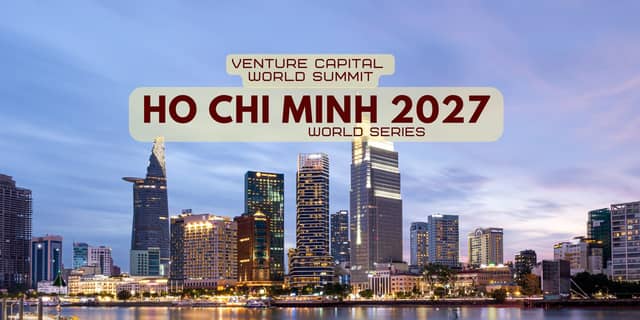
Conference «Venture Capital World Summit Ho Chi Minh City 2027»
The Executive Centre, Saigon Centre Tower 1
4,540,000 ₫ – 21,070,000 ₫



 Culture and Arts
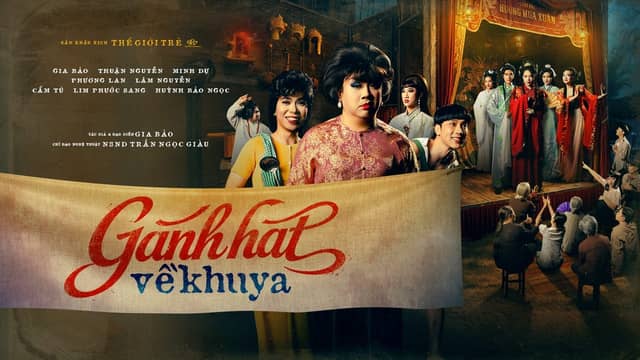
Some plays are staged to settle a family debt. Gia Bao (Gia Bảo) belongs to the fourth generation of the Thanh Minh – Thanh Nga stage dynasty, and he has put an entire cải lương troupe on a stage in central Ho Chi Minh City, near the Bùi Viện backpacker strip, as a thank-you to his great-grandmother, an impresario the southern stage called “the impresario of impresarios”. He plays her himself: a man in the role of the woman who kept the company alive.
The action takes place inside a fictional cải lương company called Hương Mùa Xuân, a troupe on hard times that could break up at any moment. The one holding it together is its owner-manager, Kim Sa. She opens auditions for the female lead in the classic old-style opera “Lương Sơn Bá – Chúc Anh Đài”: the veterans refuse to step aside, while she is determined to push a younger performer into the light. Running alongside it is a rumour that the ghost of a dead actress walks the company — a fear that forces every one of them to look at themselves and, in the end, to finish the show. Envy, scheming and quiet sabotage backstage are all part of it. The question the play asks is blunt: if everyone thinks only of themselves, where does the company end up?
Kim Sa is modelled on bà bầu Thơ, who ran Thanh Minh – Thanh Nga, one of the most celebrated troupes in southern Vietnam. Widowed young — her husband was the performer Nam Nghia (Năm Nghĩa) — she raised her children alone and kept the company on the road, leaving behind productions that became heritage: “Thái hậu Dương Vân Nga”, “Tiếng trống Mê Linh”, “Bên cầu dệt lụa” and “Sân khấu về khuya”, the title this play deliberately echoes. One real family episode goes straight into the script: the company's leading man, full of himself, insults the manager and walks out right before opening night — and she immediately brings on a young actor she had been quietly preparing all along. Gia Bao repeated to Tuổi Trẻ what his grandmother and uncle told him: “My great-grandmother was decisive and had a sharp eye — one hearing of a script and she knew whether it could be staged.”
What is actually on stage:
— the old-style opera “Lương Sơn Bá – Chúc Anh Đài” by the late playwright Duc Phu (Đức Phú), first staged more than 50 years ago; Gia Bao obtained the author's family's permission to use its strongest scenes, and it was Thanh Nga of this same dynasty who first played Chuc Anh Dai, with Duc Phu himself as Luong Son Ba
— every performance features a secret guest who comes out and sings with the cast, a different one each night: singer Nhu Quynh (Như Quỳnh) performed an excerpt from “Lương Sơn Bá”, cải lương artist Minh Vuong (Minh Vương) sang “Tô Ánh Nguyệt” as a duet with Gia Bao, and Hong Dao (Hồng Đào) and Thanh Hang (Thanh Hằng) have both dropped in
— written and directed by Gia Bao, dramaturgy by Tam Nhan (Tâm Nhân), artistic direction by People's Artist Tran Ngoc Giau (Trần Ngọc Giàu)
— classical movement staged by Meritorious Artist Bach Long (Bạch Long), who spent a month teaching straight-drama actors to sing and move by cải lương convention — some of them had never watched cải lương before
— the central pair is Thuan Nguyen (Thuận Nguyễn) and Huynh Bao Ngoc (Huỳnh Bảo Ngọc) as Cẩm Lài; Minh Du (Minh Dự) plays Aunt Sau, the troupe's cook and a former actress; Lim Phuoc Sang (Lim Phước Sang) plays Minh Vu
The production recreates the life of the earliest travelling companies — “gạo chợ nước sông”, rice from the market and water from the river, the Vietnamese phrase for a life with no fixed address — moving between towns on ghe hát, the boats that doubled as theatres, tying up at one landing and then the next. If you already know cải lương, this is that world rebuilt inside a spoken-drama play. If you have never sat through a cải lương performance, it is an easy way in: there is a story, there is comedy and grief, and the sung passages are staged by the book.
Sân khấu Thế Giới Trẻ was relaunched in early 2010, is run by Sài Gòn Phẳng and seats around 320 people, and has aimed at a young audience from the start. This production was approved on 11 January 2026, opened during the Tết Bính Ngọ season, ran roughly 10 performances in April alone and has held its place in the repertoire for more than half a year.
The next performance is an evening one on Friday, 4 September, and for now it is the only date on sale. Nothing later has been announced yet: the theatre's own schedule page runs no further than 6 September, and the ticket page holds this single showing.
Worth knowing before you book: beyond the VIP and standard tickets — upper-level seats cost the same as standard — the theatre keeps a VVIP tier at 400,000 VND for row A, exactly 15 seats, sold only in person at the box office and never online.
The play is performed in Vietnamese. A large share of the running time is cải lương music and classical movement, so the costumes, the choreography and the sung scenes carry a great deal without translation.
The box office, (028) 2228 3825, holds seats by phone only and only with a confirmation call back — messages are not accepted as bookings.
Pick a night, take a seat and watch how long the lamps of a late-night troupe stay lit.
San Khau The Gioi Tre
125 Cong Quynh, Cau Ông Lanh Ward, Ho Chi Minh City
The Executive Centre, Saigon Centre Tower 1
4,540,000 ₫ – 21,070,000 ₫

Công viên 30/4
Contact organizers
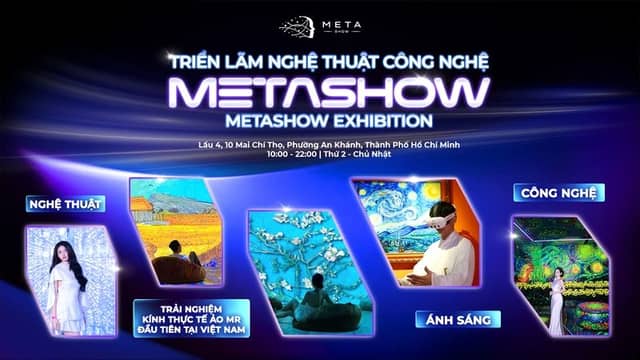
Thiso Mall Sala (Floor 4, L9-L10)
150,000 ₫ – 650,000 ₫

Saigon Exhibition and Convention Center (SECC)
Contact organizers
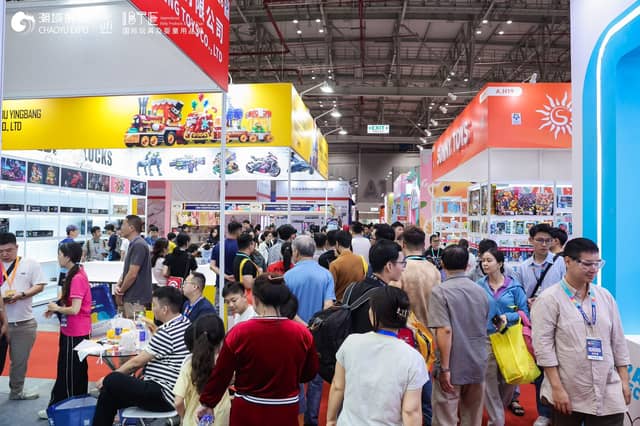
Saigon Exhibition and Convention Center (SECC)
Contact organizers

Saigon Exhibition and Convention Center (SECC)
Contact organizers
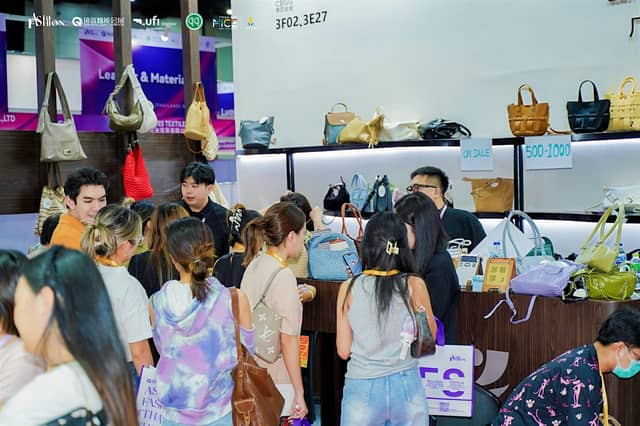
Sky Expo Vietnam
Free
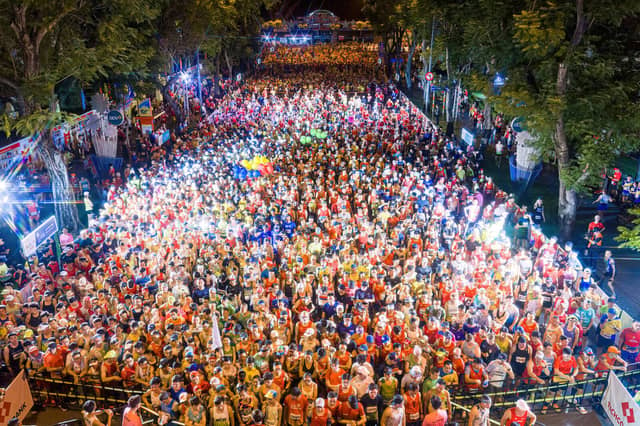
Đường Lê Duẩn – Nguyễn Bỉnh Khiêm
Contact organizers
The Executive Centre, Saigon Centre Tower 1
4,540,000 ₫ – 21,070,000 ₫
Công viên 30/4
Contact organizers
Thiso Mall Sala (Floor 4, L9-L10)
150,000 ₫ – 650,000 ₫
Saigon Exhibition and Convention Center (SECC)
Contact organizers
Saigon Exhibition and Convention Center (SECC)
Contact organizers
Saigon Exhibition and Convention Center (SECC)
Contact organizers