
Exhibition «Chúng tôi, những dòng sông Nam Bộ» (We, the Rivers of the South)
History Museum of Ho Chi Minh City
30,000 ₫



 Culture and Arts
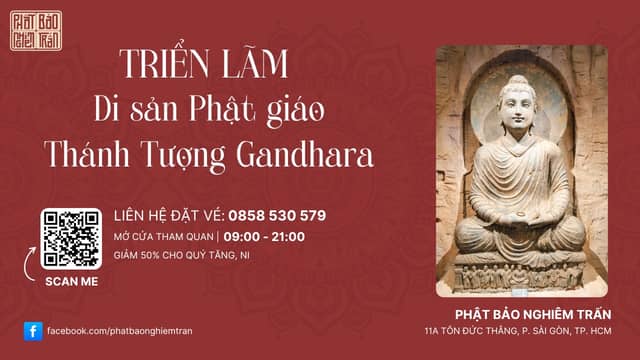
Some corners of a big city keep the street noise politely outside the door, where the air itself seems to slow down. Just a fifteen-minute walk from the Bach Dang riverfront, a space opens up with a single purpose — an encounter with a Buddhist heritage nearly two thousand years old. People come here not for a spectacle, but for a rare moment of stillness.
The essentials:
The exhibition is built as a journey through space and time. Four halls stand for four lands where Buddhism took root and flourished, from its ancient sources to the present day. Each hall has its own light, rhythm and mood, yet together they tell one story — how the teaching of the Buddha Shakyamuni (Đức Phật Thích Ca Mâu Ni) travelled from country to country, changing its outward form while keeping its essence.
A hall of special weight is devoted to Gandhara, a Buddhist kingdom at the meeting point of the Greek and Indian worlds, whose lands today lie across Pakistan and Afghanistan. It was here that the celebrated Greco-Buddhist style was born, the first to give the Buddha a human face. The state has long vanished from the political map, yet its artistic language is recognised everywhere.
At the heart of the display are almost a hundred rare images of the Buddha, patiently collected from every corner of the planet. Together they form a living chronicle of the Dharma's spread — the path of teaching and compassion begun by the Enlightened One himself. Each sculpture is not a museum piece behind glass but part of a carefully composed scene, where light and silence do as much work as the figures themselves.
The organisers have set gentle terms for those closest to the tradition: monks and nuns are admitted at half price, and children under ten come free. The space is meant for a slow, thoughtful visit, so it rewards those who arrive without hurry.
The format is intimate, almost meditative. To protect the relics and the atmosphere, filming and livestreaming are not allowed, phones are asked to be silenced, and the statues may be touched only with a guide's permission. Modest, covered clothing is requested, as in any place of worship.
For expats and international visitors, this is a rare chance to see in a single visit how Buddhism was refracted through very different Asian cultures — a subject textbooks usually cover in one short paragraph. Here the history of art becomes tangible, and Eastern aesthetics stop being exotic and open up from within.
Session times and capacity are limited, so it is worth planning your visit ahead — tickets on ticketbox.vn.
Silence, light and the faces of the Buddha across four civilisations — a reason to pause in the middle of the city.
Toa nha Infinity
11A Ton Duc Thang, Sai Gon Ward, Ho Chi Minh City
History Museum of Ho Chi Minh City
30,000 ₫
Galerie Quynh
Contact organizers

Wiking Salon
Free

Rare Sea
Free
Gate Gate Gallery
Contact organizers
Vietnamese-German University
Contact organizers