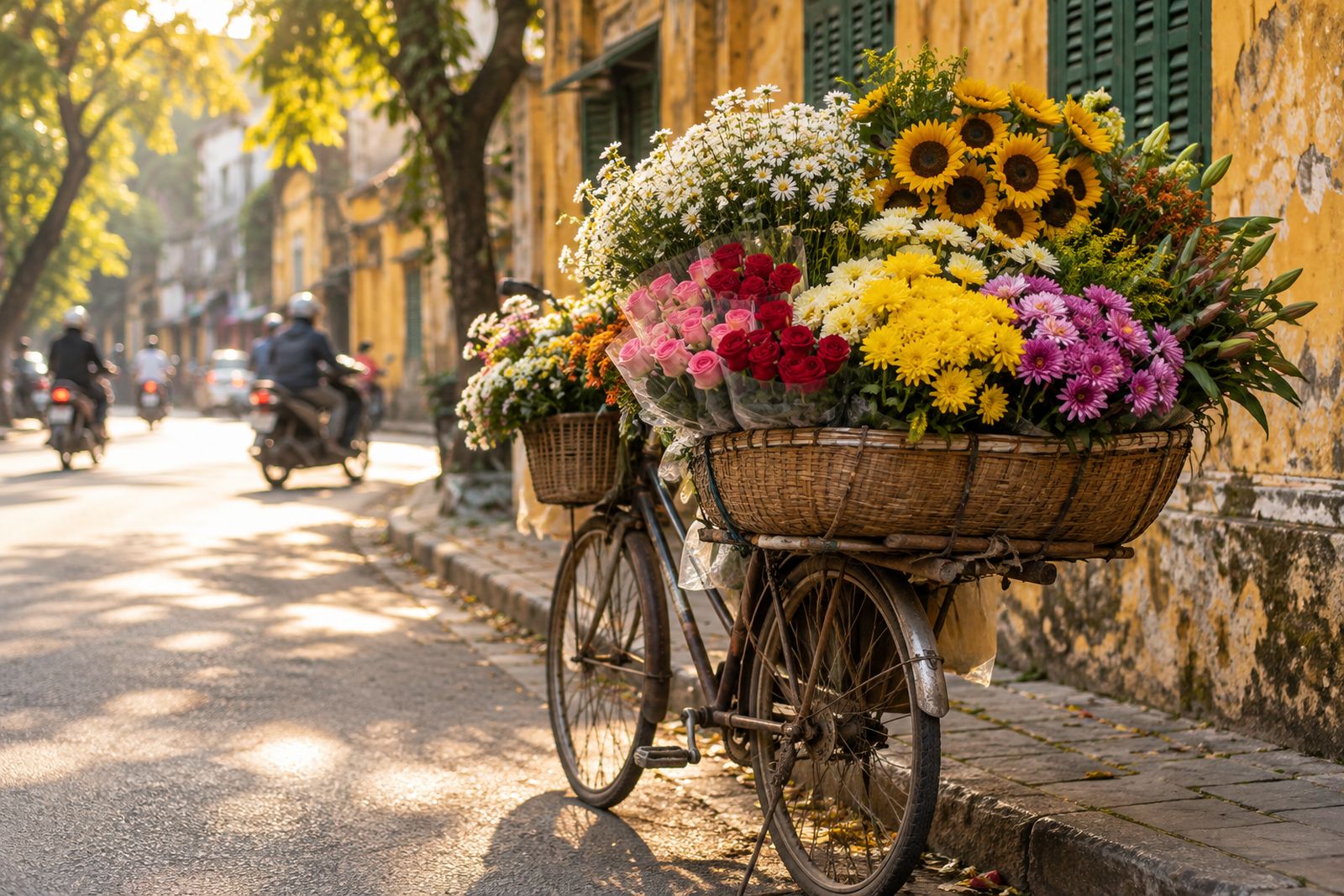
Vietnam has two women's days a year. One is the International Women's Day everyone knows, March 8. The other is home-grown: October 20, Ngày Phụ nữ Việt Nam, Vietnamese Women's Day. To a visitor it's invisible on the calendar — it isn't a public holiday — but very visible on the streets: two days ahead, flower stalls sprout on every corner, rose prices triple, downtown restaurants book solid, and men in offices hold anxious meetings about gifts. In 2026 it falls on a Tuesday, and Hanoi marks the 96th anniversary. Here's where the day comes from, how it differs from March 8, how it's celebrated, and what a foreigner should do to get it right.
Where the day comes from
The date is historical. On October 20, 1930, just months after the founding of the Indochinese Communist Party, the Vietnam Women's Anti-Imperialist Association (Hội Phụ nữ phản đế Việt Nam) was created — the country's first mass women's organisation, which later became the Vietnam Women's Union (Hội Liên hiệp Phụ nữ Việt Nam). Its founding date was declared the national day of Vietnamese women.
But the meaning runs wider than one organisation. Vietnam is a country where women stand at the front of its history rather than on its margins: the first uprising against Chinese rule, in 40 AD, was led by the Trưng Sisters (Hai Bà Trưng), who have a temple and a whole district named after them in Hanoi; in the 3rd century Lady Triệu led an army; in the 20th century, from Nguyễn Thị Minh Khai to General Nguyễn Thị Định, women served in the underground, the army and diplomacy. A distinctly Vietnamese layer is the "Heroic Mothers" (Bà mẹ Việt Nam anh hùng), an honorary title for women who lost husbands and sons in the wars — their memory is part of every official October 20 ceremony. The day thus brings together three things: pride in historical heroines, gratitude to mothers, and recognition of the women who today carry the family, the business and half the economy.
AI-generated illustration
How October 20 differs from March 8
Vietnamese celebrate both, but differently. March 8 is international and "official": a workplace occasion, flowers for colleagues, speeches. October 20 is local, domestic and warmer: it's for mothers, wives, grandmothers, teachers and girlfriends; the day when men cook dinner, children draw cards, and companies hold in-house celebrations for "their" women. If March 8 is about equality and work, October 20 is about appreciation and family. A Hanoi bonus: the weather. October is dry and cool — the best season for evenings out — so cafés and restaurants are full that day.
The traditions: how it's celebrated
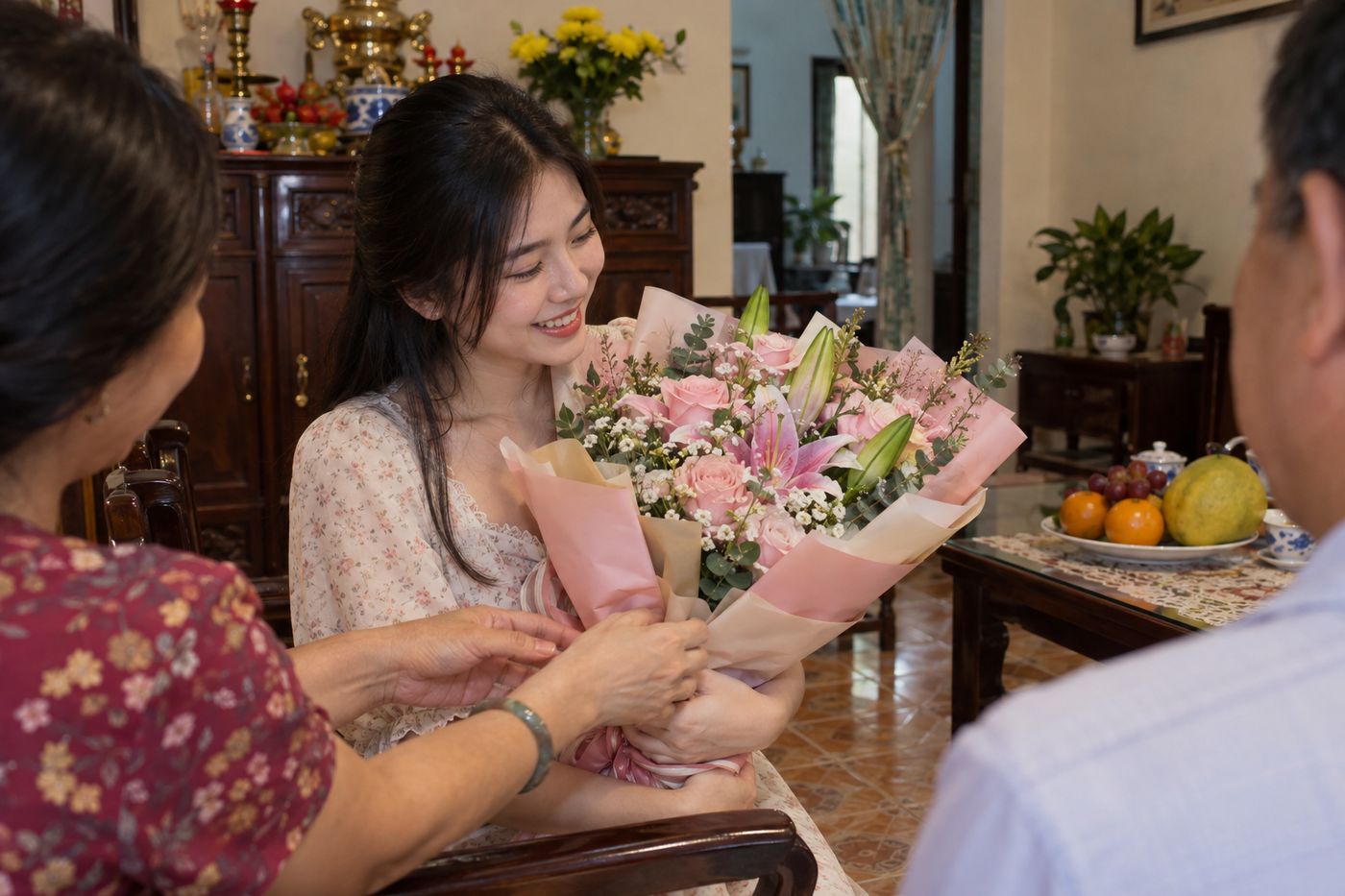
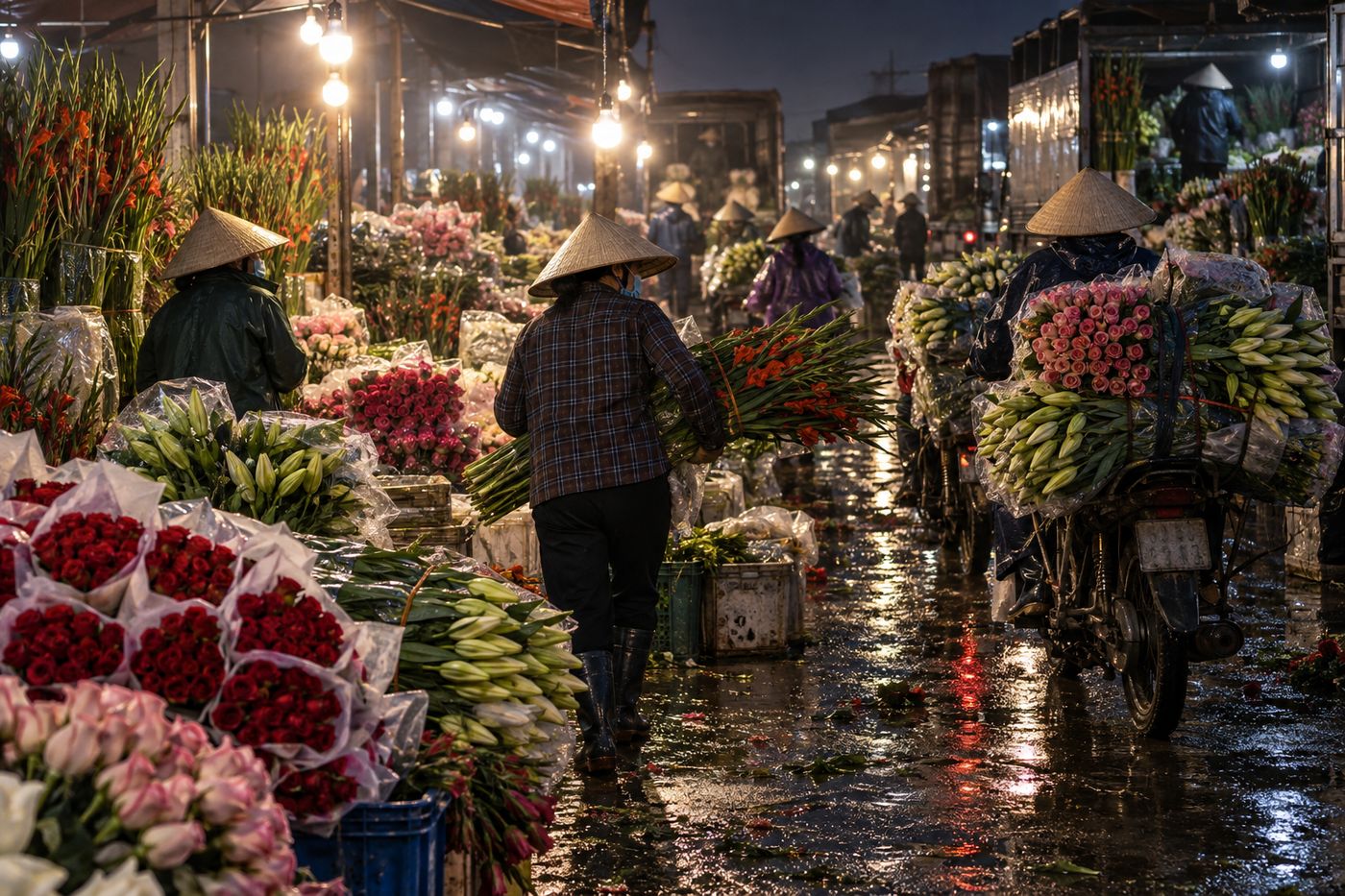
Flowers. The holiday's main language. Roses are the classic (red for a wife, pink and yellow for colleagues and friends), plus sunflowers, orchids and lilies; "Korean-style" bouquets in kraft paper and boxed arrangements are the current fashion. The night flower market at Quảng Bá by West Lake runs like a trading floor the night before: wholesalers, florists and ordinary Hanoians arrive at 2–4 a.m., and rose prices double or triple over two days. Street stalls appear everywhere on October 18–19.
Gifts. Cosmetics, jewellery, silk scarves, gift sets, spa vouchers; for mothers and grandmothers, something practical and respectful. Malls and brands launch "20/10" discount campaigns a week ahead, and social media fills with gift guides.
Dinner and "the man at the stove". A tradition that advertising loves and that genuinely exists: on October 20 the husband cooks and the wife rests — or the family goes out. Tables at popular downtown and West Lake restaurants are booked days ahead; many venues run special menus and hand each female guest a flower.
At work. Companies almost always celebrate: flowers and gifts from "the men's side", a short ceremony, tea or a company dinner, contests (cooking, talent, sometimes tongue-in-cheek beauty pageants) — playful but warm. State bodies and enterprises hold formal meetings with awards for outstanding women staff.
At school. Pupils congratulate their female teachers (teachers also have their own day on November 20, but October 20 is a reason too), kindergartens make cards for mums; many schools run contests and exhibitions.
The official side. The Women's Union holds meetings, conferences and award ceremonies — the Vietnam Women's Award (handed out in early October, ahead of the 20th), tributes to Heroic Mothers and women veterans; television airs concerts and documentaries. In Hanoi, exhibitions on women in history and art open around the date — usually at the Vietnamese Women's Museum (Bảo tàng Phụ nữ Việt Nam, 36 Lý Thường Kiệt), one of the city's best museums and the natural address for the day.
Young people and couples. For young men, October 20 is a second Valentine's Day: flowers, dinner, a gift for the girlfriend. Cafés run themed sets, photographers offer mini-shoots, and social media floods with congratulations.
AI-generated illustration
What a foreigner sees — and should know
It's not a day off; transport and shops run as usual, but the city visibly "blooms". If you work in a Vietnamese team, stay with a Vietnamese family, or simply deal with Vietnamese women day to day, congratulating them is expected and appreciated: a flower or a small gift for a colleague, a host, a teacher, a hotel manager. A foreign man who hands a colleague a rose on October 20 earns more goodwill than in a month of work. Keep it modest, and give to all the women in the team rather than just one. The greeting is simple: "Chúc mừng ngày Phụ nữ Việt Nam!"
Planning dinner on October 20? Book — downtown and West Lake fill up. Want to understand the day more deeply? The Women's Museum: three floors on women in family, history, war and fashion, with the Old Quarter's street vendors as an exhibition in their own right. And if you go flower-shopping at Quảng Bá at night, bring cash and expect prices on October 18–19 that surprise even Hanoians.
What's happening in Hanoi in 2026
The detailed programme appears in the first half of October: concerts (usually at the Opera House and around Hoàn Kiếm), exhibitions at the Women's Museum and galleries, Women's Union charity fairs, mall and restaurant promotions. We'll add event cards to the block below as organisers announce dates.