On Friday, September 25, 2026, a full moon rises over Hanoi that locals call the roundest of the year — and the whole city walks out to meet it with lanterns. Tết Trung thu, the Mid-Autumn Festival, is Vietnam's second-biggest holiday after Lunar New Year, and the only one that belongs entirely to children. For two weeks already, Hàng Mã street has been glowing with thousands of star lanterns, bakeries have queues for mooncakes, and lion-dance drums echo from courtyards after dark. If you're in Hanoi this week, you've timed it well: this is the warmest, most family-centred and most photogenic week of the Hanoi year. Here's where the festival comes from, what matters in it, and how to experience it the way locals do.
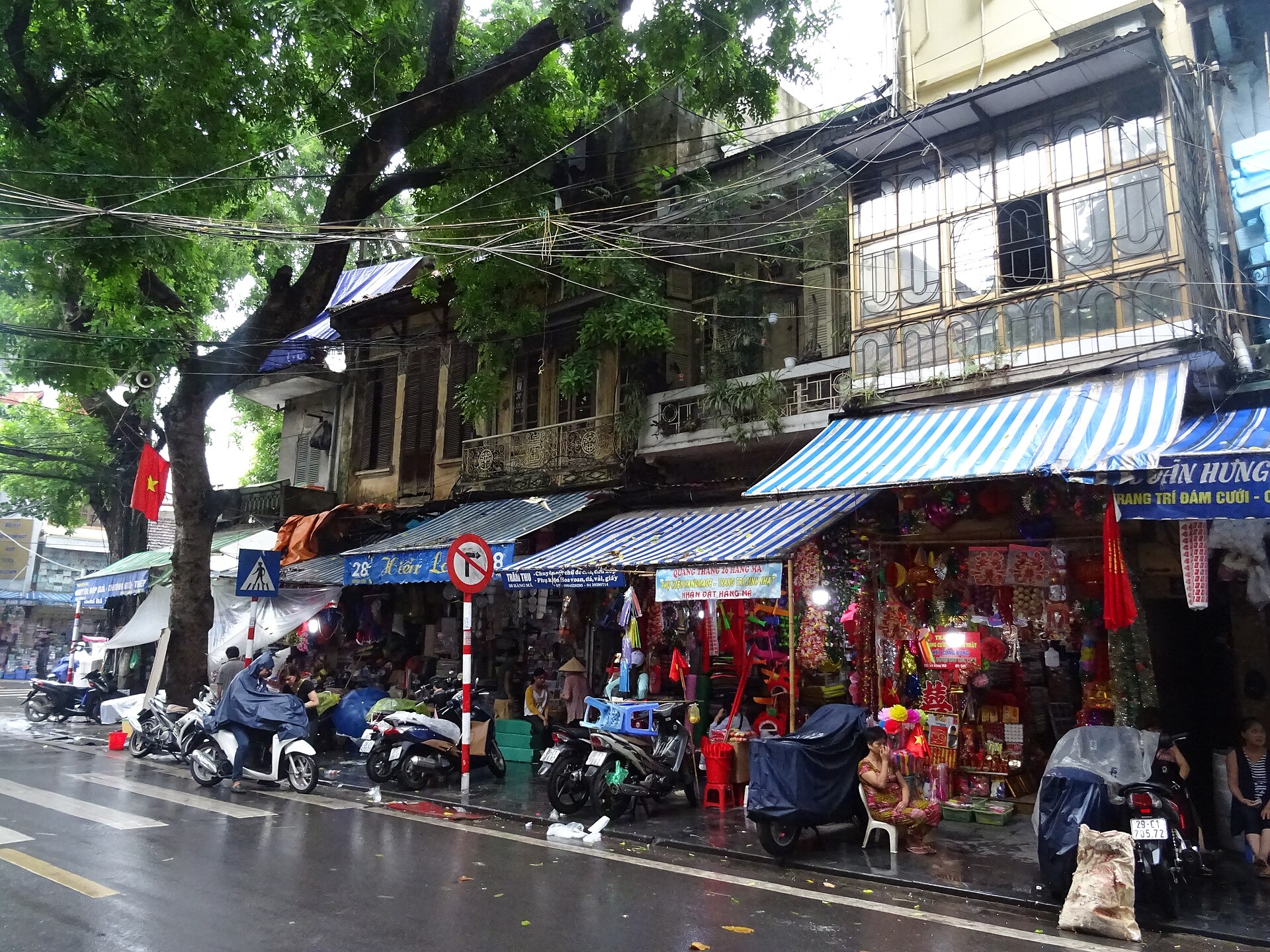
Photo: Christophe95 / Wikimedia Commons, CC BY-SA 4.0
What the festival is
The holiday falls on the 15th day of the 8th lunar month — the full-moon night in the middle of autumn, when the moon is considered the brightest and roundest of the year. Hence its other name, Tết trông trăng, "the moon-watching festival". In 2026 that's September 25, but Trung thu lives far longer than one night: markets, fairs and children's programmes start two to three weeks earlier, and the moon itself is just the finale.
It has several faces. It began as a harvest festival: the rice is in, there's a pause before the next cycle, families give thanks for fertility, and a full moon means abundance. Over time it became Tết đoàn viên, the "reunion festival" — like Lunar New Year, it gathers the family at one table, only with mooncakes instead of bánh chưng. And in Vietnam it is also Tết thiếu nhi, "children's Tết": kids get the lanterns, masks and toys, and the right to raid the festive table first. That's the key difference from China's Mid-Autumn Festival, which centres on the adult family dinner — Vietnam handed the full-moon night to its children.
Where it comes from: from a 12th-century stele to Hồ Chí Minh's letters
The earliest Vietnamese record of the festival is a stele at Đọi Pagoda dated 1121: under the Lý dynasty, Mid-Autumn was already an official celebration in the capital Thăng Long (today's Hanoi), with boat races, water-puppet shows and lantern processions. In other words, Hanoi has been celebrating Trung thu for at least nine centuries — and in essentially the same way: lanterns, puppets, water and the moon.
The legends show where the shared East Asian tradition ends and the Vietnamese one begins. From China came the moon goddess Hằng Nga, who drank the elixir of immortality and floated up to the moon, and the Tang emperor who visited the lunar palace. But the hero of Vietnam's Trung thu is homegrown: Uncle Cuội (chú Cuội), a woodcutter who found a magic banyan whose leaves could raise the dead, failed to look after it, and was carried into the sky when the tree uprooted itself. He's been sitting on the moon under his banyan ever since — Vietnamese children still look for his silhouette in the lunar shadows, and every kindergarten sings the song about Cuội at the foot of the banyan.
The 20th century added one more layer. The first Trung thu of independent Vietnam came two weeks after the republic was proclaimed in September 1945 — and Hồ Chí Minh wrote a letter to the nation's children, starting a tradition he kept every Mid-Autumn for the rest of his life. That cemented Trung thu as an official children's holiday: today every neighbourhood, school and apartment complex organises it for all its kids, and gifts for children from poor families are a standard part of every district's programme.
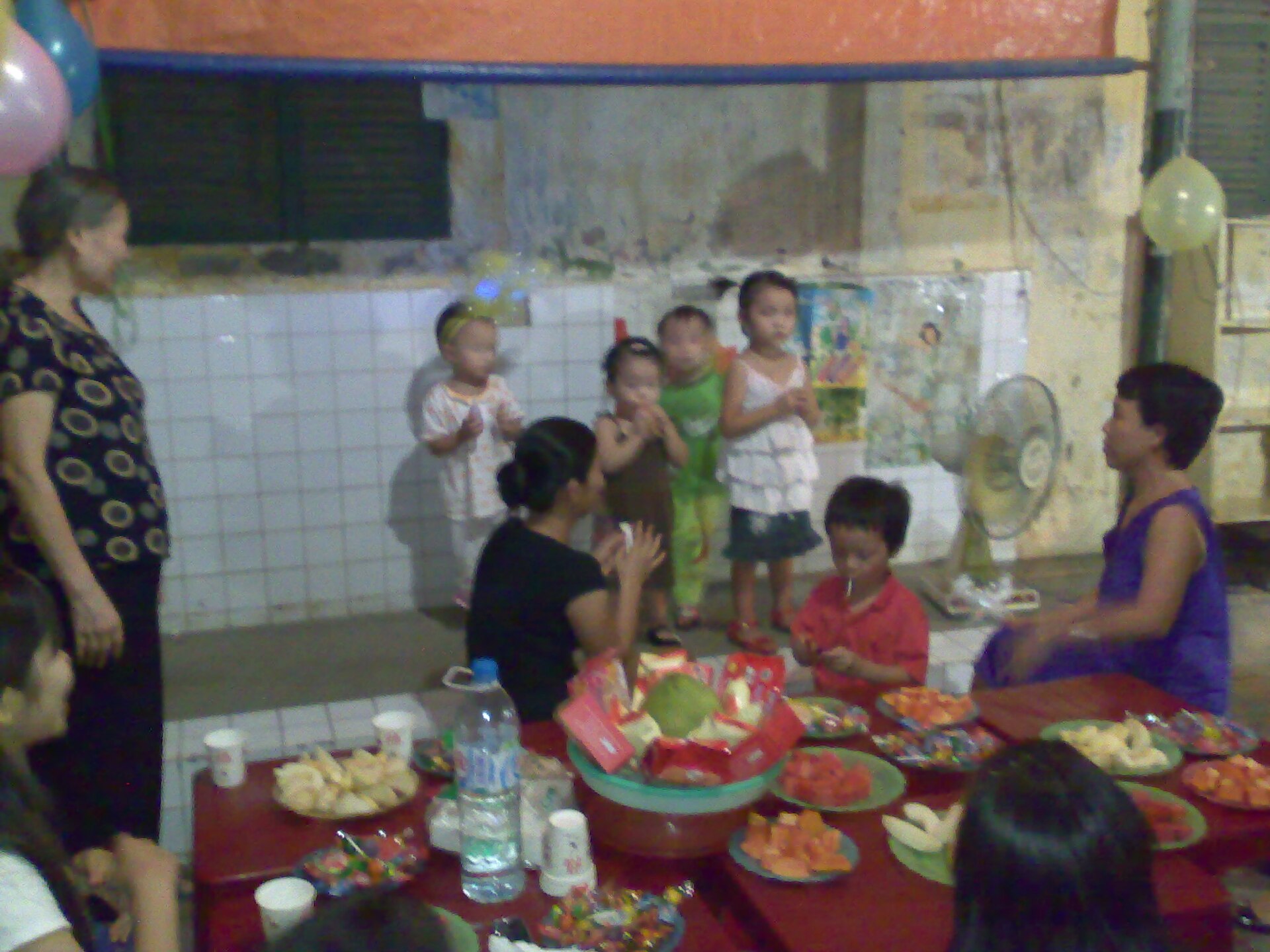
Photo: Newone / Wikimedia Commons, CC BY 3.0
The symbols: what's on the table and what's in the hands
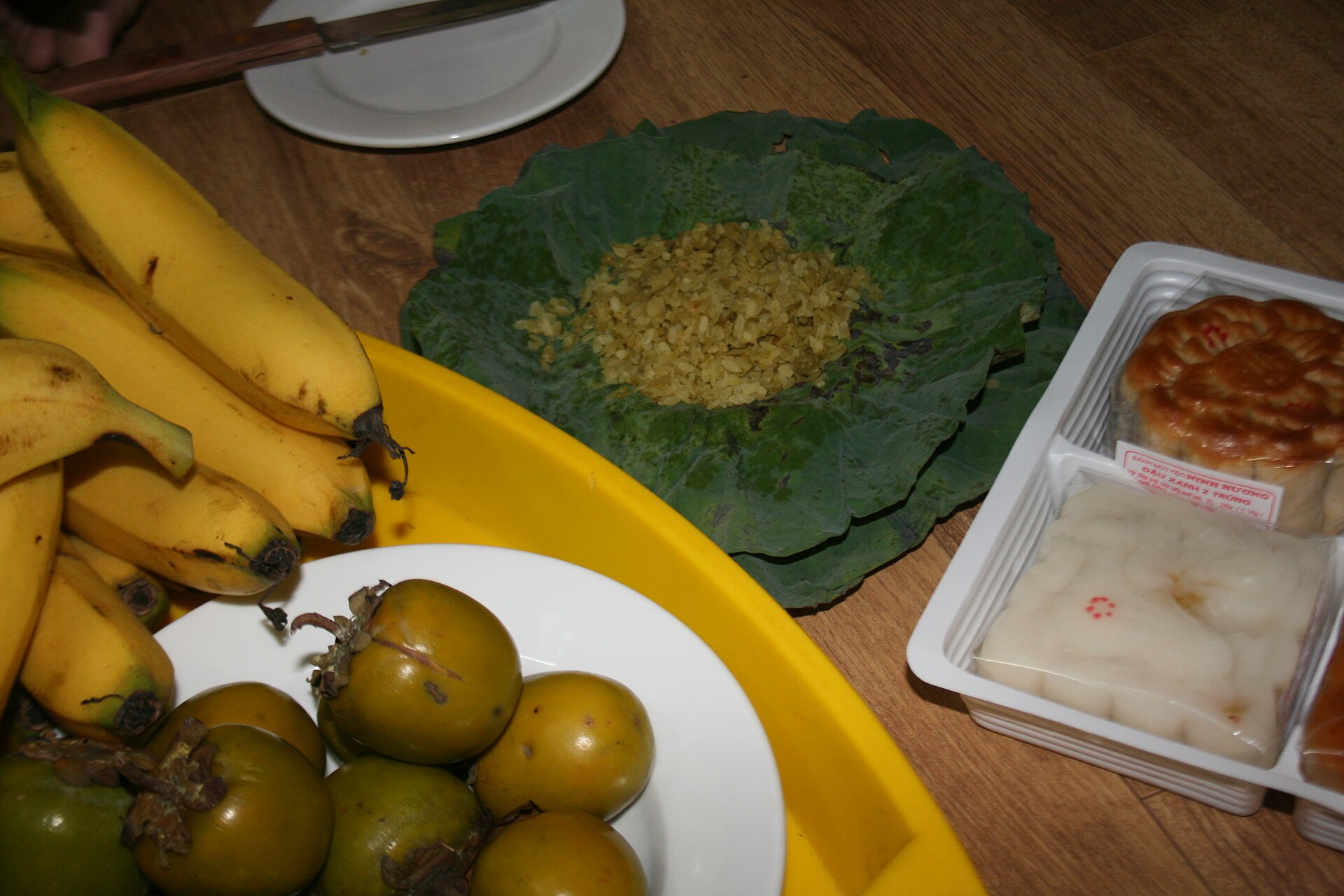
Photo: Viethavvh / Wikimedia Commons, CC BY-SA 4.0
Mâm cỗ trông trăng — "the moon-watching tray". It isn't a dinner but a still life: seasonal fruit — pomelo, persimmon, bananas, custard apple (na), pomegranate — piled around mooncakes. The star of the tray is the pomelo dog: a body of pomelo segments, peppercorn eyes, a fruit-chip nose; Hanoi grandmothers compete over whose dog looks fluffiest. Beside it sits a paper "doctor of letters" (ông tiến sĩ giấy) in a mandarin's hat — a wish for the child's success at school, a Hanoi tradition recognisable by the scholar's glossy red robe. The evening's climax is phá cỗ, "breaking the tray": when the moon is at its highest, the children get the signal and the whole still life vanishes in a minute.
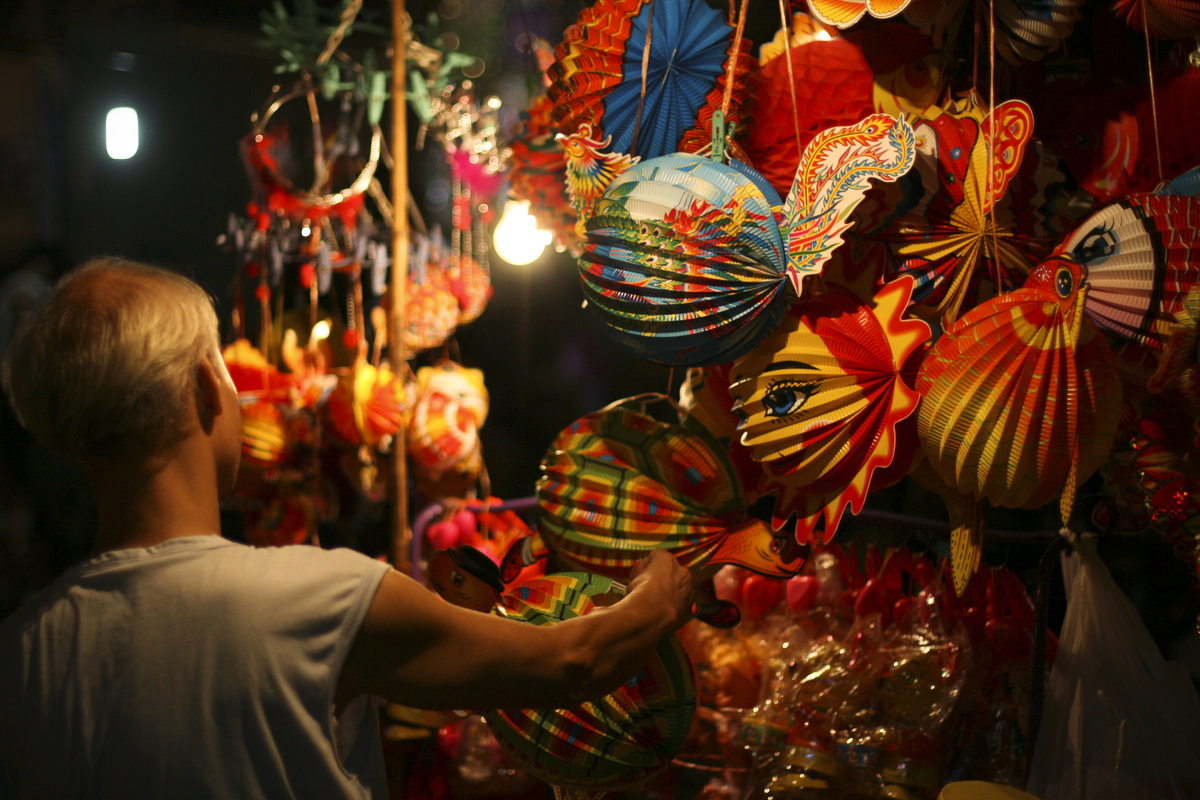
Lanterns. The classic is the đèn ông sao, a five-pointed bamboo star wrapped in red cellophane with a fringe. It's the festival's most recognisable symbol and is still handmade in Hậu Ái village just outside Hanoi (Vân Canh commune, Hoài Đức): thousands of stars per season at 20–50,000 VND each (under $2). The second type is the đèn kéo quân, the "marching soldiers lantern": inside a paper cylinder, heat from a candle spins cut-out figures whose shadows run around the walls — Vietnam's original animation. The third is the đèn cá chép, the carp lantern, a symbol of perseverance (the carp that leaps the waterfall becomes a dragon). Plastic LED lanterns with music are everywhere too, but Hanoians have been pointedly returning to bamboo and paper in recent years.
Lion dance (múa lân). Drums, cymbals, a giant papier-mâché lion head and a pot-bellied character in a grinning mask with a fan — Ông Địa, the Earth Spirit — who teases the lion and makes the children laugh. Troupes tour streets and courtyards in the last days before the full moon; a lion that dances at your door is said to chase off evil spirits and bring luck. Lion heads and papier-mâché masks (mặt nạ giấy bồi) — tigers, monkeys, "Uncle Tễu" — are made in Ông Hảo village (Hưng Yên province), whose craftsmen come to Hanoi's September festivals to demonstrate the craft.
Tò he. Tiny figurines of coloured rice dough — dragons, flowers, cartoon characters — that a craftsman shapes in a minute right in front of you. A craft from Xuân La village (Phú Xuyên, Hanoi) and probably the cheapest souvenir of the festival: 20–30,000 VND a figure. Tò he used to be edible, but today's makers use different doughs and dyes — treat it as a toy rather than a treat, and ask the maker if in doubt.
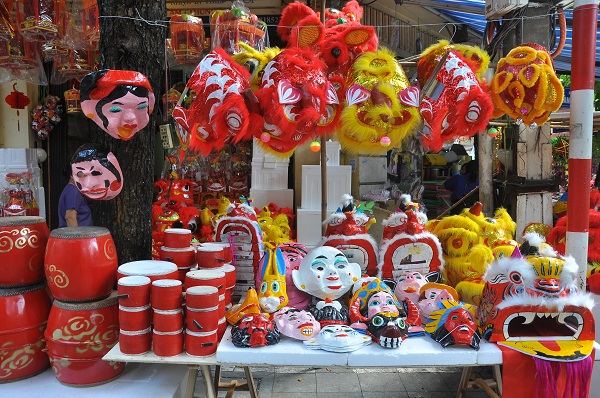
Photo: Binbin0111 / Wikimedia Commons, CC BY-SA 4.0
Mooncakes: what's the difference, and where's the queue
The mooncake, bánh trung thu, comes in two kinds. Bánh nướng is baked, with a golden embossed crust and a dense filling; bánh dẻo is "soft" — snow-white glutinous rice flour scented with flower water, never baked. The classic filling is thập cẩm, "mixed": candied fruit, sesame, nuts, kaffir lime leaves, Chinese sausage (lạp xưởng) and a salted duck egg yolk in the centre — the "moon" inside the cake. There are gentler versions too: lotus seed paste, mung bean, black sesame; and lately matcha, durian, cheese and tiramisu.
In Hanoi, the mooncake is also a queuing ritual. People line up for an hour at the old Bảo Phương bakery on Thụy Khuê street (by West Lake), and the wait is part of the pleasure: the bakery has been running since the 1950s, the recipe hasn't changed, and the cakes are sold warm, without boxes. Gifting is a different universe: hotel and brand boxes (Metropole, JW Marriott, Kinh Đô, Hữu Nghị) in lacquered chests at 500,000–3,000,000 VND ($20–120), sold from kiosks on every corner from late August, because the mooncake is the corporate gift of the season. Our advice: taste at Bảo Phương or any neighbourhood bakery (30–60,000 VND per cake), give in a box — and be warned that real thập cẩm is an acquired taste: salted yolk with candied fruit surprises many first-timers.
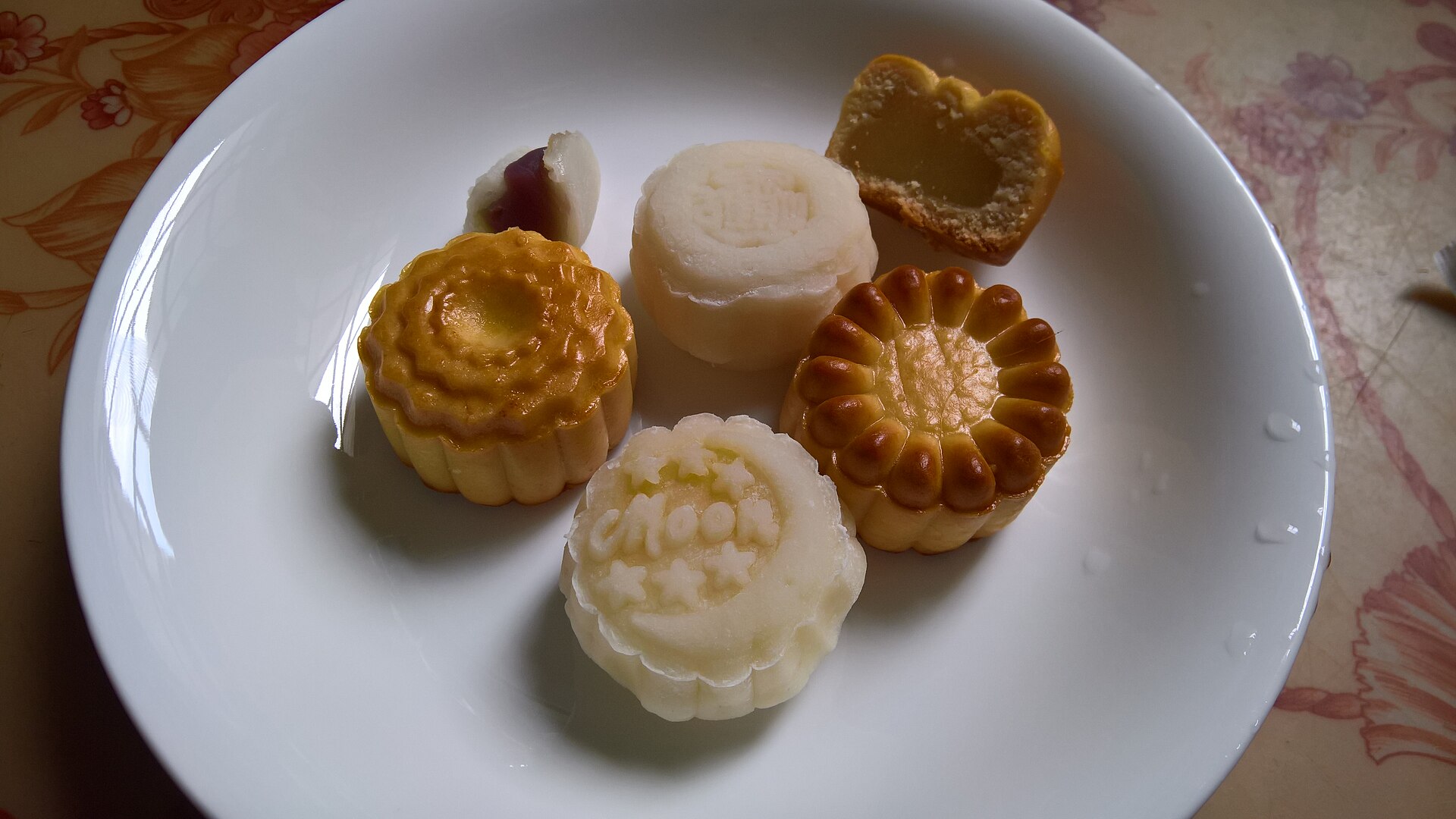
Photo: Donald Trung / Wikimedia Commons, CC BY-SA 4.0
What Hanoi looks like for these two weeks
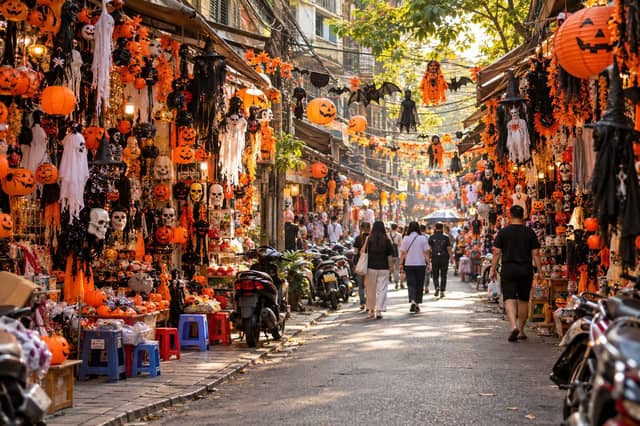
The epicentre is Hàng Mã street in the Old Quarter, the "paper goods street", which three weeks before the full moon turns into a solid glowing tunnel: lanterns, masks, lion heads, garlands and drums hang from the facades three tiers deep. Motorbikes are barred in the evenings, the crowd moves in one stream, and this is one of the most photographed streets in the country in September. Neighbouring Hàng Lược, Hàng Rươi and the square by Đồng Xuân market pick up the fair; the pedestrian zone around Hoàn Kiếm Lake fills with lion troupes, buskers and costumed children on weekends.
But the real Trung thu happens in courtyards. Every apartment complex, school and village cultural house gathers its children on one of the evenings before the festival — the organiser picks the exact day: a stage, gifts, a lantern contest, a lion, phá cỗ. If you're staying in a Hanoi high-rise, don't ignore the notice by the lift — guests are usually welcome. And on September 25 at about eight in the evening, simply step outside: all over the city, children with lanterns and parents with phones walk to the nearest lake to "show the moon the lantern". That is the festival.
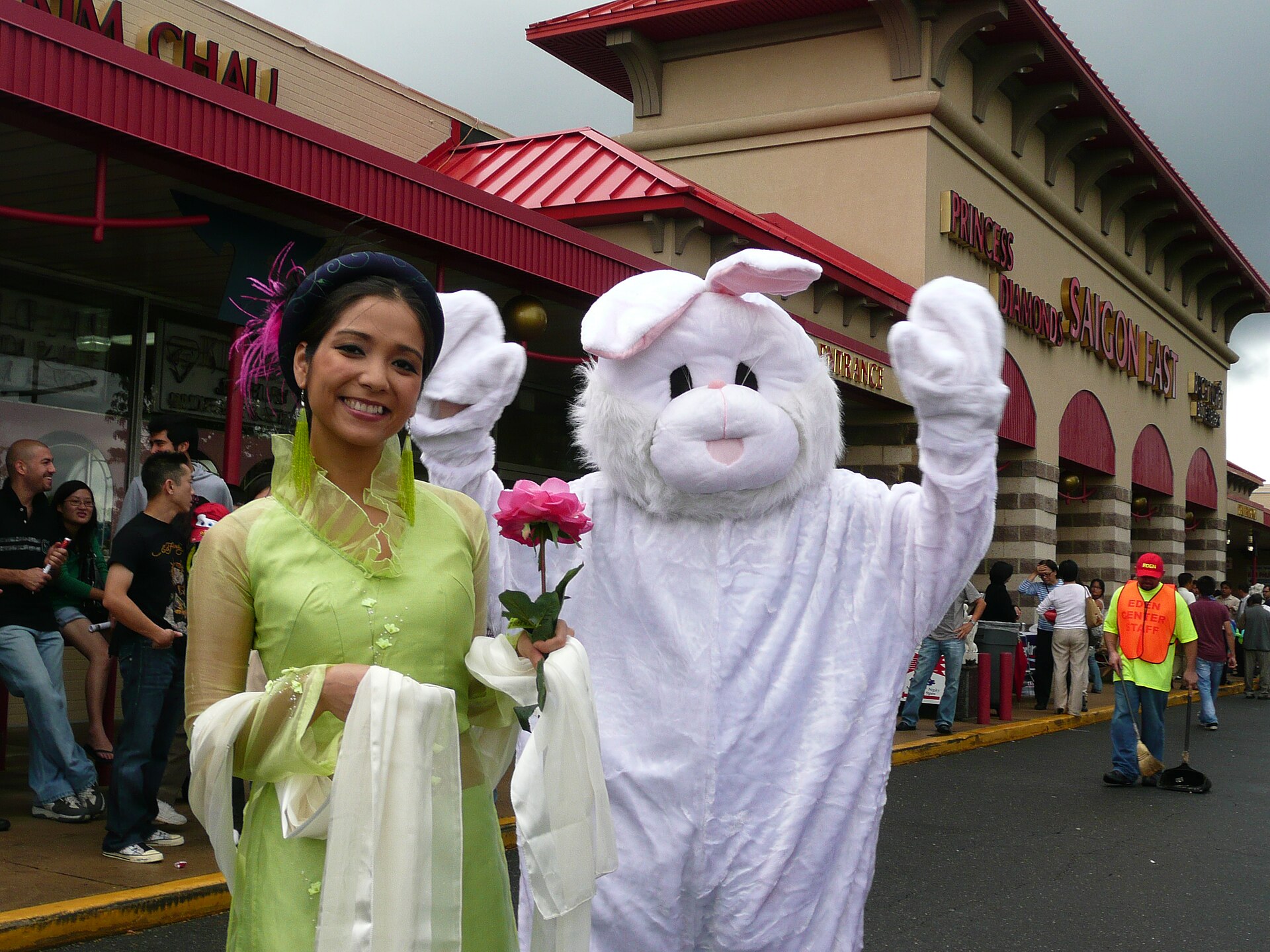
Photo: angela n. / Wikimedia Commons, CC BY 2.0
Hanoi's 2026 programme
Still to come
The procession around Hoàn Kiếm Lake, Friday evening, 25 September. The main event of the festival night: around a thousand participants in fifteen columns — dragon and lion dances, the "Moon Palace" float (xe Nguyệt Cung), traditional lanterns, carp, paper horses, the "doctor of letters", a five-fruit tray and children's lantern columns. The Đình làng Việt club will show two large lanterns shaped like the Brush Tower (Tháp Bút) and the Inkstone (Đài Nghiên) — the very ones that stand at the entrance to Ngọc Sơn Temple. The procession sets off from the stage in front of the Hồ Gươm Cultural Information Centre, 2 Lê Thái Tổ, and winds through the streets around the lake.
Check the time with the organiser: Hanoi's Department of Culture and Sports gives 19:00, the government publication 20:00. The name differs too — "Đêm Trăng Phố Cổ" for the department, "Đêm hội Trăng Rằm" for the publication. We print what has been published rather than turning a one-hour gap into a "19:00–20:00 programme". Sources: Hanoi Department of Culture and Sports, 29.08.2026, Thăng Long, a government publication, 28.08.2026.
"Lễ hội Trung thu 2026", 23–24 September, 2 Hoa Lư. The official festival at the Vietnam Exhibition Centre for Culture and Arts (Hai Bà Trưng area): themed installations, a giant moon-gazing tray, an exhibition of folk toys and workshops. Check opening hours and entry terms with the organiser — the ministry's announcement doesn't give them. Source: Ministry of Culture, Sports and Tourism, 18.09.2026.
"Lưu trăng phố cổ 2026" — until 30 September. A trail across six Old Quarter venues, each telling its own part of the festival story: 50 Đào Duy Từ (Cultural Exchange Centre, the festival's farming roots), 22 Hàng Buồm (Culture and Arts Centre, the "Lưu trăng" exhibition — lanterns, masks, folk toys), 87 Mã Mây (Heritage House, "Đón Trăng" — the festival in a Hanoi family home, mooncake baking), 40 Lãn Ông (herbal teas and folk knowledge), 2 Lê Thái Tổ (lion-head workshop), 28 Hàng Buồm ("Hương trầm với trăng xưa", incense). Free entry.
Already over, but the places remain
Vietnam Museum of Ethnology, 19–20 September — the "Trung thu 2026: Colours of Cultural Heritage" programme with craft-village artisans. The museum itself is open as usual and is still the best address in town for a family with children — but the festival workshops are over.
"Đêm Trăng hồ Văn" at the Temple of Literature, 19–20 September — a night of crafts and light installations by Văn lake. Also finished.
The night of 25 September
Besides the Hoàn Kiếm procession — Hàng Mã, the lakeside and the courtyards of apartment blocks. At around eight in the evening the city walks out with lanterns; every neighbourhood has its own small celebration, and that is exactly the part of Trung thu nobody announces in advance.
Out of town, it's worth knowing about Tuyên Quang (130 km north), which stages an annual giant-lantern festival for Trung thu: bus-sized floats shaped like dragons, carp and fairy-tale characters paraded through the streets to music — a scale Hanoi simply doesn't have.
Practical tips
Hàng Mã — evenings and weekdays. On the weekend of September 19–20 and on the night of the 25th the crowd is impassable with a stroller; the best photos and calmest shopping are 17:00–19:00 on weekdays, when the lanterns are lit but the flood hasn't started. Bargain gently: lanterns run 20–80,000 VND, masks 30–80,000, lion heads from 150,000 to millions for the big ones.
With kids, head to the Museum of Ethnology or 2 Hoa Lư — hands-on activities, shade and toilets; do the Old Quarter later in the evening and keep it short. Buy your child a lantern in advance: candle-lit bamboo ones only under supervision, battery-powered for the little ones.
Weather: late September in Hanoi is still warm (27–32 °C) and rainy — afternoon thunderstorms are normal; a pocket poncho is mandatory and paper lanterns don't survive a downpour.
What to take home: a star lantern from Hậu Ái (it folds flat), a giấy bồi mask, a tò he (it's dough and won't keep — take a photo of it), a box of mooncakes from Bảo Phương or a hotel. And one good photo of the moon over Hoàn Kiếm: people here have gazed at this moon for centuries — bring home your own.
Cover photo: AngelsWings / Flickr, CC BY 2.0