
Festival «Bốc Fest»
Nha may xe lua Gia Lam (Ha Noi)
999,000 ₫ – 1,399,000 ₫



 Culture and Arts
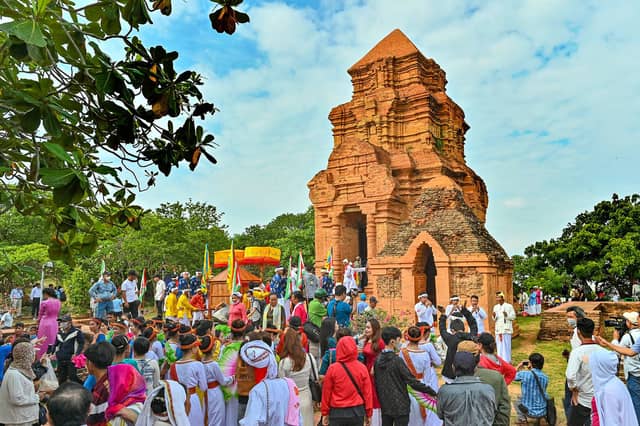
Once a year the Chăm community of Lâm Đồng returns to the red-brick towers on Bà Nài hill, and the monument stops being a sightseeing stop and becomes a working sanctuary again. This year the celebration runs for four days instead of the usual two, and the festive half now includes sessions where you can shape clay pottery or bake ginger cakes at the foot of the towers.
In brief:
Katê is the largest festival of the Chăm who follow the Brahmanist tradition. It falls on the first day of the seventh month of the Chăm calendar, roughly between late September and October, and honours the deities and the ancestors. It has two halves: the solemn rites performed by priests inside the tower, and the celebration that spreads across the courtyard to the sound of the saranai reed pipe and drums, amid the colours of traditional dress.
The plan was discussed at a working session on 20 August chaired by Lê Thị Trúc Linh, deputy director of the provincial Department of Culture, Sports and Tourism. Lư Thái Tuyên, deputy director of the provincial museum, said the dates are still provisional and that the festival keeps its provincial scale. Lê Thị Trúc Linh stressed that after the administrative merger Lâm Đồng is home to 49 ethnic groups, so safeguarding the identity of each community is the guiding idea of the event.
Tháp Po Sah Inư stands on Bà Nài hill about 7 km north-east of Phan Thiết. The group was built in the late 8th and early 9th century in the Hòa Lai style as a shrine to Shiva; only in the 15th century were sanctuaries added for princess Po Sah Inư, credited with teaching local people wet-rice farming and brocade weaving. Three towers survive, the main one 15 m tall with its door facing east, and since 1991 the site has been a national architectural and artistic monument.
The festival itself is heritage too: the Ministry of Culture, Sports and Tourism entered the Katê festival of the Chăm people in the national list of intangible cultural heritage by decision 776/QĐ-BVHTTDL of 4 April 2022, when the area still belonged to Bình Thuận province.
The days are open to the Chăm community and to visitors from far away alike. On the two main ritual days national treasures and artefacts are displayed at the towers themselves, so the area is under a separate security plan. The detailed programme and the entry conditions are still being finalised by the organising committee, so it is worth checking the department announcements before you travel.
Four days of Katê are a rare chance in the year to see heritage that is still alive rather than kept behind glass.
Tháp Po Sah Inư
Đồi Bà Nài, phường Phú Thủy, tỉnh Lâm Đồng
Nha may xe lua Gia Lam (Ha Noi)
999,000 ₫ – 1,399,000 ₫

Nhà thi đấu Cầu Giấy
2,150,000 ₫ – 3,990,000 ₫

Phòng hòa nhạc Lớn, Học viện Âm nhạc Quốc gia Việt Nam
500,000 ₫ – 800,000 ₫

Hanoi
Contact organizers

Bảo tàng Vũ Dân Tân (Vu Dan Tan Museum)
Free

West Lake & Trinh Cong Son Walking Street
159,000 ₫

Phố đi bộ Trần Nhân Tông
420,000 ₫ – 780,000 ₫

National Convention Center
1,310,000 ₫ – 11,770,000 ₫
Nha may xe lua Gia Lam (Ha Noi)
999,000 ₫ – 1,399,000 ₫
Nhà thi đấu Cầu Giấy
2,150,000 ₫ – 3,990,000 ₫
Phòng hòa nhạc Lớn, Học viện Âm nhạc Quốc gia Việt Nam
500,000 ₫ – 800,000 ₫
Hanoi
Contact organizers
Bảo tàng Vũ Dân Tân (Vu Dan Tan Museum)
Free
West Lake & Trinh Cong Son Walking Street
159,000 ₫